Augmented Reality in logistics and warehouse management
Augmented Reality stands out in the logistics sector, providing great help in speeding up warehouse maintenance and management.
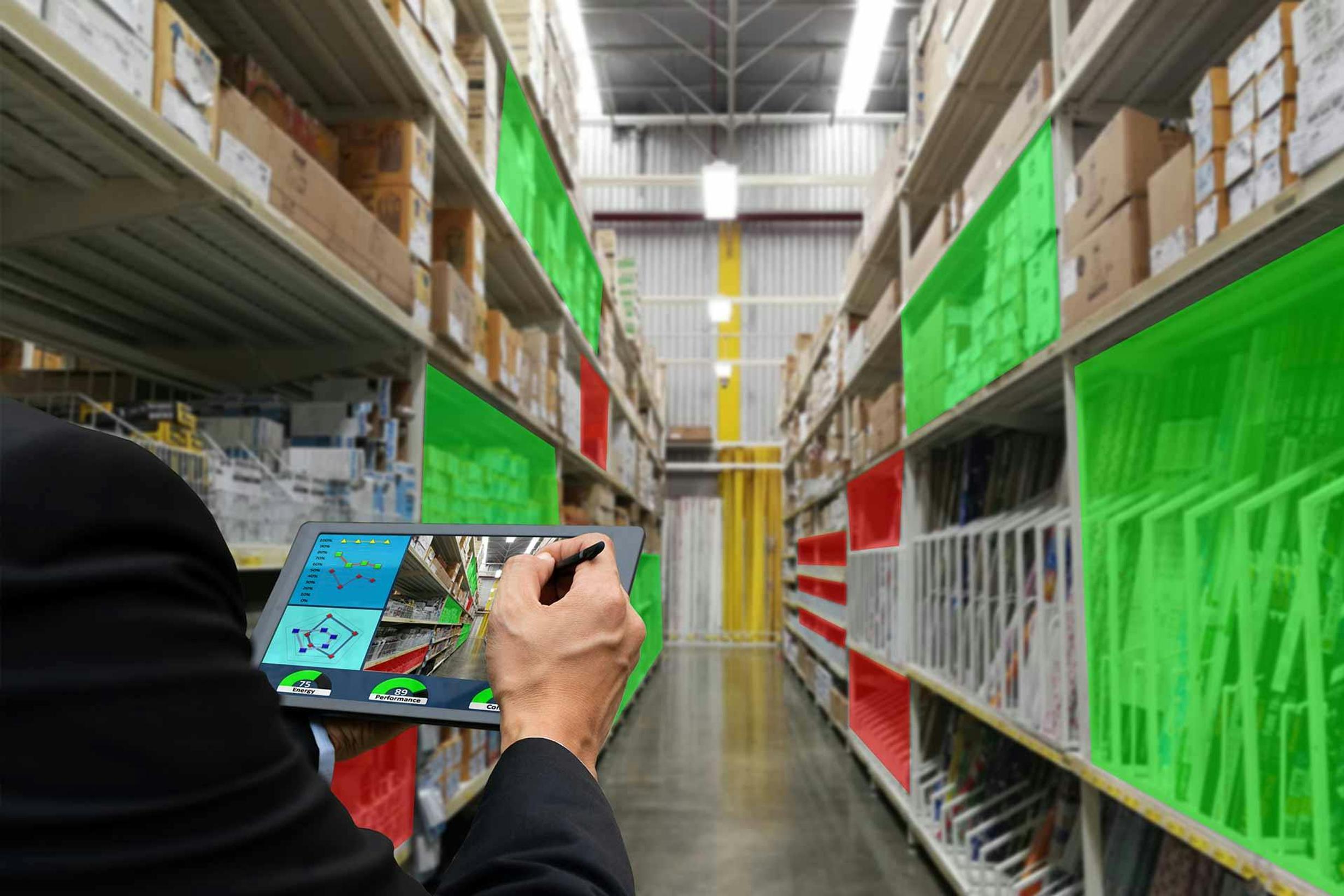
New technologies are a real challenge for companies in all sectors. We all have to keep up with the new changes to adapt to today's society, applying new technological solutions to our businesses. And especially in sectors such as logistics, renewing and adapting working methods with new technological tools is a key factor in being able to offer the solutions that today's customers require.
As we already know, Virtual Reality and Augmented Reality have become key technologies for improving the day-to-day running of many companies. And Augmented Reality in particular stands out in the logistics sector, providing great help in speeding up warehouse maintenance and management, optimising the work to be done even further.
How is Augmented Reality used in the logistics sector?
Thanks to Augmented Reality, large companies in the logistics sector have increased their productivity by between 10 and 15%. And this is not an isolated case: more and more companies are incorporating Augmented Reality into their working methods to promote faster, more efficient methods.
Augmented Reality can be used at many points in the logistics chain to speed up any process and help operators manage warehouses. Most of the benefits are found during picking the process of searching for and selecting items in a warehouse in order to prepare or store orders. With a Virtual or Augmented Reality system, the operator can see in real time where each item is located, as well as receive information on the quantity of products in the warehouse and get a better view of the space available for storing products.
And Augmented Reality is not only used during picking and other selection tasks, it also helps to choose the most efficient and optimal routes without the need for prior planning. This advantage can be applied both to the transport of products, to calculate the best routes based on distance and traffic conditions, and within the warehouse itself, to reach the point where the item is located by the quickest route.
Nor can we forget about training: Virtual Reality and Augmented Reality are key technologies for training future operators and helping them learn the most optimal working methods to improve their productivity.
Augmented Reality solutions for the logistics sector
At Invelon we offer Augmented Reality solutions for companies in the logistics sector. We have the vision picking solution TeamViewer Frontline xPick a patented, award-winning solution that facilitates manual order preparation, goods in, goods out and sorting, inventory control, sequencing and more processes in logistics and warehousing departments.
TeamViewer Frontline xPick lets you view all the information in the logistics process in Augmented and Mixed Reality, locating your products and their data with a simple scan. Thanks to xPick you will be able to optimise logistics processes to the fullest with the hands free option, increasing agility and productivity during picking.
Benefits of applying Augmented Reality in logistics companies
As we have already mentioned, the main advantage of applying Augmented Reality in a logistics company is productivity: selection, order preparation, transport and warehouse management tasks and even training processes are carried out more quickly than manually. So, Virtual and Augmented Reality solutions for logistics and warehouse management offer us great benefits in terms of increasing and improving productivity:
- They speed up picking processes
- They optimise selection tasks and storage processes
- They help to make better decisions
- They reduce the margin of error
- They bring comfort and ease to workers
Other applications of Virtual Reality and Augmented Reality in the working world
As we have seen, both Virtual Reality and Augmented Reality offer us great benefits in the various working sectors. And not only in the logistics sector, these new working tools help us improve and speed up any work process. Currently, Virtual Reality and Augmented Reality are already applied in many other different sectors:
- Design departments
- Architecture
- Simulation of dangerous situations
- Industrial Maintenance
- Museums
- Cultural heritage
- Education
- Advanced information visualisation
- Product catalogue
- Training and protocol
It is estimated that in the coming years Virtual and Augmented Reality technologies will revolutionise industry and other working sectors with the aim of making them more efficient and productive. Because the main aim of both Virtual Reality and Augmented Reality is to help people make their day-to-day lives easier.