Augmented Reality for industrial maintenance
Maintenance is one of the pillars of industry and Augmented Reality can influence productivity, efficiency and production quality.
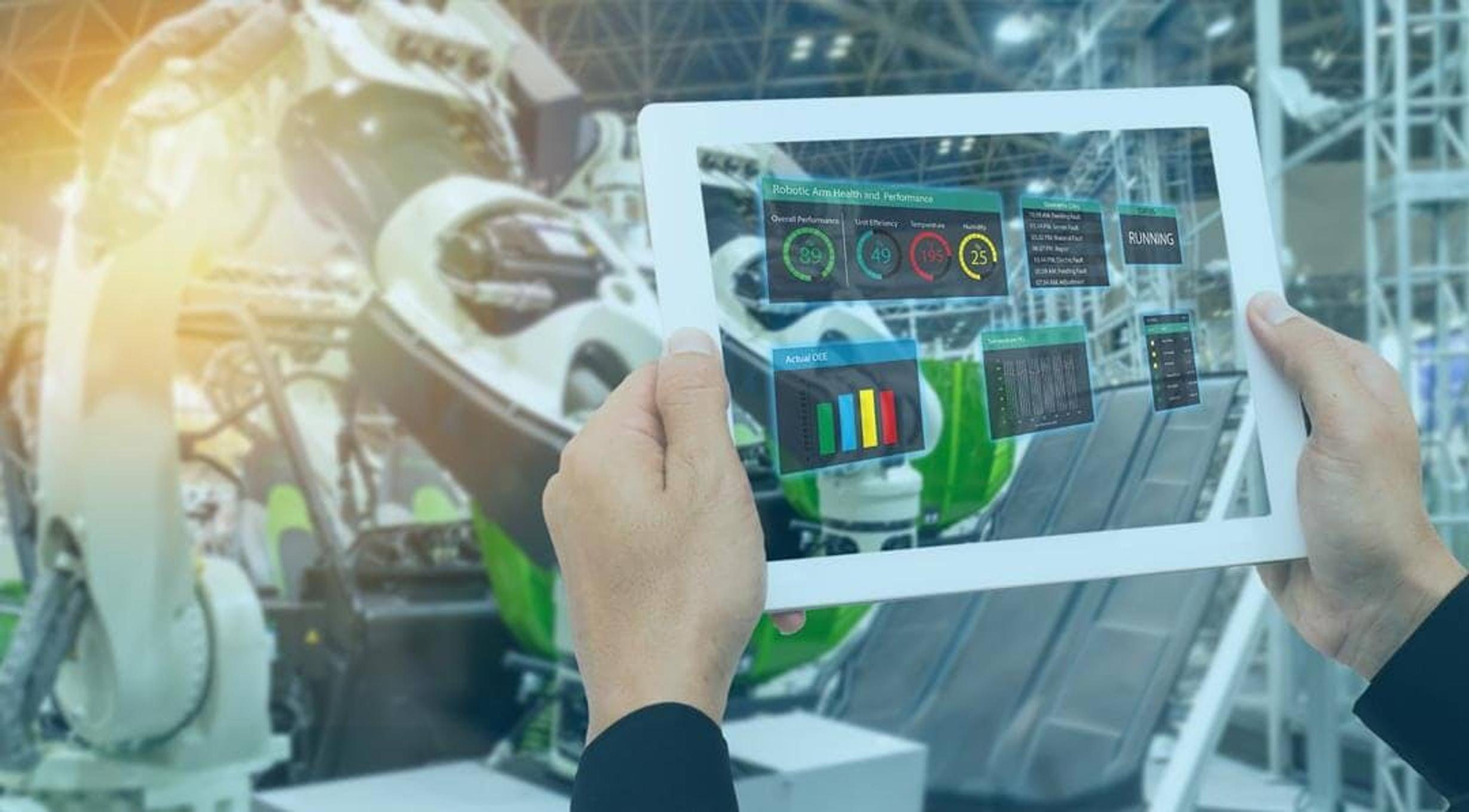
The age of Augmented Reality and Virtual Reality is already here and can be seen in a great many working sectors. However, today we want to focus especially on the benefits this technology can bring to industrial maintenance.
Maintenance is one of the basic pillars of industry and, accordingly, Augmented Reality is the technology that can best influence productivity, efficiency and production quality. The technological development of industry is therefore essential not only to survive, but also to be competitive and even as a way of obtaining specific information and resources on the spot.
How is Augmented Reality used for industrial maintenance?
There are many applications in the manufacturing sector waiting to be explored by this type of virtual technology. Predictive maintenance, simplified logistics, the design and development of more efficient products, the scheduling of optimised assembly processes and expert support with data management are just some of them. In short, the various Augmented Reality solutions for industrial maintenance operations and repair focus on being able to offer preventive, corrective and predictive maintenance:
- Preventive maintenance
- Operator assembly instructions.
- Service inspection instructions.
- Detailed instructions for unfamiliar procedures.
- Compliance checklists. - Corrective maintenance
- Manual service instructions.
- Remote assistance. - Predictive maintenance
- Performance dashboards.
- Access to real-time data: monitoring, control actions, analysis, etc.
Benefits of using Augmented Reality for industrial maintenance
- Video conferencing and remote technical service with Augmented Reality
Using Augmented Reality, you can create a specialised experience in the work environment, at any time and from anywhere. Whenever a problem arises, you can connect with experts who help you diagnose the problem and give you a quick, effective solution. In this way, you will reduce machine downtime and repair time; in short, you will save effort and money.
It is even no longer necessary for technicians and technical service staff to travel to the places where their machines are located in order to repair them. Instead, they can now analyse, diagnose and solve problems remotely, virtually. - Reduced time in SLAs (Service Level Agreements)
With Augmented Reality technologies, you can efficiently monitor each work process. Likewise, you will obtain the information you need to help you improve your work and you will be able to share it quickly. In other words, these solutions give you a specific, detailed view of your assets and processes.
Augmented Reality is establishing itself as a useful resource for simplifying the drawing up, management and monitoring of Service Level Agreements or, in other words, for obtaining all the precise information through this technology and creating the contracts between service providers and internal or external clients, which are binding. - Increased efficiency with Augmented Reality
Paper manuals will soon become obsolete thanks to VR and AR technologies. As a result, you will no longer have to search and research to find answers to the most technical questions. With Augmented Reality, the solutions to your problems will appear literally before your eyes.
Through a digital device (glasses, a head-mounted display (HMD) or a smartphone or tablet), Augmented Reality fuses you with the machines. The technology recognises the equipment, understands how it works and then springs into action with real-time solutions. And this whole process, of course, directly affects efficiency, increasing the speed and productivity of industrial maintenance processes. - Maintenance Step by Step
Features such as scene recognition, instant tracking and real-time targets make it easier to share Augmented Reality experiences between professionals.
While scene recognition helps workers overcome the challenge of tracking industrial sites and machines, instant tracking allows remote experts to guide on-site workers on the move. The ability to save and load Augmented Reality experiences with real-time targets can simplify your processes, reduce your effort and optimise communication. - Faster fault resolution
Infrared thermography is a good example. This technology lets you see electrical systems, mechanical equipment, construction applications and fluid systems through thermal vision.
In this way, and together with Augmented Reality applications, you can detect faulty connections, abnormal motors, pipe temperatures and tank levels through equipment that displays different colours depending on their temperature, making it possible to detect and fix faults more quickly. In addition, using Augmented Reality in these cases also reduces the risk of injury and improves occupational risk prevention. - Easy, visual access to information with Augmented Reality
Technicians can do the actual work with the instructions on their handheld devices, enter how long it takes to complete tasks, filter past work orders and close the system. All the information is recorded with real-time data, so managers can access the information instantly.
The ability to track their work, document it and send it to managers can be combined with wearable technology, so that engineers get an enhanced view of assets through thermal technology or the ability to see instructions on assets and use that data. All of this helps us to train new employees and not have to worry about onboarding.
Other applications of Augmented and Virtual Reality in the world of work
Many companies are achieving optimal results by implementing this type of Virtual Reality and Augmented Reality solutions in their businesses, and not only for industrial maintenance: most working sectors can now benefit from all the advantages offered by the new VR and AR technologies:
- Design departments
- Logistics and warehouse management
- Architecture
- Simulation of dangerous situations
- Museums
- Cultural heritage
- Education
- Advanced information visualisation
- Product catalogue
- Training and protocol
As Augmented and Virtual Reality technologies gain strength, the possible use cases will grow in scope and in the number of opportunities. Industrial maintenance is just one of the areas in which new VR and AR applications can have a major impact, and they already are. It will be exciting to see where the industry is heading in terms of the adoption of Augmented and Virtual Reality in the future. And you, are you willing and ready?