“The next great technological revolution is just around the corner, and it will be marked by spatial intelligence and humanoid robotics.”
Joan Folguera, Founder & CEO of INVELON, on the present and future of the XR and robotics sectors.
July 8, 2026

In this interview, Joan Folguera analyzes how the convergence of software, spatial intelligence, and physical execution is driving a new technological revolution. We discuss smart interfaces and INVELON’s strategic commitment to robotics as one of the major drivers of transformation in the coming decade.
Question: Joan, what exactly is changing in the relationship between humans and technology?
Answer: The convergence of Artificial Intelligence, Extended Reality, and Robotics is giving rise to a new digital layer over the physical world: an ecosystem where knowledge no longer exists solely on screens but is directly integrated into space, transforming the way we work, learn, and evolve. Traditional interfaces have reached their limits, and a new paradigm is unfolding before us—one in which INVELON has been immersed for some time, anticipating where the sector is headed and how we can support society, individuals, and businesses in these advancements.

Photo: UB-Tech
Q: So, what kind of interfaces will we see in the future?
A: In fact, we’re already seeing them. Interfaces such as screens, apps, or control panels—which allow us to interact with machines and devices—are going to become obsolete.
We’re entering the era of spatial and intelligent interfaces—interconnected systems that will continue to display information and receive commands through multimodal interactions, but that will also be able to understand context, interpret the user’s intent while learning from them, and dynamically adapt to that interaction in real time.
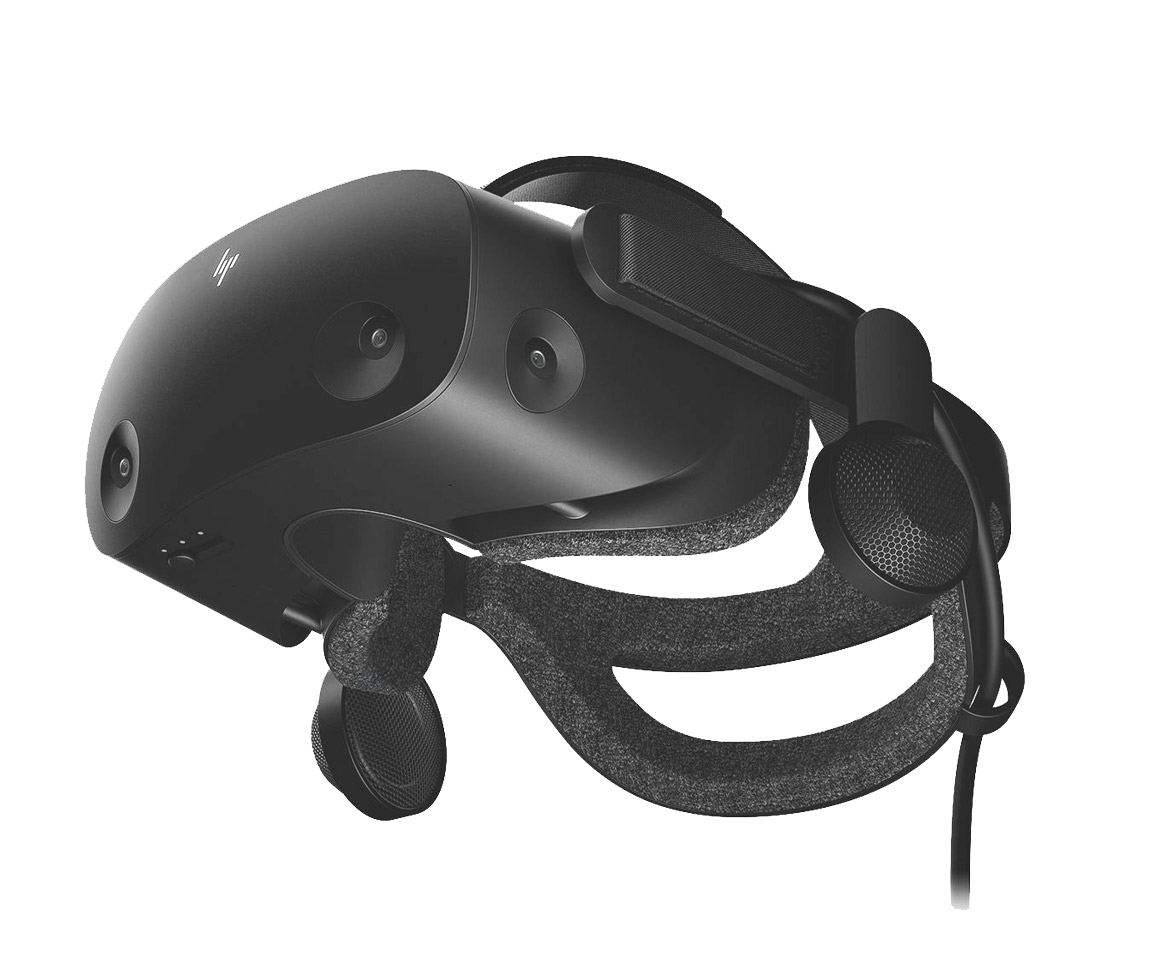
In the near future, any intelligent interface will include products such as virtual reality headsets, smart glasses, curved screens, immersive projection, augmented reality smartphones, holograms, and robots. In this new paradigm, robotics will play a very important role, providing a physical and operational layer that, combined with the capabilities of AI and XR technology, will allow us to enter the next great technological revolution: the space revolution.
Q: The technologies you just mentioned have evolved independently and in parallel for years. What has changed?
A: It is precisely in this space of interconnection and hyperconvergence among these technologies where the next revolution will take place. AI currently helps us understand; it provides reasoning capabilities, interprets, reasons, and helps us make decisions. XR, in any of its forms, gives us the ability to visualize and contextualize our environment, as well as simulation capabilities. If we add robotics as a third layer, we can act upon the physical world, transferring everything we’ve learned and simulated to the real world, thereby harnessing and bringing to life the vision of Spatial Intelligence in its broadest sense. Without robotics, Spatial Intelligence can understand and assist. With robotics, we can take action on and with it.
Q: What’s the next step? Where will this new technological revolution begin?
A: Programming humanoid robots using virtual reality devices. The user performs the task using a virtual reality setup (VR headsets, controllers, haptic gloves, motion tracking, cameras, etc.). These tools, connected to the system, track head position, arm movements, wrist rotation, hand gestures, and even the force or intent of a grip. The system translates human movement to the robot’s body, transmits the information, and replicates human movements in real time. We can also use teleoperation technologies, natural language programming, or direct programming languages such as ROS, MATLAB, C++, or Python.
Q: What tangible benefits will robotics bring when applied to a real-world environment?
A: This new paradigm allows us to automate complex tasks in industrial, logistics, and operational environments with greater precision, efficiency, and scalability. As a result, we will achieve greater productivity in performing repetitive, high-workload, or high-precision tasks, freeing up human talent for activities of greater strategic value. It also helps us achieve higher safety standards by reducing human exposure to dangerous or repetitive tasks and in critical environments. And finally, it takes training and knowledge transfer to the next level by leveraging XR simulation to train more quickly and effectively.

Photo: UB-Tech
Q: To wrap up, what will we be talking about in 10 years, and what role will INVELON have played in that progress?
A: Without a doubt, the next decade will be marked by the digitization of space, enabling people, organizations, and machines to share a common understanding of their environment and collaborate in real time. It is at the intersection of technologies where much of the value in the coming years will be generated. We firmly believe this is the direction in which the market is heading. That’s why it’s essential for INVELON to strengthen our robotics division with new partnerships and new talent on our teams. We’re going to add new technological capabilities to our portfolio and round out our value proposition, which will enable our clients to complete the full cycle of digital transformation. We’ll continue to break down barriers to accessing technology—and this is the true potential of convergence and spatial intelligence.