Virtual Reality, a great help in the medical sector
The medical sector is also one of the fields in which Virtual Reality is used: it is applied in surgery, in the treatment of illnesses and in training.
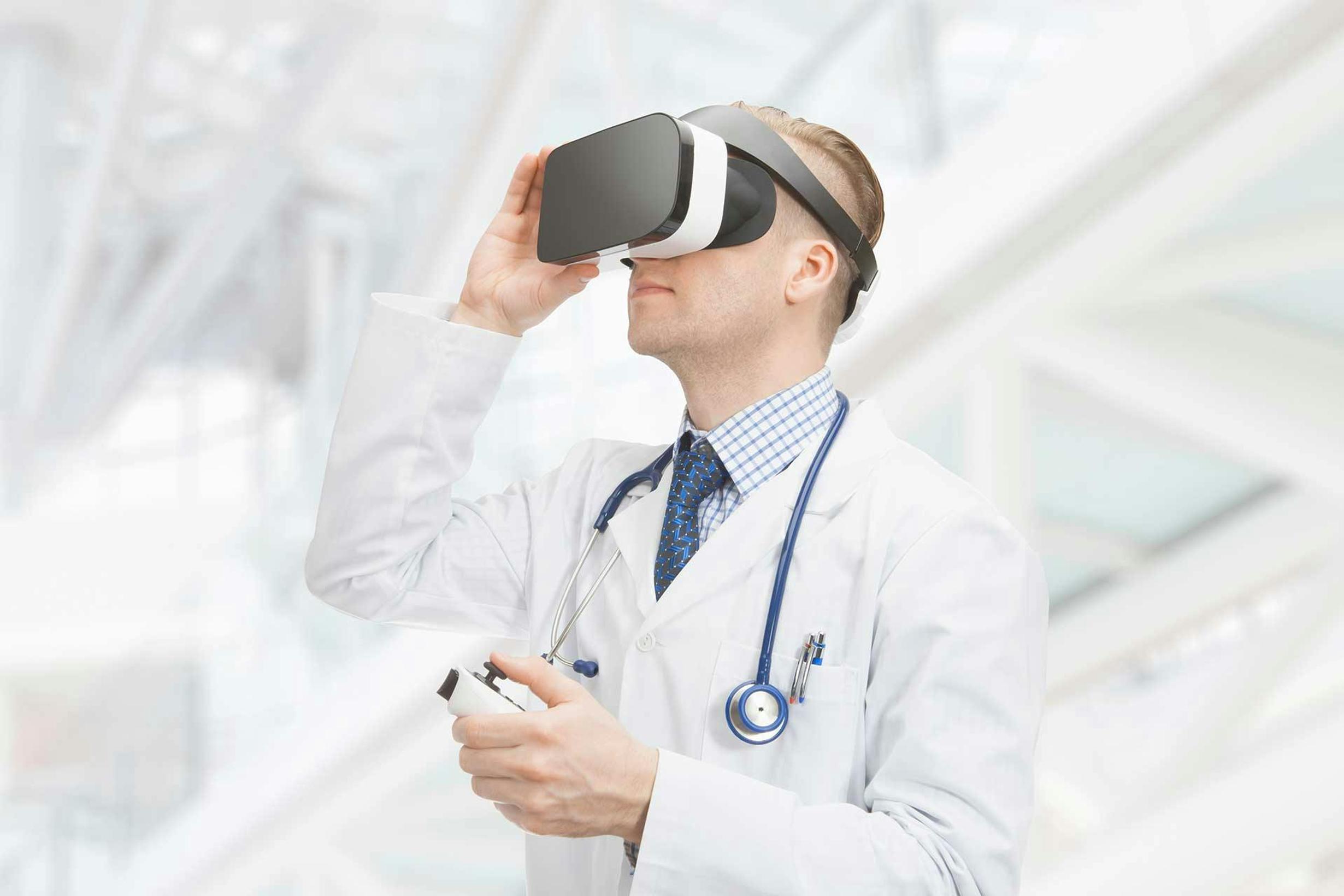
When we talk about virtual reality, most people think of its use in video games and leisure. But nothing could be further from the truth: Virtual Reality (and also Augmented Reality) is carrying more and more weight in many other sectors.
A great example is the use of Virtual Reality in the medical sector: applying this new technology in some fields of medicine can bring great benefits and be of great help in both the training and practice of medical activities.
In fact, the medical sector is one of the main fields of action for Virtual Reality. There are more and more applications to help both doctors and patients. The advantages of Virtual Reality are already being applied in surgery, in patients with disorders and phobias, in the treatment of diseases and especially in medical training.
Surgery with Virtual Reality
The difficulty and pressure involved for a doctor in performing surgery on a patient are considerable, especially in the most complex cases or in areas of the body more prone to complications.
Performing an operation is, and will remain, quite a challenge. Even so, with the help of Virtual Reality, doctors can practise highly difficult surgeries, preparing them optimally to later carry out the real operation. Thanks to Virtual Reality, surgeons and doctors in general can be trained, starting to work with virtual human anatomy, without the need for a human body, gradually reducing the time taken in all kinds of operations and improving their surgical skill.
Virtual Reality in medical training
Another of the best applications of Virtual Reality in the field of medicine is during the training of these future doctors. Medical students must not only understand and learn medical theory, but must also prepare for real cases where they will have to deal with all kinds of challenges.
With the use of Virtual Reality, people training in medicine can undergo all kinds of virtual simulations. It allows them to train in a more practical, visual and virtual way in anatomy, operations, emergency situations or diagnoses, because they will later have to experience this type of situation first-hand. Thanks to medical training with Virtual Reality, students are much better prepared for the situations they will have to face in real life, and possible negligence and/or medical errors are reduced.
Overcoming fears, phobias and addictions thanks to Virtual Reality
Virtual Reality has also established itself as a new way of doing therapy, in which the professional can control the patient's stimuli gradually. This is the case for people with fears, phobias, insecurities or even addictions.
Thanks to the fully immersive system of Virtual Reality, patients can be exposed to certain situations that make them uncomfortable or stressed, in order to combat their fears in a controlled way. Although the scenarios are not real, patients experience this virtual recreation as if they were, in order to diagnose and control their phobias. Finally, patients gradually adapt to this type of virtual situation, so that they can later face them in the real world.
Virtual Reality for the treatment of mental illnesses and disorders
Many mental illnesses are irreversible and, at present, there is still no cure for them. What does exist are methods to treat and alleviate this type of illness. For some years now, Virtual Reality has been establishing itself as one of these methods, helping to treat illnesses and disorders such as Alzheimer's, Autism or ADD / ADHD (Attention Deficit Disorder and Attention Deficit Hyperactivity Disorder).
With Virtual Reality, the aim is to control and relieve the symptoms of this type of illness. In Alzheimer's patients, for example, images from their past are reproduced in a fully immersive way to help restore their cognitive abilities. Beyond the methods used for each illness, the ultimate aim of Virtual Reality is to help patients recreate virtual situations that stimulate their minds and prepare them to overcome the same situations in real life.
Other applications of Virtual Reality in the medical sector
Beyond the applications we have already mentioned, there are other occasions on which the immersive technique offered by Virtual Reality for different medical specialities is also used: this new technology has already been used with patients to relieve chronic pain, reduce obesity, recover part of their vision, carry out game-based physiotherapy, refine prosthesis designs and even to relax and entertain hospitalised patients.
In short, Virtual Reality is already present in the medical sector to help improve our health and quality of life. The use of these new virtual realities could mean a great advance for our society, helping us to meet all kinds of new needs and thus improving our health, quality of life and wellbeing in general.