How Virtual Reality is rethinking Occupational Risk Prevention (ORP) training
Virtual Reality applied to Occupational Risk Prevention (ORP) training brings a notable acceleration of complex training or risk situations.
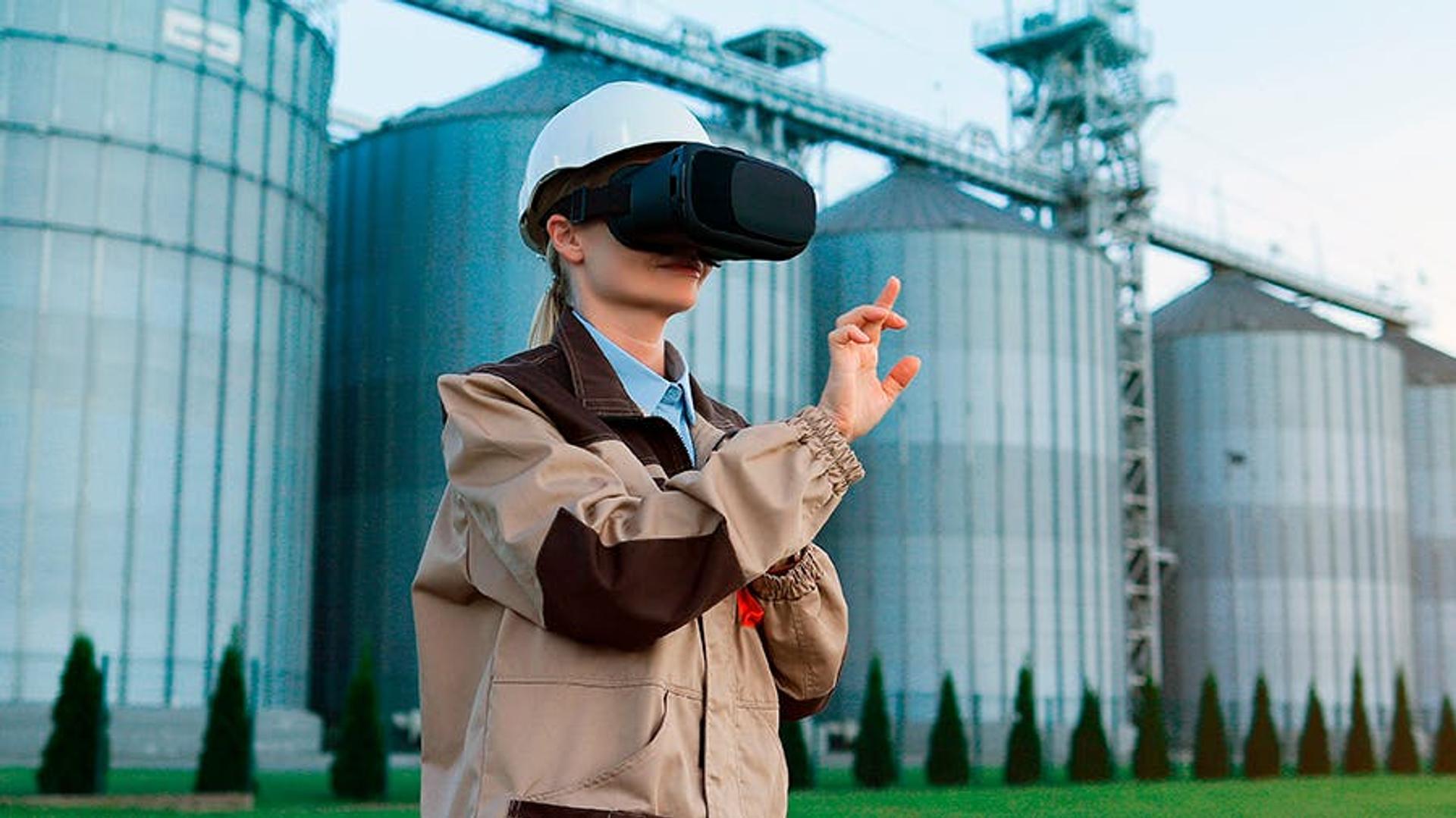
When we talk about 4.0 technologies such as Virtual Reality (VR), limits cease to exist. These technologies make it possible to recreate simulated environments and situations that make our lives easier.
Virtual Reality (VR) technology, applied to Occupational Risk Prevention (ORP) training, brings a considerable increase in possibilities and a notable acceleration of especially complex training, aimed at improving workers' safety and health conditions.
The main problem for many companies is the impossibility of carrying out live training because of the risk involved, its high cost or because they are situations that are hard to recreate, such as fires, explosions or accidents.
Thanks to simulations using Virtual Reality (VR), the way workers are trained is redefined and, above all, so is the approach taken to the field of Occupational Risk Prevention (ORP).
The problem for companies of being unable to carry out dangerous training
In response to these problems, Virtual Reality means that, without needing to be present at the company's premises, workers can put what they have learned into practice and interact with it, thanks to simulated environments.
Virtual Reality makes it possible to run dangerous simulations that would be impossible in the real world because of the risk involved. Therefore, not only is workers' training optimised, through a practical, first-person methodology, but they can be trained to know how to react in extreme situations.
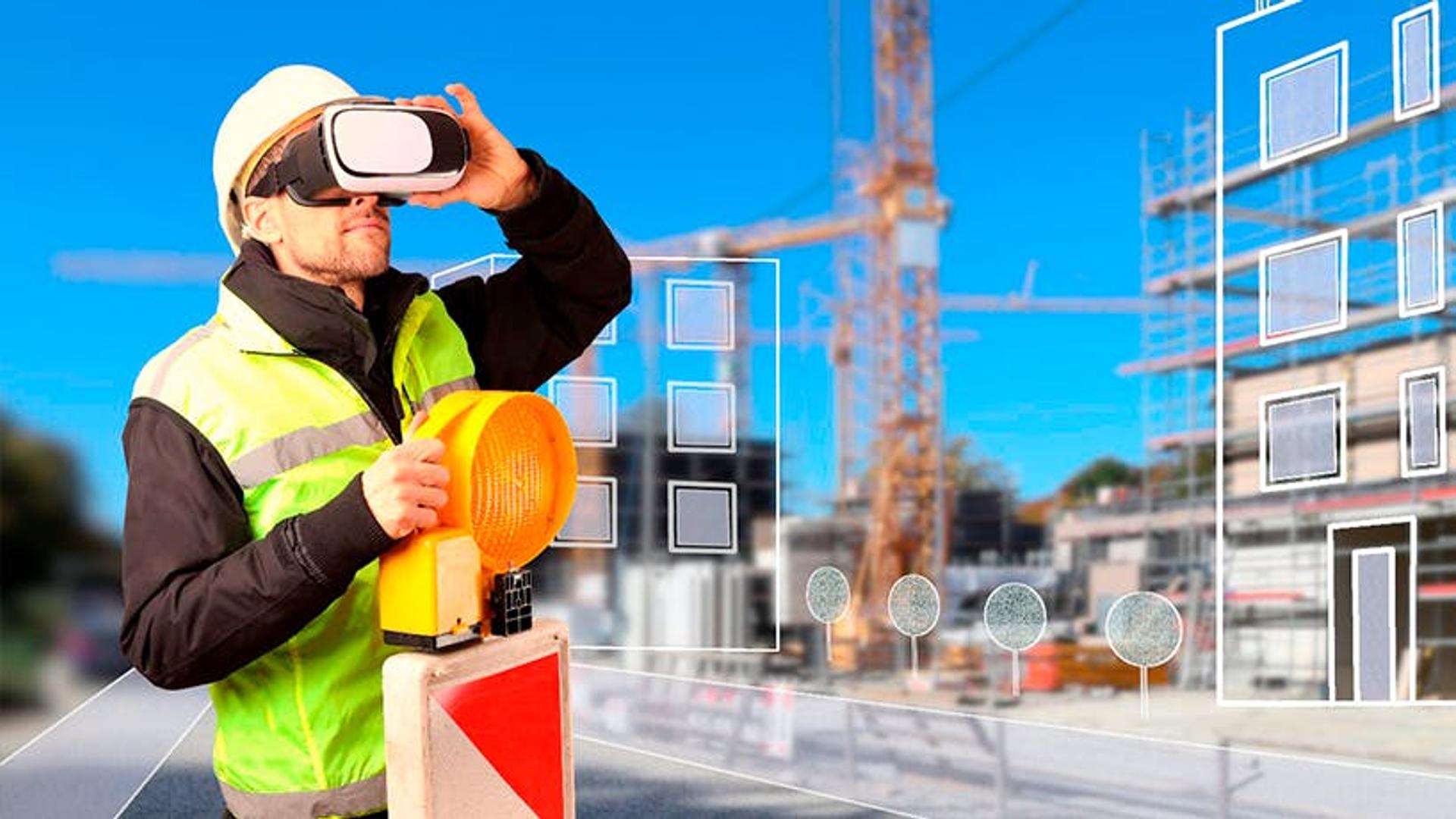
How does Virtual Reality help in Occupational Risk Prevention (ORP)?
These simulated situations are useful for different sectors, companies and fields within them. Depending on where we apply it, it will bring us one set of benefits or another compared with traditional training.
Virtual Reality makes it possible to reproduce real situations in which users have total freedom of action and are able to experience a workplace accident first-hand. Thanks to these VR simulations, Occupational Risk Prevention (ORP) has gone a step further and has managed to train workers in a more enjoyable and, above all, safer way.
- Carrying out highly dangerous training without risk
Thanks to Virtual Reality, simulations can be run of situations that cannot take place in the real world because of their danger.
- First-person experience and interaction
The learner does not receive theoretical training, but is immersed in real experiences in the first person, which also helps to increase their interest and motivation. After all, they become the protagonist and the decisions they make are crucial.
- More complete and engaging learning
The worker's behaviour is very different compared with conventional learning, since through VR they experience sensations that stay in their memory.
- Possibility of adding learning resources
The Virtual Reality headset lets you see and interact with other resources added to the training, such as text drop-downs, photographs, explanatory audio or video capsules.
- Interaction takes place in real time and without limits
The simulations give the worker a sense of real presence in that space. What is more, learners do not need to be in the same place, as it can be done remotely. And they can also repeat the training as many times as they need, as well as access the resources as often as they wish.
- Training as close to reality as possible
The purpose of this type of training adapted to ORP is to create environments and situations that are as realistic as possible. As a result, if the task is to put out a fire, learners will feel the weight of the extinguisher and will have to follow the same steps they would in a real fire.
- The trainer can watch the performance via streaming
By watching in real time how the learner is carrying out the action, the trainer can score the learner and even give instructions on how to do it better.
- Virtual Reality simulations cost less
Virtual Reality simulations do not require as much financial investment as creating simulations in a real physical space. What is more, they do not carry the danger of a real situation, but for practical purposes they are just as valuable, or more so.
Our Training Capsules solution: Training VR
At INVELON we have a Training Capsules solution for training workers in risk situations. This is Training VR, a platform that aims to create an interactive classroom in Virtual Reality (VR).
In this way, trainees will access a teaching platform with a virtual assistant and a recreation of the facilities. The aim is for them to improve their skills and abilities, without the dangers of a real facility.
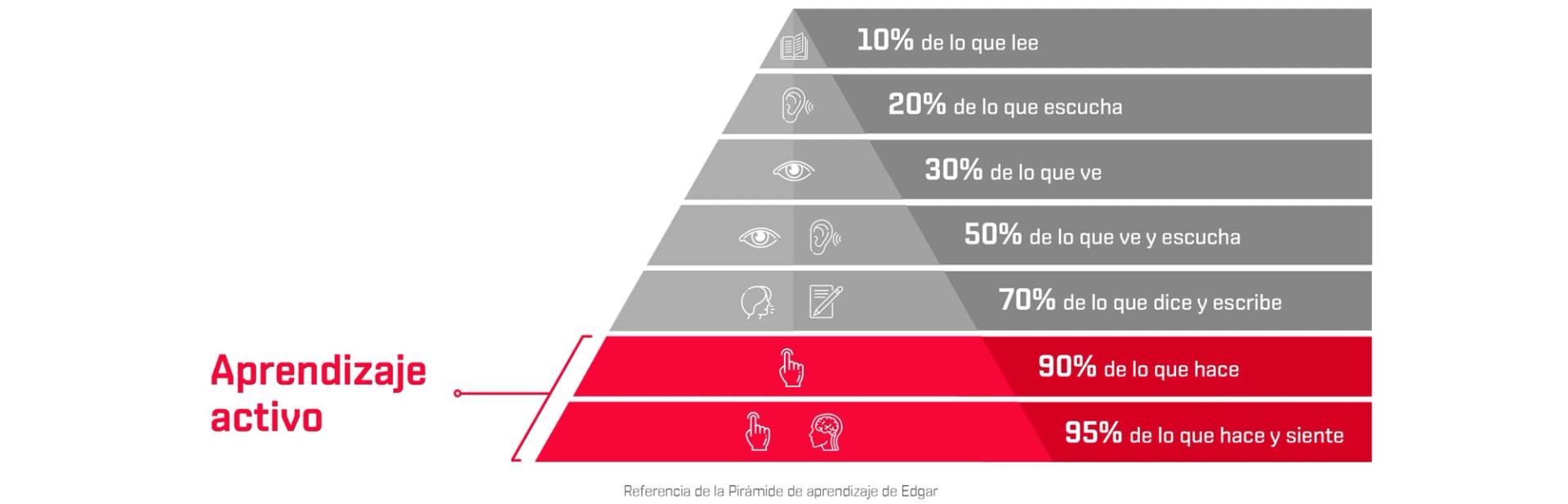
The reality is that, thanks to the application of this technology, learning becomes completely active, which means it will stay longer in workers' memory.
Based on Edgar Dale's learning pyramid, active learning rests on two fundamental pillars: what the worker does, and what they do and feel, these being the two forms of training that stay longest in the memory, at 90% and 95% respectively.
Learning through Virtual Reality means a great saving of time, since a specific piece of content can last around 2 hours in a traditional class. The same content applied to e-learning is reduced to 45 minutes, while in Virtual Reality it falls to 29 minutes, according to studies by PWC (Price Waterhouse Coopers).
What is more, training through Virtual Reality means that participants empathise much more with the information they receive. The data show that Virtual Reality quadruples interest and empathy compared with other forms of learning, such as traditional learning or e-learning.
In turn, learners who receive training through Virtual Reality say that they focus much more on the content and manage to block out external distractions, compared with other forms of teaching.
Hardware recommendations for ORP training
The HP Reverb G2 Omnicept Edition headset is one of the most recommended headsets for training, as it offers intelligent experiences that are customisable and adaptable to each user.
These glasses have sensors that measure users' muscle movement, gaze, pupil size and pulse.
As a result, learners' reactions to the stimuli presented are captured as accurately as possible and in real time. Thus, companies and developers can create experiences that are 100% customisable and based on each user.
Using this headset is especially interesting in risk training, as it makes it possible to study whether the user has reacted as expected to the insights.
In which sectors is Virtual Reality applied in risk training for workers?
Virtual Reality training can be applied in all sectors, as its benefits are valuable for any activity.
Here are the sectors or activities in which Virtual Reality makes it possible to carry out safe training that, without this technology, could not be carried out because of the danger involved.
- Detection and prevention of risks on the shop floor
- Firefighting
- Work at height
- Confined spaces
- Electrical or chemical explosions
- Construction safety
- Accidents involving transport vehicles
- High-risk medical operations
- First aid
- Overhead cranes
- PPE
- Logistics and electrical risks
- Lifting platforms
Benefits of ORP training through Virtual Reality
The Training Capsules from INVELON bring a great many benefits to Occupational Risk Prevention (ORP) training through Virtual Reality; here are some of them:
- Fewer accidents and/or occupational risks
- Makes training easier and faster
- Fewer staff needed for training
- Standardises procedures and replaces physical manuals
- Lower costs
- Physical barriers no longer exist
In short, we have the possibility of obtaining workers who are better trained and prepared for any accident or setback at work, since without Virtual Reality, some training is not carried out because of the danger it involves.