Logistics 4.0: How Augmented and Mixed Reality are applied in the logistics sector, picking and warehouse management
Augmented and Mixed Reality technologies have become more relevant in the logistics sector, in picking and in warehouse management. These technologies open up a world of possibilities for this sector, bringing new applications and uses, as well as multiple benefits, which centre on greater efficiency and faster activities.
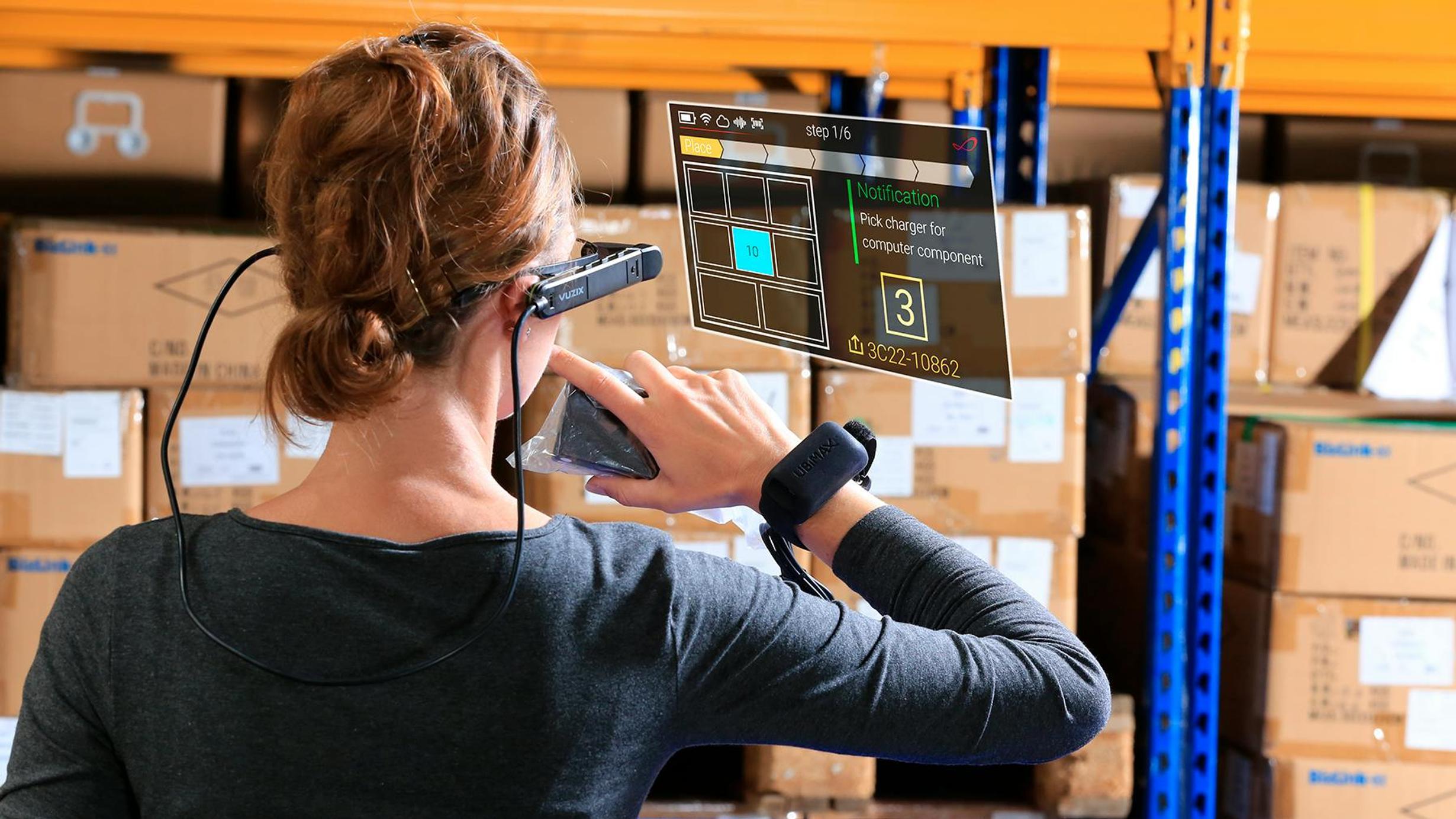
Recently, Augmented and Mixed Reality technologies have become more relevant in the logistics sector, in picking and in warehouse management. These technologies open up a world of possibilities for this sector, bringing new applications and uses, as well as multiple benefits, which centre on greater efficiency and faster activities.
We are in the new era of the logistics sector, so-called logistics 4.0, which is characterised by a clear trend towards integrating new technologies into the sector. Some of the technologies gaining the most ground are Augmented and Mixed Reality. Today we are going to tell you about the applications and uses of these technologies in the logistics sector.
In such a changing and competitive market, consumer demands are growing by the moment. For this reason, the logistics sector must find a way to respond to the demands and needs of the market and of consumers. In this regard, one of the key points is that paper-based management must be avoided, as it slows down processes and lowers customer satisfaction.
Augmented and Mixed Reality technologies offer a way out of many of the limitations of the logistics sector, involved in storage tasks or in manual order preparation. They are therefore a key factor to bear in mind if you want to increase efficiency, speed and error detection in your logistics company.
In which logistics processes does Augmented and Mixed Reality technology become essential?
Augmented and Mixed Reality technologies are applied at different stages of the logistics process, benefiting multiple tasks within the cycle.
- Sorting of items. With a simple scan, products are located with their exact position, their data and the right quantities of product in the field of vision.
- Goods in and goods out. Augmented Reality solutions for the logistics sector make it possible to control all processes for receiving and dispatching goods.
- Inventory control, supply and storage. The operator can receive information on the quantity of products in the warehouse and better visualise the available space in order to decide the best storage option. The inventory information obtained is in real time.
- Sequencing and kitting. The devices can also provide information on the kitting strategy to follow when gathering all the parts that make up a product.
- Manual picking. Operators can carry out picking while seeing the information they need, with their hands completely free, which allows them to increase their productivity.
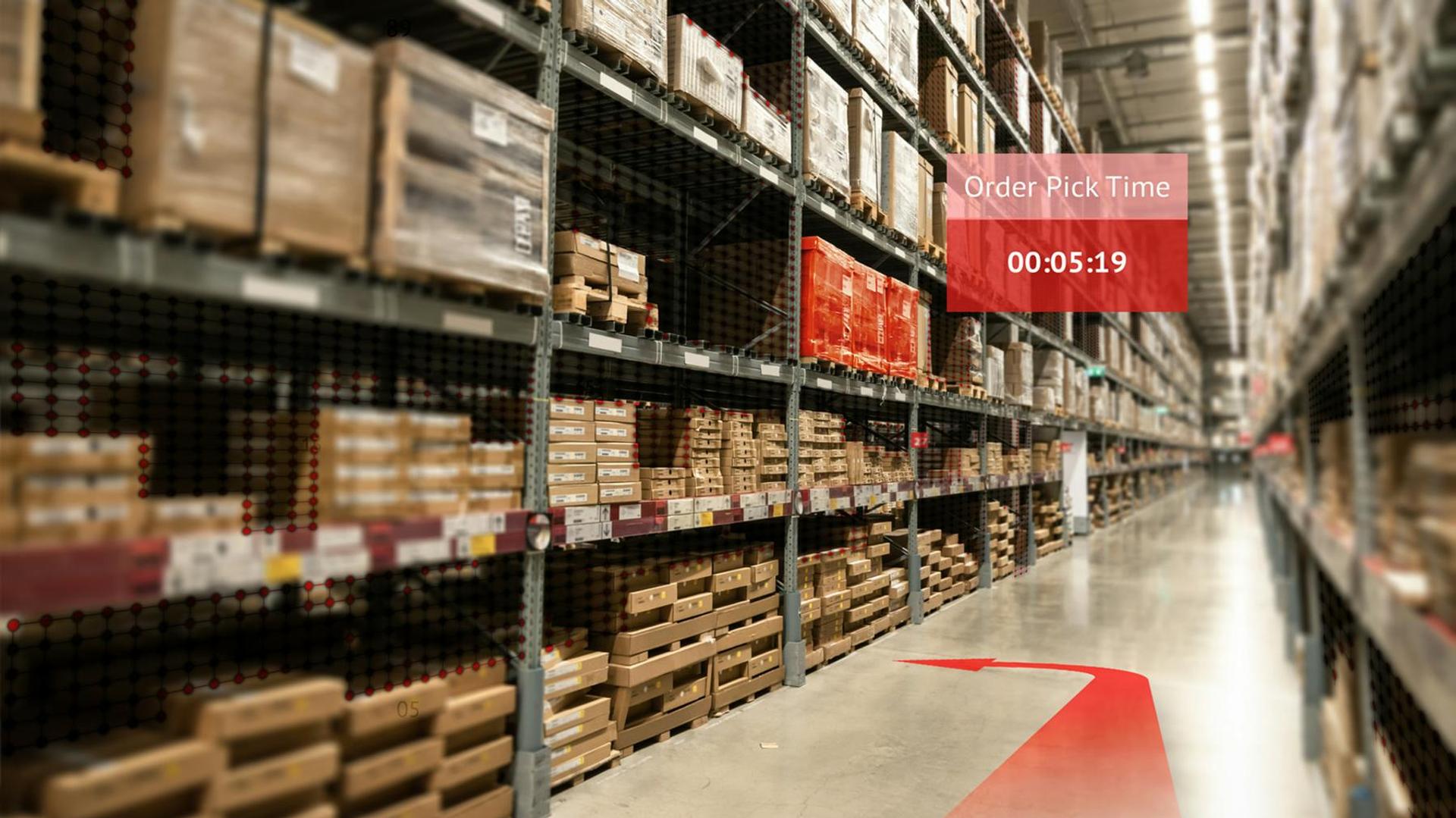
- Location, collection and order preparation. This application is also useful within the warehouse itself, to find the quickest route to the point where an item is located.
- Optimisation of order transport. There is no need for prior planning, as thanks to Augmented Reality, you will be able to see the best routes based on distance and traffic conditions.
- Skills development and training. Augmented and Mixed Reality devices make it easier to train new employees.
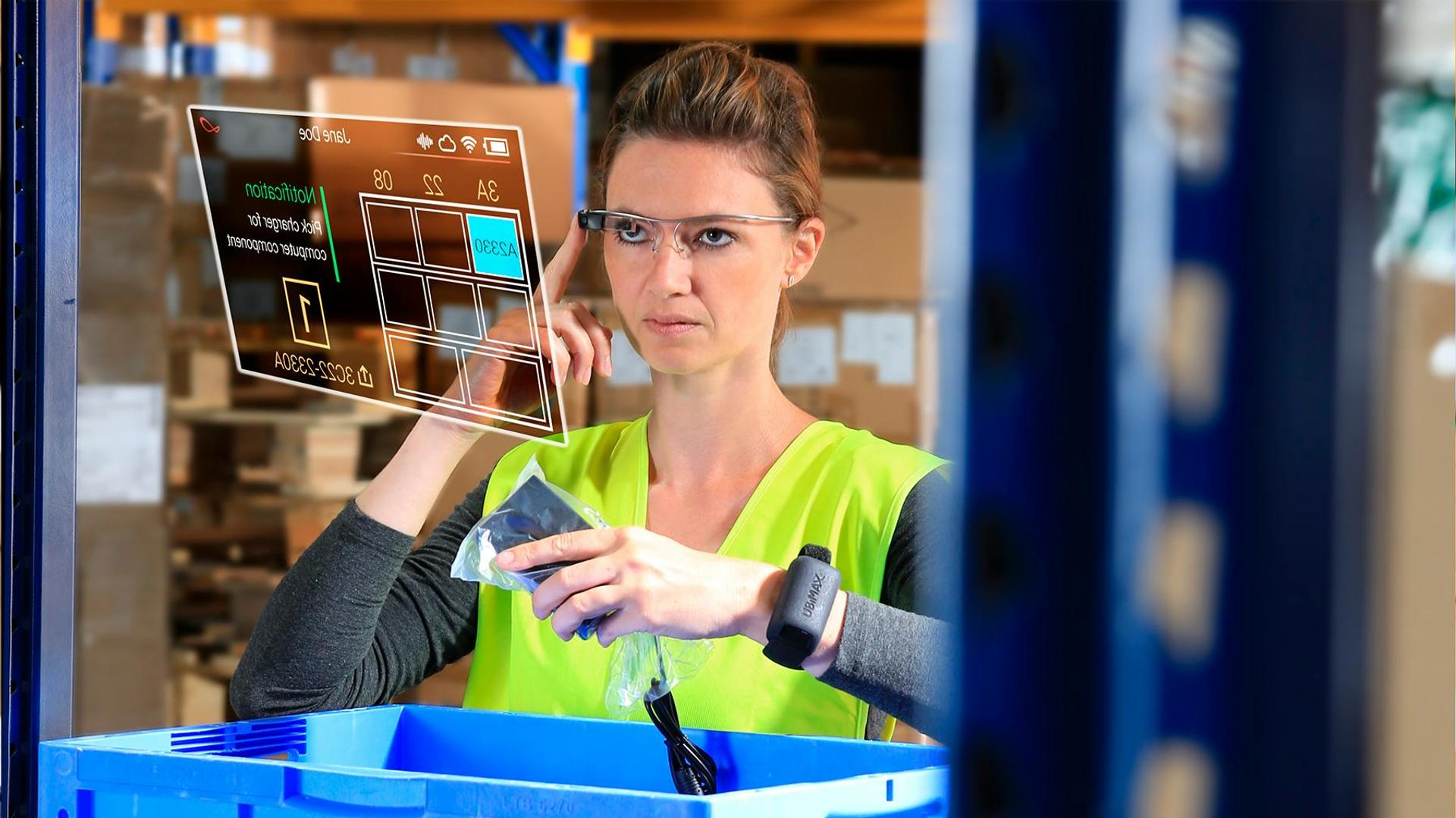
Augmented and Mixed Reality solutions for the logistics sector
TeamViewer's Frontline xPick is a patented, award-winning vision picking solution that facilitates manual order preparation, goods in and goods out, inventory control and other logistics and storage processes.
With TeamViewer's Frontline xPick you can digitalise logistics processes thanks to the display of all logistics process information in Augmented and Mixed Reality.
The TeamViewer solution acts as an alternative to the manual logistics processes that still predominate in many companies. It therefore focuses on resolving aspects such as manual picking, sorting of items, sequencing and kitting, goods in and goods out, inventory control, and replenishment and storage.
Benefits of applying Augmented and Mixed Reality in the logistics sector
The main benefits obtained from integrating Augmented and Mixed Reality technologies in the logistics sector are directly related to the challenges the sector faces: increasing speed, minimising errors and increasing flexibility.
Fewer errors
Reducing errors within the logistics process is one of the main advantages of applying Augmented and Mixed Reality technologies in the logistics cycle. It is achieved thanks to the graphical user interface, step-by-step instructions and sensor monitoring.
Greater speed
As already mentioned, the logistics sector must cope with the speed the market demands. Logistics operators manage to carry out their tasks more quickly because they have both hands free, because the technology is simple to implement and because they see all the exact information in their field of vision.
Depending on the level of automation and on the technology integrated into picking and warehouse management processes, processes will be faster to a greater or lesser extent.
Greater flexibility
Another of the great benefits of integrating these technologies into logistics and picking processes is the flexibility gained. This is partly because the devices are mobile and can be used hands free. In addition, the solutions are customisable and compatible with a variety of hardware.
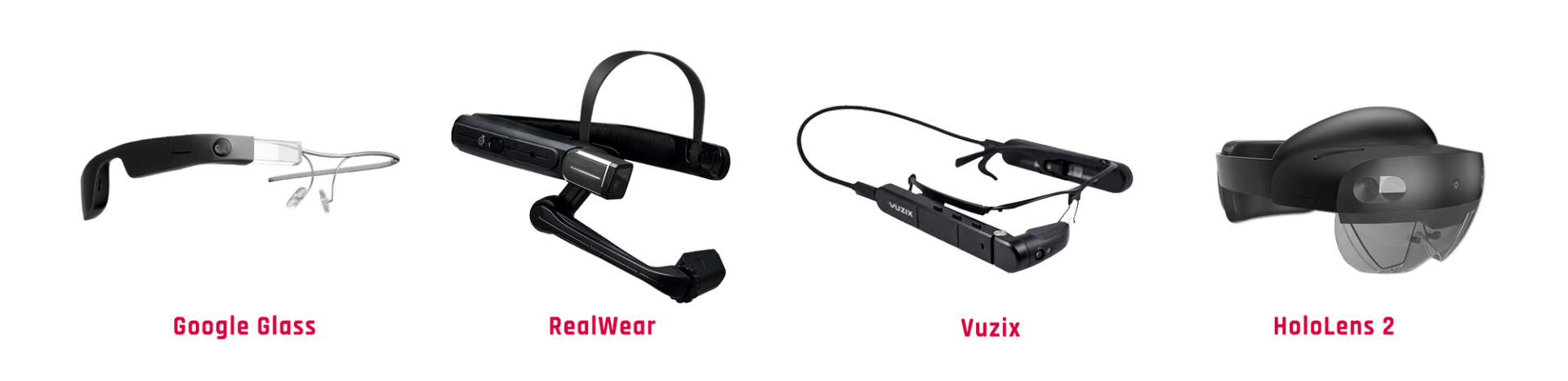
Recommended hardware for warehouse management with Augmented and Mixed Reality
Solutions for the logistics sector, picking and warehouse management are compatible with hands-free devices, such as the RealWear headset, Google Glass, Vuzix and HoloLens 2.
Wearables are also becoming relevant in the logistics sector
Wearables are portable electronic devices used in logistics sector activity. The aim of these devices is to make workers' tasks easier, as well as to increase their performance and productivity.
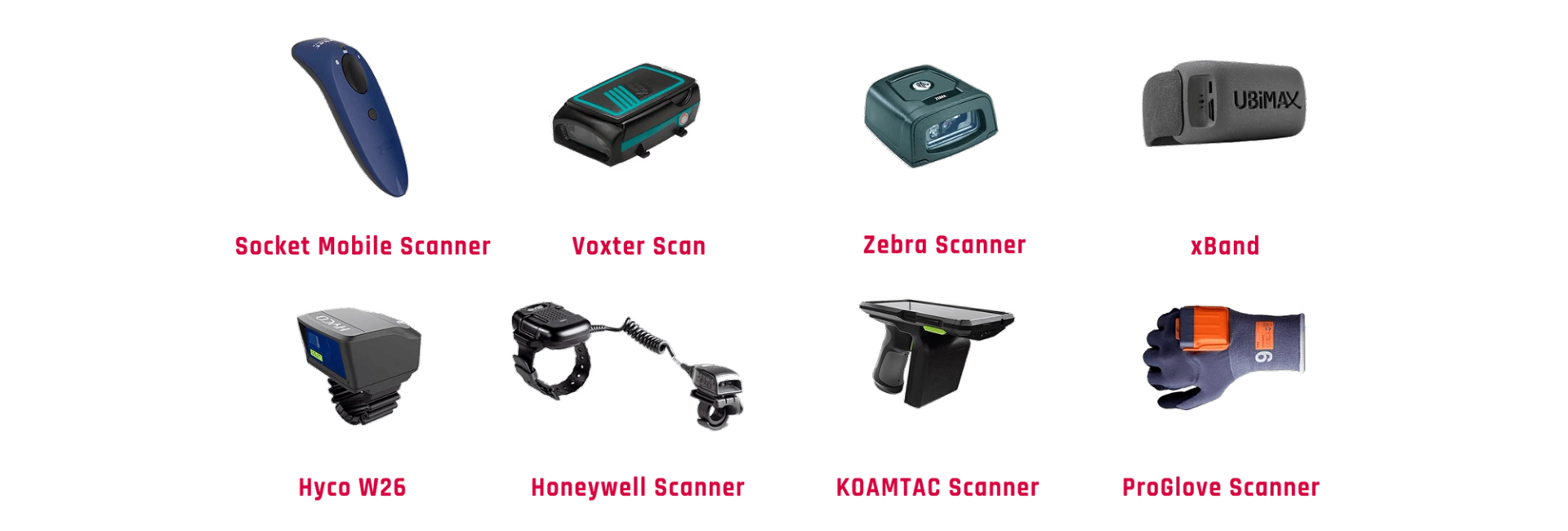
Barcode and RFID scanners can be worn as a ring or wristband and provide additional support in logistics processes. These devices offer conveniences such as seeing exactly where the order to be collected is located or reaching a hard-to-access storage location.
In addition, the work carried out is much more ergonomic and comfortable thanks to these portable devices.
All in all, when Augmented and Mixed Reality technologies are integrated into the logistics sector, the key objectives are the automation of manual work and the simplification of operators' procedures.
Likewise, the technology also makes it possible to digitalise knowledge, that is, to collect, process and record data in a faster and more efficient way. From this, a digital archive of items can be created that may be useful to other departments, customers or organisations.