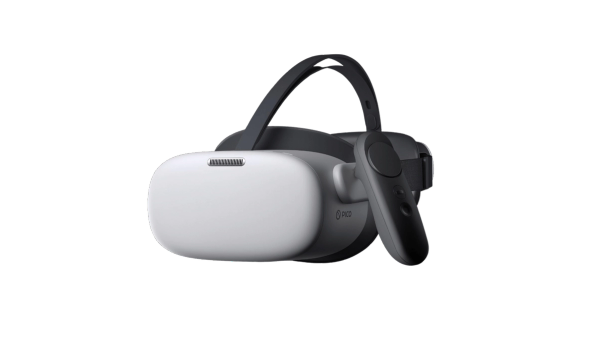
Immersive events: the key to unforgettable virtual reality experiences
Immersive virtual reality experiences are establishing themselves as a key strategy for connecting with audiences in a memorable, educational and emotional way.
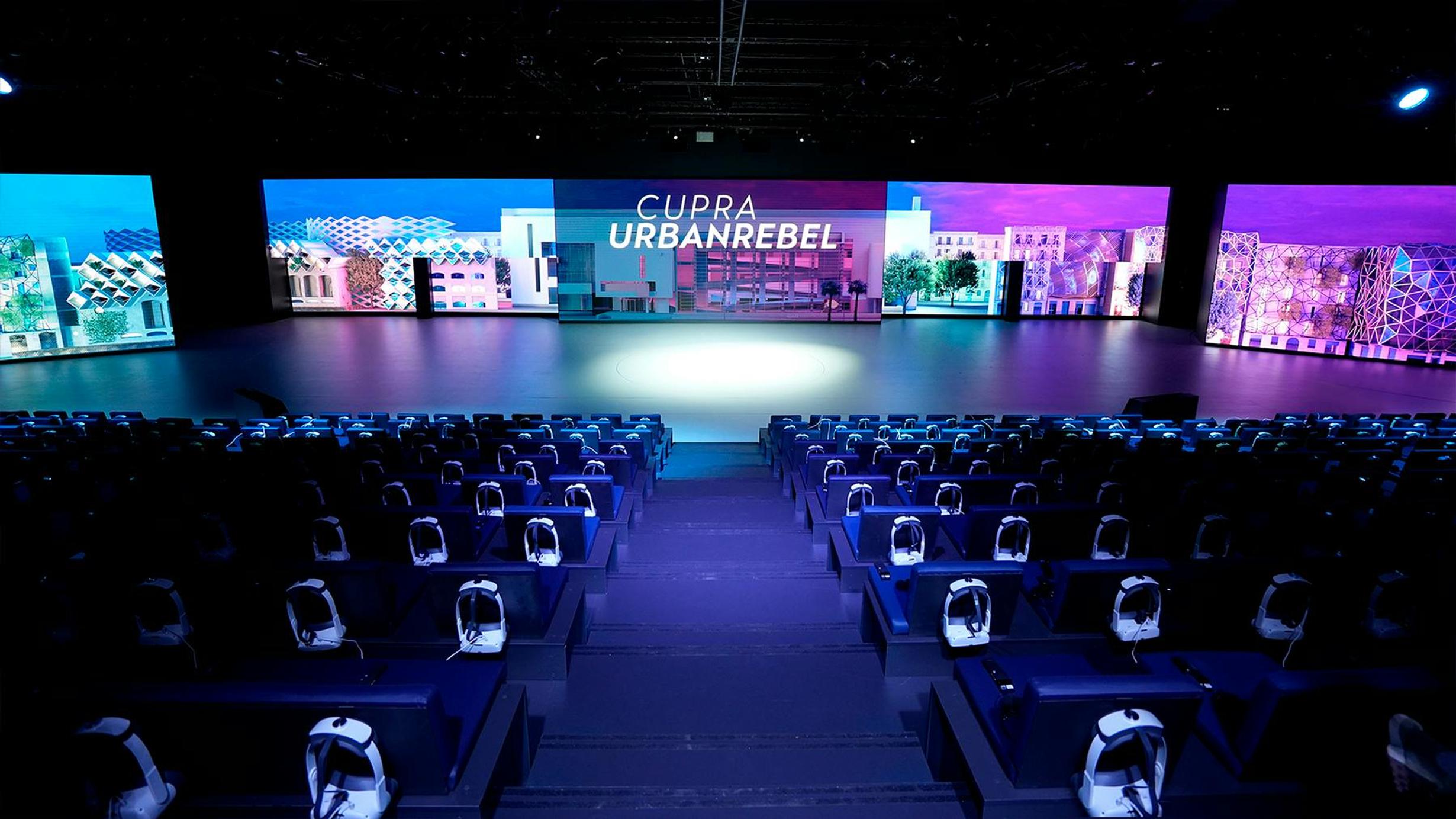
Virtual reality immersive experiences are emerging as a key strategy for connecting with audiences in a memorable, educational and emotional way.
In a world where differentiation is key, immersive events have become a strategic communication and engagement tool. Thanks to virtual reality, it is possible to create events with impressive experiences without leaving the spot, or to experience products and services in a completely interactive way.
In this article we explain exactly what an immersive experience is, in which sectors it has the greatest impact, what benefits it brings and how at INVELON we support companies, centres and institutions in transforming their events into memorable experiences.
What is an immersive experience?
An immersive experience is much more than a simple visualisation, it is a digital creation that immerses users in a 360º environment designed to stimulate several senses simultaneously, offering a deep emotional connection with attendees.
This connection is achieved through the use of virtual reality devices, motion controllers and sensors, which allow the user to interact with the environment actively and naturally, thanks to factors such as interactivity, immersive storytelling and sensory realism.
This emotional and sensory connection not only encourages active participation, but also retention of the message, making immersive experiences powerful tools for many different types of sector.
In which sectors are immersive experiences used?
The ability of virtual reality to create fully immersive, personalised environments has led a wide range of sectors to adopt this technology to solve challenges and boost their objectives.
From education to healthcare, these exhibitions make it possible to explore new ways of connecting with the public, offer practical training without risk or provide unique cultural experiences from anywhere in the world.
Below, we detail some of the sectors where these immersive technologies have a significant impact:
Education and training
In the education sector, virtual reality is used to create simulators and virtual tours that allow both students and professionals to practise skills in a dynamic and safe way.
This is especially valuable in technical or high-risk areas, where practical learning is essential, but the real environment can be complex or dangerous.
Companies and corporations
In the corporate sphere, virtual reality makes it possible to develop simulation environments to train employees in specific skills, operational processes or safety protocols, with a level of realism that significantly improves learning and knowledge retention.
In addition, externally, immersive experiences are used to strengthen brand identity, improve communication with customers or investors and present products or services in an original and effective way. This technology not only captures attention, but also makes complex concepts easier to understand and generates a greater emotional impact.
Marketing and advertising agencies
Immersive exhibitions and virtual reality events offer brands and companies a useful tool for presenting products and services in an innovative and memorable way.
Marketing and advertising agencies can take advantage of it to create impactful campaigns that generate a lasting emotional connection and strengthen brand positioning. In short, virtual reality could be described as the perfect formula for impressing the audience and making complex concepts easier to understand.
Event and trade fair organisers
Agencies that organise events such as trade fairs and conferences can hire our virtual reality headsets to create attractive immersive experiences that capture attendees' attention and improve interaction. This technology is key to turning traditional events into unforgettable experiences.
Tourism and culture
The tourism and cultural sector benefits enormously from immersive experiences, as they allow 360º virtual tours of museums, cities or natural spaces. This makes destinations and exhibitions accessible to a global audience, without any physical or geographical restriction, thus extending cultural reach and the dissemination of heritage.
Healthcare
In the healthcare sector, virtual reality is used to create environments that help reduce patients' anxiety, as well as to train medical professionals in complex procedures safely and in a controlled way. These applications improve the quality of care and continuing training in a sector where precision and practice are key.
What does an immersive experience involve?
An immersive virtual reality experience goes beyond simple viewing. It is a seamless integration of technology, content and storytelling, with the aim of submerging the participant in a completely enveloping environment.
By combining these aspects, an immersive event is created that not only attracts visually, but also establishes an emotional connection with participants, leaving a lasting mark on their experience.
In the case of events, it is crucial to plan several technical and narrative elements to ensure an effective experience:
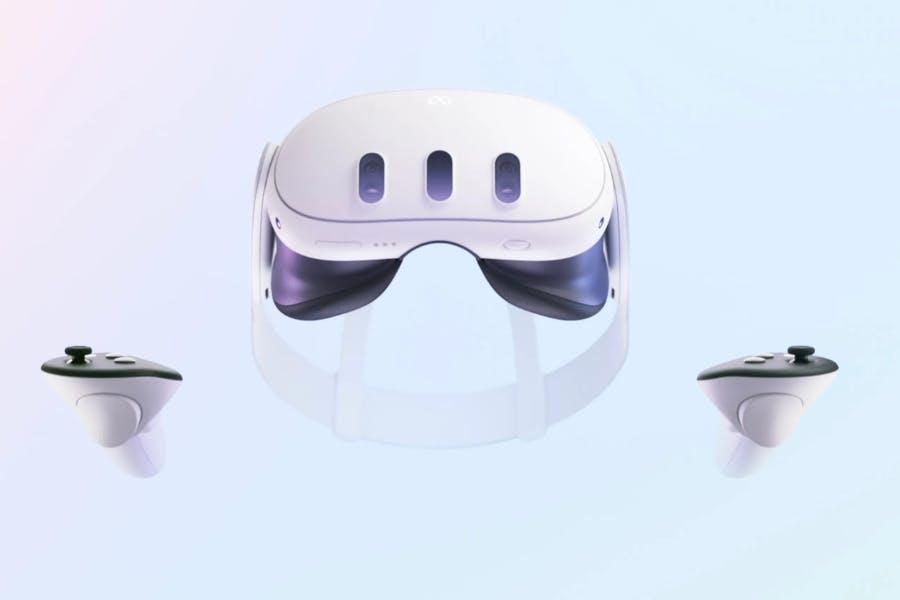
Suitable hardware
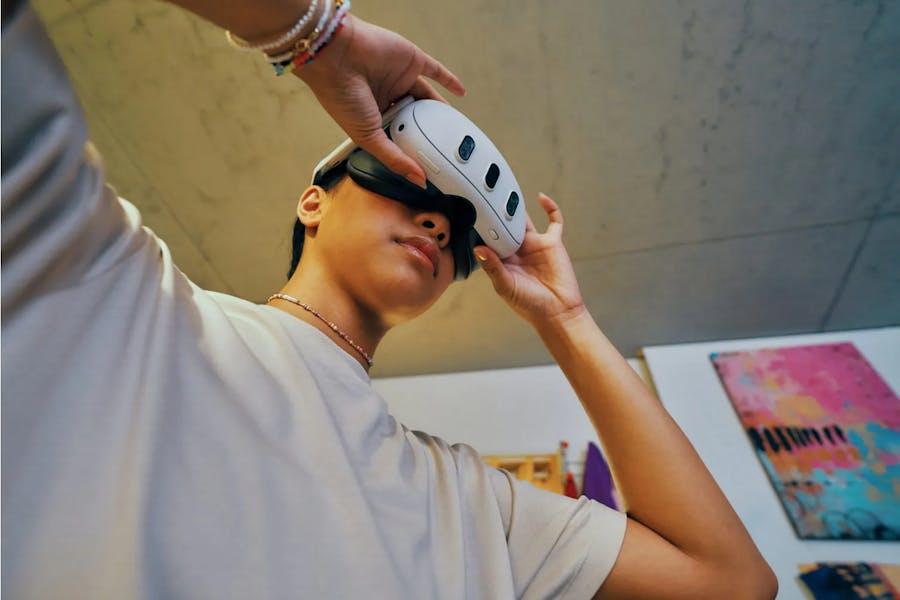
The use of specific devices such as VR headsets or motion tracking systems is essential so that participants feel physically present in the virtual environment.
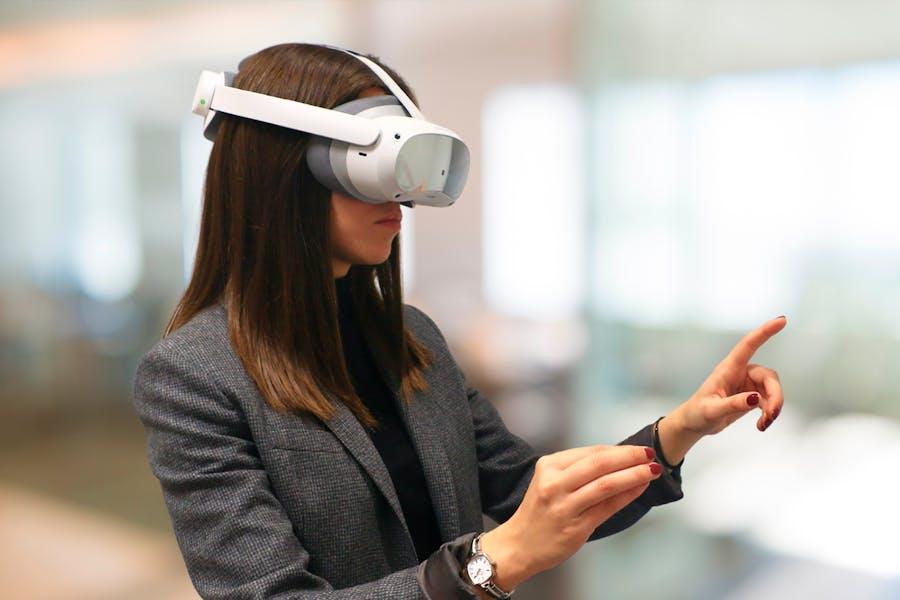
360º visual content
Visual environments must be designed to offer a complete, realistic 360-degree view, allowing users to explore and navigate the space freely and reinforcing the sense of immersion.
Surround audio
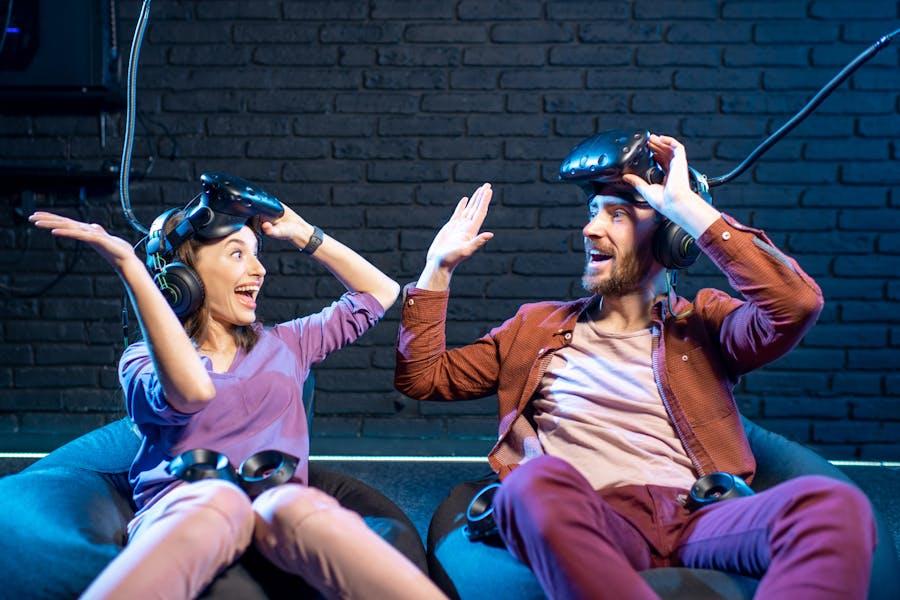
Three-dimensional sound, or spatial audio, plays a key role, providing an additional layer of realism. Sounds must be synchronised with the user's actions and movements, creating a richer, more dynamic atmosphere.
Structured storytelling
A solid, well-thought-out story is what ties all the previous elements together. The narrative must be engaging and adapt to the participant's pace, allowing a deep emotional connection. This not only makes the content easier to understand, but also lets users feel they are an active part of the story they are experiencing.
Benefits of virtual reality at events
Adaptable and customisable
Virtual reality adapts perfectly to the specific goals, needs and characteristics of each event, company and individual. In addition, at INVELON, we offer the possibility of customising VR devices with your own brand image, ensuring that the experience is not only innovative, but also consistent with your corporate identity.
Greater interaction and engagement
Virtual reality experiences are much more than simple presentations. They encourage greater interaction from attendees, as the immersion that surrounds you creates a strong emotional connection, stimulating active participation and continued interest throughout the event.
Retention of the information presented
Thanks to the immersive nature of virtual reality, participants are better able to remember the information presented. Immersive experiences activate multiple senses, which makes for more effective, memorable learning that is etched into attendees' long-term memory.
Accessibility and removal of barriers
Virtual reality makes it easier to access environments that might otherwise be inaccessible for geographical, financial or safety reasons. This makes it possible, for example, to train in complex procedures without having to be physically in a laboratory or a factory, or to take cultural visits to museums from anywhere in the world.
Brand recognition
Using immersive experiences at events not only captures attendees' attention, but also creates a visual and emotional impact. This powerful tool allows you to stand out from the competition and leave a mark on attendees. It will also help to strengthen your brand recognition, attract a wider audience and generate positive word of mouth.
Reduced logistics costs
By integrating virtual reality into events, many of the logistics costs associated with organisation can be reduced, such as transporting equipment, building complex physical spaces or the need to travel to attend an event. Virtual experiences offer a simulation of real environments without the need to travel or to rely on expensive physical elements.
Recommended virtual reality (VR) headsets for events
At INVELON we offer a selection of state-of-the-art virtual reality devices and headsets, designed specifically for interactive events.
We make sure that every experience is unique, smooth and completely immersive, tailored to the needs of each type of event, from corporate presentations to brand activations or educational experiences.
We also make these devices easier to access by offering the option to rent them without the need for a large initial investment. Our rental service includes delivery, setup and technical support throughout the event, so that all you have to worry about is enjoying the experience.
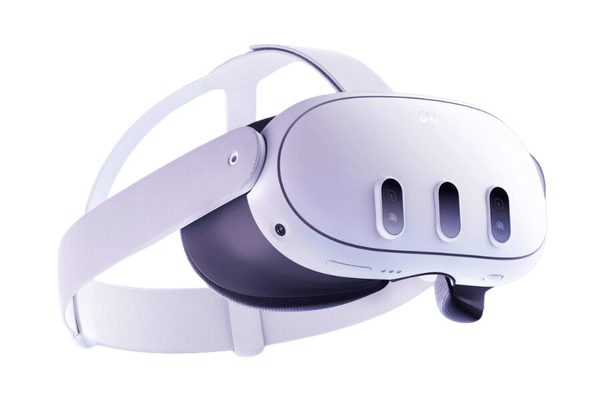
Meta Quest 3
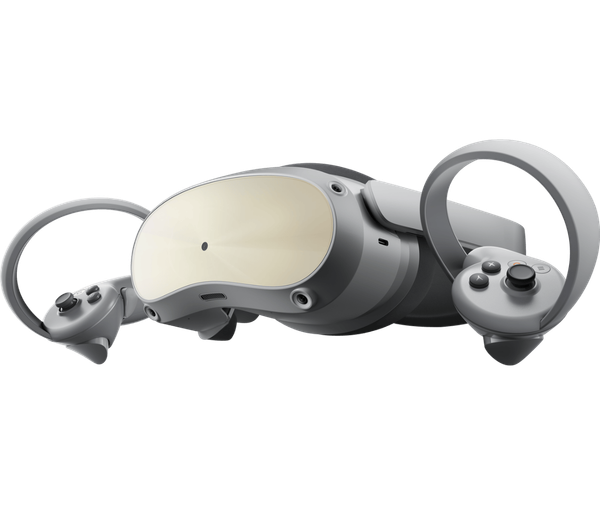
Pico 4 Enterprise