Augmented Reality comes to Google Maps
It is no surprise that Google is betting on adding Augmented Reality to Google Maps, as it is already within everyone's reach today.
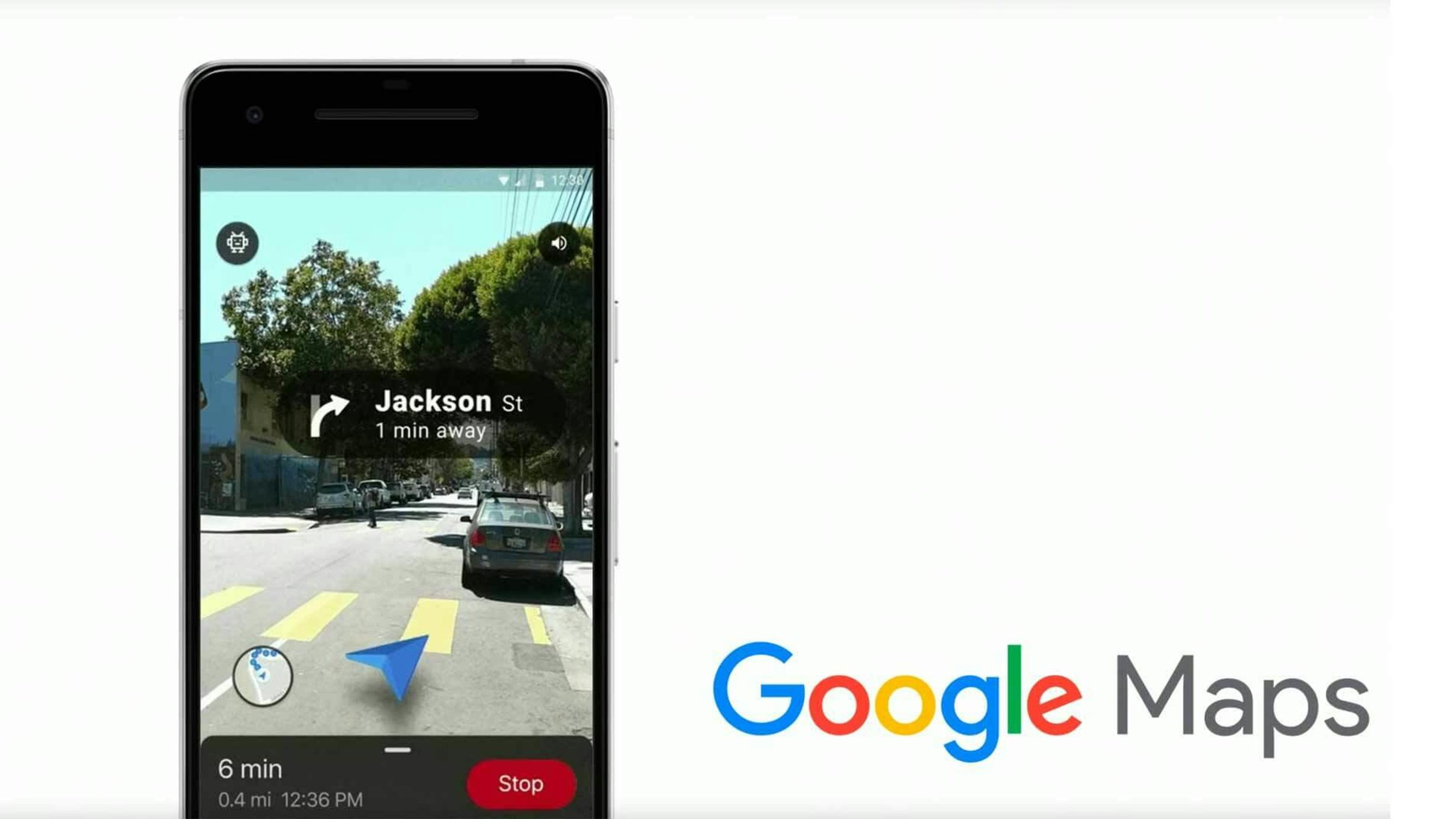
If you keep up with the latest Google news, you probably already know about this. But if not, you have come to the right place: Google has recently added a new Augmented Reality feature to its mobile app “Google Maps”. And at Invelon Technologies, experts in Virtual and Augmented Reality, we are delighted with this news and want you to know how it is used.
It is no surprise that Google is adding Augmented Reality to Google Maps, since Virtual Reality and Augmented Reality are now within everyone's reach. Anyone with a smartphone in their hands may have an app on their device that uses Augmented Reality, such as product catalogues, video games, or even features for measuring the distances and lengths of an object or space. So, how could Google not apply Augmented Reality to an app like Maps?
Google Maps has positioned itself as one of the most widely used map and GPS apps in the world almost since its launch in 2005. In these 14 years, the app has gradually added more and more features: a GPS tool, address search, public transport timetables, street view, live traffic conditions, travel history and usual routes, and even recommendations, photos and detailed information on shops, restaurants, petrol stations and more. And at the last Google I/O conference in 2018, the company announced that it would add a new feature with Augmented Reality to its Google Maps app.
Google Maps adds a new Augmented Reality feature
Although the news that Google Maps will include Augmented Reality in its upcoming updates has been known for some time, only some users of the app have been able to benefit from this new update on their devices.
As the company announced, a first test version was released to Local Guides (users who regularly write reviews, post photos and suggest changes to the places listed on Google Maps), who had the chance to try out the new feature, spot bugs and suggest improvements. And last May, Google announced on its social media that, from now on, both Local Guides and all users of Google Pixel devices can try out this new update to the app.
The aim of this new Augmented Reality feature is to complete the information we are given and make it easier to get from one place to another, with more precise directions that appear on our mobile screen.
More detailed information with Augmented Reality
Most uses of Augmented Reality focus on providing additional information to the user, through electronic devices such as tablets, glasses or mobile phones. With Augmented Reality, we can see more detailed information, in real time and in a more visual and appealing way, which helps us improve our ability to understand, analyse and grasp what is being shown.
What Google Maps now does thanks to Augmented Reality is add information superimposed, in real time, on top of images of our surroundings. Using arrows, it shows us the direction to follow to get on the right path. To do this, the app does not just use GPS; it also draws on the Street View feature and our camera to work out where it is and guide us on the way to the chosen destination. The moving image with the 2D street map that appeared until now still appears on our screen. But with the new feature we can also see real-time directions in Augmented Reality, through the images captured by the mobile phone camera.
Although the Augmented Reality feature in the app is a major technological novelty, it can only be used for walking routes and outdoors. Otherwise, adding the AR feature for driving routes could distract the driver and pose a road safety risk. In addition, to stop users from looking only at the screen and to save some of the phone's battery, the Augmented Reality feature is not available for the whole journey, and directions about the surroundings only appear in specific cases, such as intersections, changes of direction and metro exits, among others, to show the user the right way.
Thanks to its earlier launch with only some users, the Google Maps developers have been able to check how well this new feature is accepted, and it has been very well received. This confirms that the Augmented Reality tool could soon arrive on devices from other brands and manufacturers, although the date is still unknown.
As we can see, new technologies and extended realities (which include Virtual Reality, Augmented Reality and Mixed Reality) are increasingly common and widely used, not only by companies as strategies to improve sales, production or even communication with consumers, but also in our personal lives.
At Invelon Technologies we have always believed that Virtual Reality and Augmented Reality can be within everyone's reach, and that they will soon become a very common everyday tool for improving the information we receive throughout the day, both at work and even in our personal lives. It is now confirmed that Augmented Reality will be part of our daily lives with Google Maps.