
Juan de la Cosa
Discover how we turn history into an immersive XR experience with Santoña's "Revealed Map".
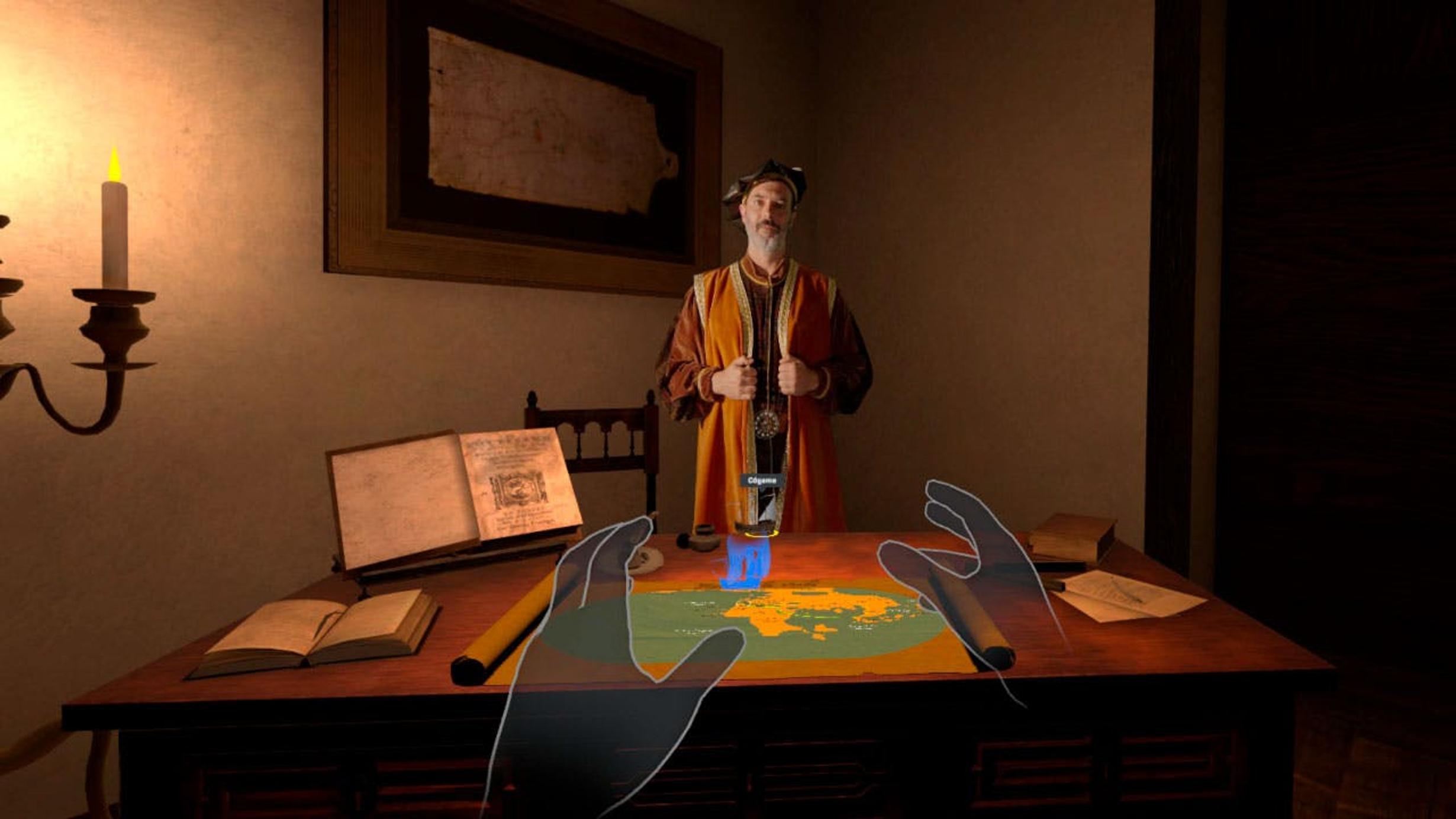
Santoña Town Council (Cantabria) promoted "El Mapa del Mundo: Una experiencia inmersiva sobre Juan de la Cosa y el descubrimiento de América" (The Map of the World: An immersive experience about Juan de la Cosa and the discovery of America).
This project seeks to spread culture and heritage through XR technology, offering an educational and emotional experience to honour Juan de la Cosa, transforming the historical narrative into a new museographic language.
An "immersive historical documentary"
The main need of the project "El Mapa del Mundo: Una experiencia inmersiva sobre Juan de la Cosa y el descubrimiento de América" revolves around redefining cultural outreach and the experience of historical heritage. Its main objectives are:
- Redefine the narrative: Replace the passive museum with an "immersive historical documentary" where users live history, not just observe it.
- Experiential learning: Generate an active sensory experience by fusing historical rigour, emotion and XR technology.
- Technology at the service of heritage: Use Virtual/Mixed Reality (XR) as a universal language to honour Juan de la Cosa and his 1500 world map, uniting learning and feeling.
Our technological contribution
To meet the challenge of transforming historical outreach, INVELON has developed a comprehensive technological solution under the premise of "technology with purpose": innovation is not presented as an end in itself, but as an invisible means that heightens emotion and facilitates universal access to knowledge.
The technical solution is built on four fundamental pillars:
- Places the user inside the story: The user "does not observe history: they inhabit it", becoming a witness and protagonist of the journey of discovery alongside the cartographer Juan de la Cosa.
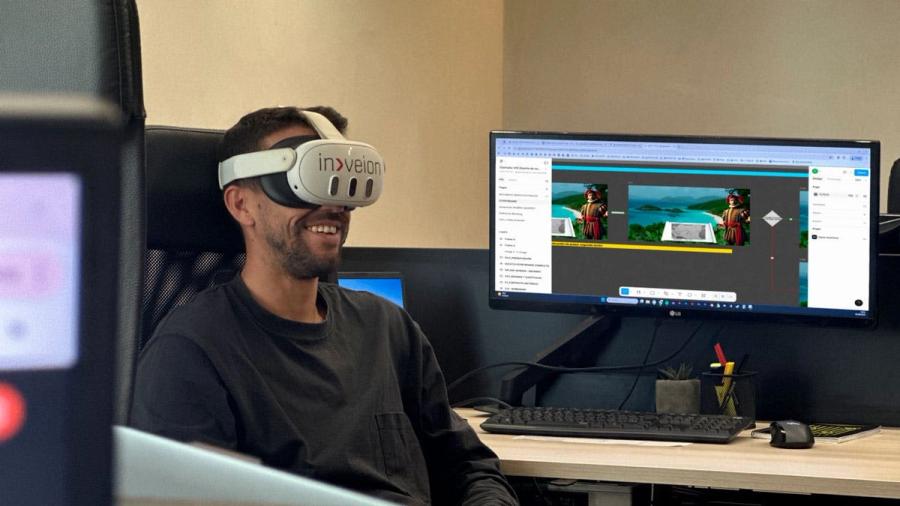
- Hybrid reality: It integrates a modular XR engine that combines Mixed Reality (MR) for the contextual introduction (overlaying historical elements on the user's physical environment) and Virtual Reality (VR) for total immersion in the main acts.
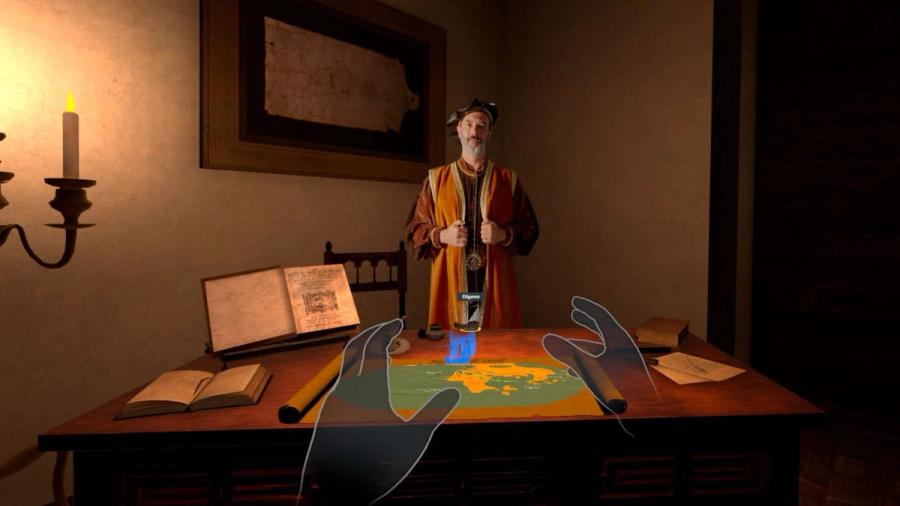
- Natural interaction and contextual intelligence: We eliminate physical controllers through native Hand Tracking. Hand-tracking technology allows intuitive interaction with history (gestures such as pointing or grabbing), making the interface transparent.
- Audio and accessibility: It incorporates spatial 3D audio for a coherent, multisensory soundscape, together with dynamic multilingual subtitles and an ergonomic design for a seated experience that is accessible to all audiences.
Living history and the "Revealed Map"
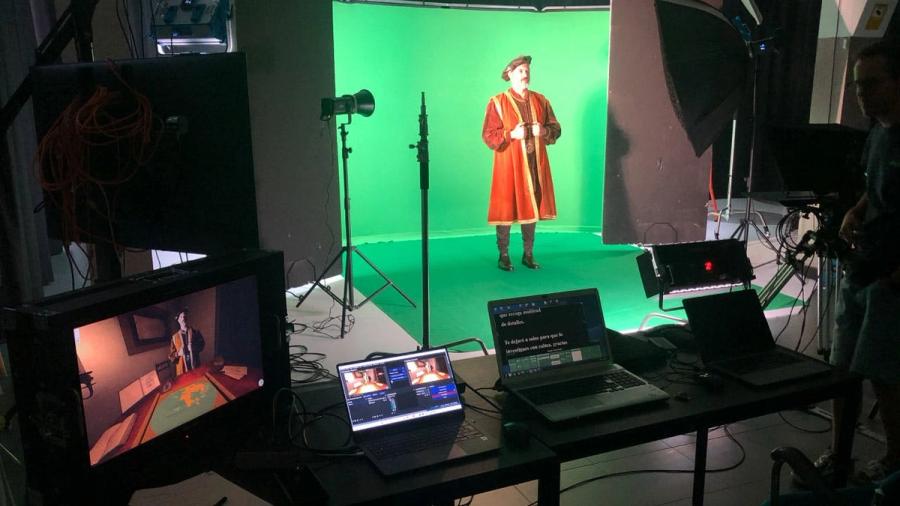
The project is "El Mapa del Mundo: Una experiencia inmersiva sobre Juan de la Cosa y el descubrimiento de América", also combining recordings in a professional chroma key studio, which make it possible to integrate the historical figure into a coherent, rigorous and visually polished virtual environment, reinforcing the sense of presence and the emotional bond with the story.
Its main result and purpose is the redefinition of cultural outreach and historical heritage through XR (Extended Reality) technology, as well as:
- Creation of a new narrative format: The development of an "immersive historical documentary" that fuses rigour, emotion and interactivity, placing the visitor "inside the story" as a witness and protagonist of history.
- Generation of experiential learning: The project turns historical knowledge into a sensory, emotional and educational experience in which the user interacts naturally with the environment (moving ships, pointing at constellations) and relives the process of discovery.
- A new cultural and social paradigm: It establishes a universal, accessible and fluid model of cultural communication that seeks to go beyond the contemplation of museums and connect generations through shared wonder, honouring the figure of Juan de la Cosa and his 1500 world map.
A cross-cutting project
The benefits of the project extend to several areas: education, technological innovation, cultural impact and accessibility. Some of the main ones are:
- Experiential learning through "Assisted Narrative Interaction": Thanks to the contextual interaction design, the user learns by doing. Complex concepts such as stellar navigation or cartography are absorbed by handling objects and taking part in the action. This methodology turns curiosity into active memory, achieving a deep understanding of the historical context.
- Innovation in the restitution of heritage: The project positions the museum as a benchmark for innovation. Beyond visual spectacle, the solution acts as a tool for historical restitution, validated by a scientific committee. It shows how XR technology can recover collective memory with sensitivity, educating without indoctrinating and moving people through shared wonder.
- Connection with collective memory: The project is conceived as an act of historical restitution, paying tribute to the figure of Juan de la Cosa and connecting generations through the shared wonder of discovery.
- Universal accessibility and inclusive design: The experience has been designed to be enjoyed by all audiences. It includes ergonomics optimised to avoid fatigue (seated experience), dynamic subtitles that adapt to the user's vision and an interaction system that requires no prior technological experience. This democratises access to advanced culture, removing cognitive and technical barriers.