
Albalate del Arzobispo
Digital Musealisation of the Castle-Palace: an active dialogue thanks to immersive technology.
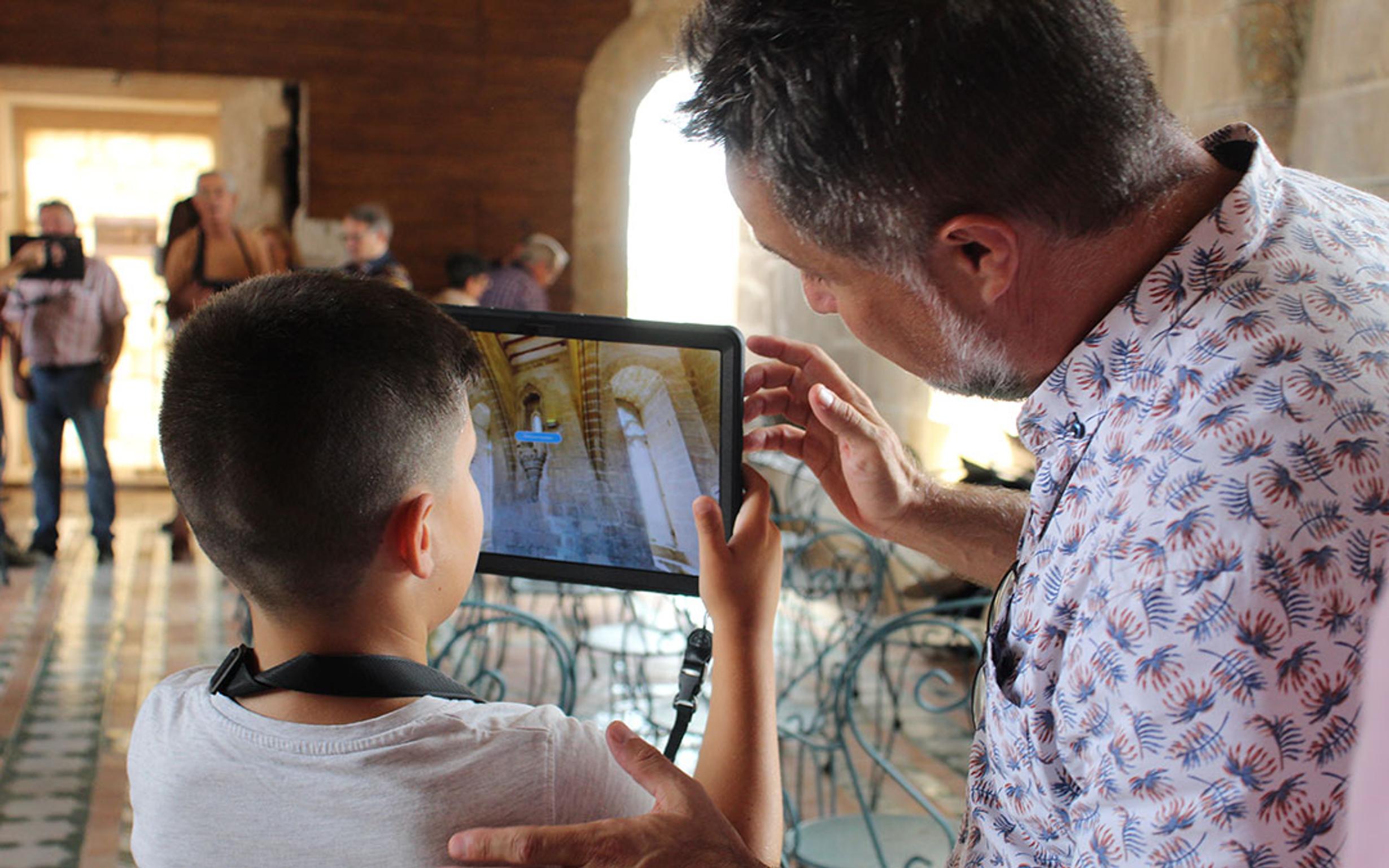
The Castle-Palace of Albalate del Arzobispo is one of the most significant monuments of Aragonese heritage architecture. As a tangible example of its history, it has endured for centuries numerous architectural transformations, structural losses and layered renovations, from its medieval and Islamic origins, through Gothic remodelling in the 14th and 15th centuries, to Renaissance interventions in the 16th century.
This project has been funded by the Just Transition Institute (ITJ) under the Recovery, Transformation and Resilience Plan, aimed at energising and revitalising municipalities affected by the energy transition through digitalisation, culture and sustainable tourism.
Accessible outreach and a less complex visual interpretation
To meet these needs, at INVELON we developed the technical side and the architecture of immersive content for the First Phase of Digital Musealisation.
Creating a digital layer with Augmented Reality, 360º visualisations and interactive content has allowed visitors to engage in dialogue with the Castle-Palace through technology, without replacing or altering its original heritage value.
Among the technological tools developed and deployed are:
Interactive system on digital tablets: Deployment of a guidance and interpretation solution using tablets that accompany visitors on free or guided tours.
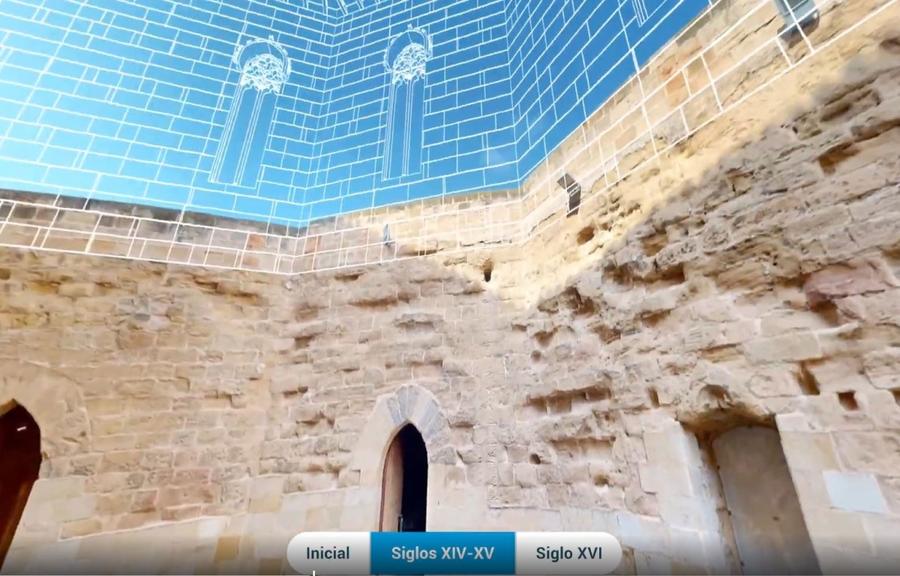
Augmented Reality (AR) experiences: Overlay of 3D models and historical reconstructions onto the castle's real physical surroundings, making it possible to view lost elements (such as architectural components of the chapel or details of interior rooms) directly on the current ruins or walls.
Immersive 360º Recreation: Development of immersive experiences that allow users to "travel" in time from the castle's central courtyard to see the volume and appearance of the palace in its different key periods (medieval period, Gothic transformation and 16th-century renovations).
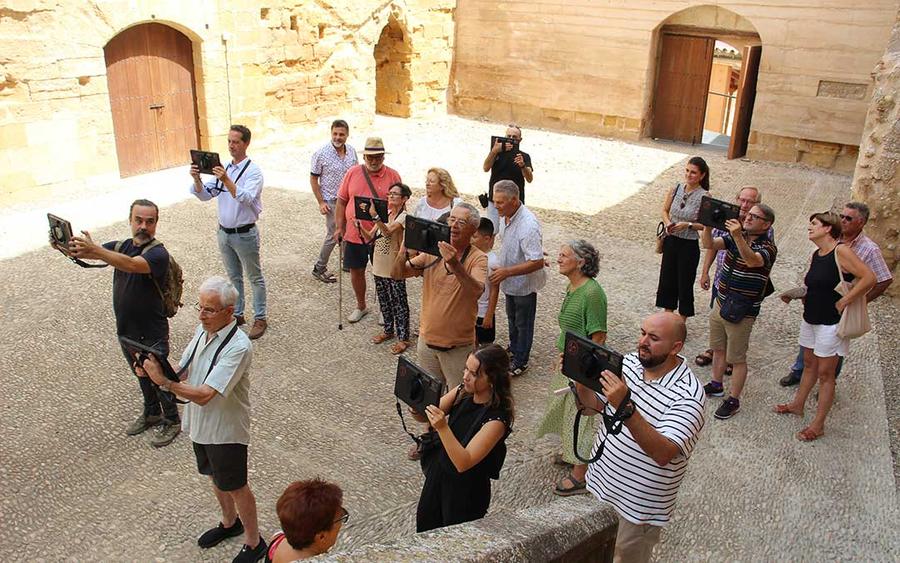
a digital layer that complements the visitor's dialogue with the real architecture
To meet these needs, at INVELON we developed the technical side and the architecture of immersive content for the First Phase of Digital Musealisation.
Creating a digital layer with Augmented Reality, 360º visualisations and interactive content has allowed visitors to engage in dialogue with the Castle-Palace through technology, without replacing or altering its original heritage value.
Among the technological tools developed and deployed are:
- Interactive system on digital tablets: Deployment of a guidance and interpretation solution using tablets that accompany visitors on free or guided tours.
- Augmented Reality (AR) experiences: Overlay of 3D models and historical reconstructions onto the castle's real physical surroundings, making it possible to view lost elements (such as architectural components of the chapel or details of interior rooms) directly on the current ruins or walls.
- Immersive 360º Recreation: Development of immersive experiences that allow users to "travel" in time from the castle's central courtyard to see the volume and appearance of the palace in its different key periods (medieval period, Gothic transformation and 16th-century renovations).
- Production of audiovisual and interactive content: Integration of an introductory audiovisual and digital interaction points that enrich the visit with detailed explanations of the monument's evolution.
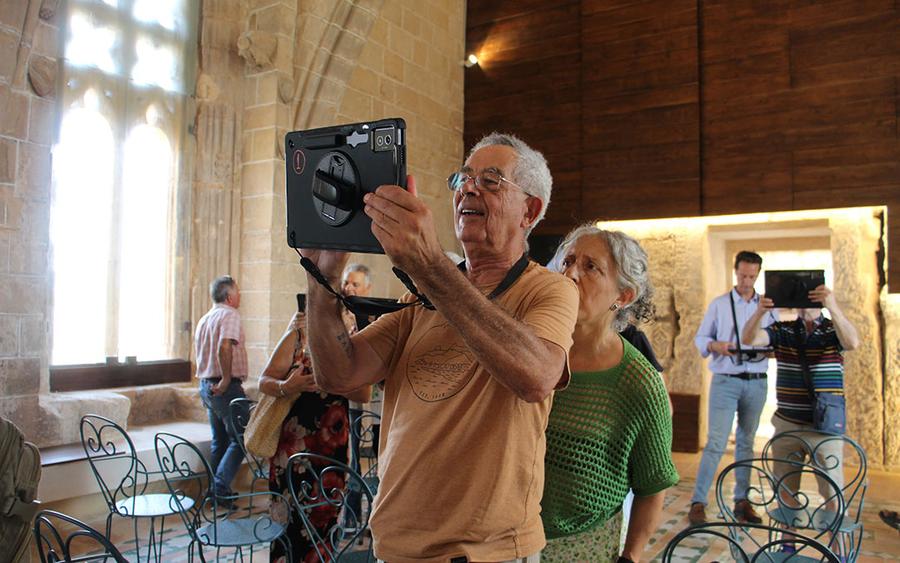
A substantial transformation in the cultural and tourism offer of Albalate del Arzobispo
The project developed for the Castle-Palace has allowed visitors to move from mere passive contemplation to an active, emotional understanding of its heritage and history: characters, anecdotes and experiences that explain the development of the territory and of the monumental building. Visitors do not simply look at walls, but understand what happened in each era and what the castle was like at its height.
Translating the archaeological and documentary evidence into the language of 3D and audiovisual media, while maintaining the highest scientific fidelity, was a real challenge. Constant technical demarcation work was required to clearly distinguish historically verified elements from visual interpretative hypotheses. This project has shown us that immersive technology (VR/AR) can fit perfectly with scientific rigour, and that the two can join forces to revalue heritage in many municipalities.
In later phases of the project, we plan to develop a permanent videomapping system on the main façade, an immersive virtual reality room, smart signage and advanced audio guides.