Virtual Reality to escape lockdown
How can Virtual Reality help us escape lockdown? Has the COVID-19 pandemic helped the VR industry to resurge?
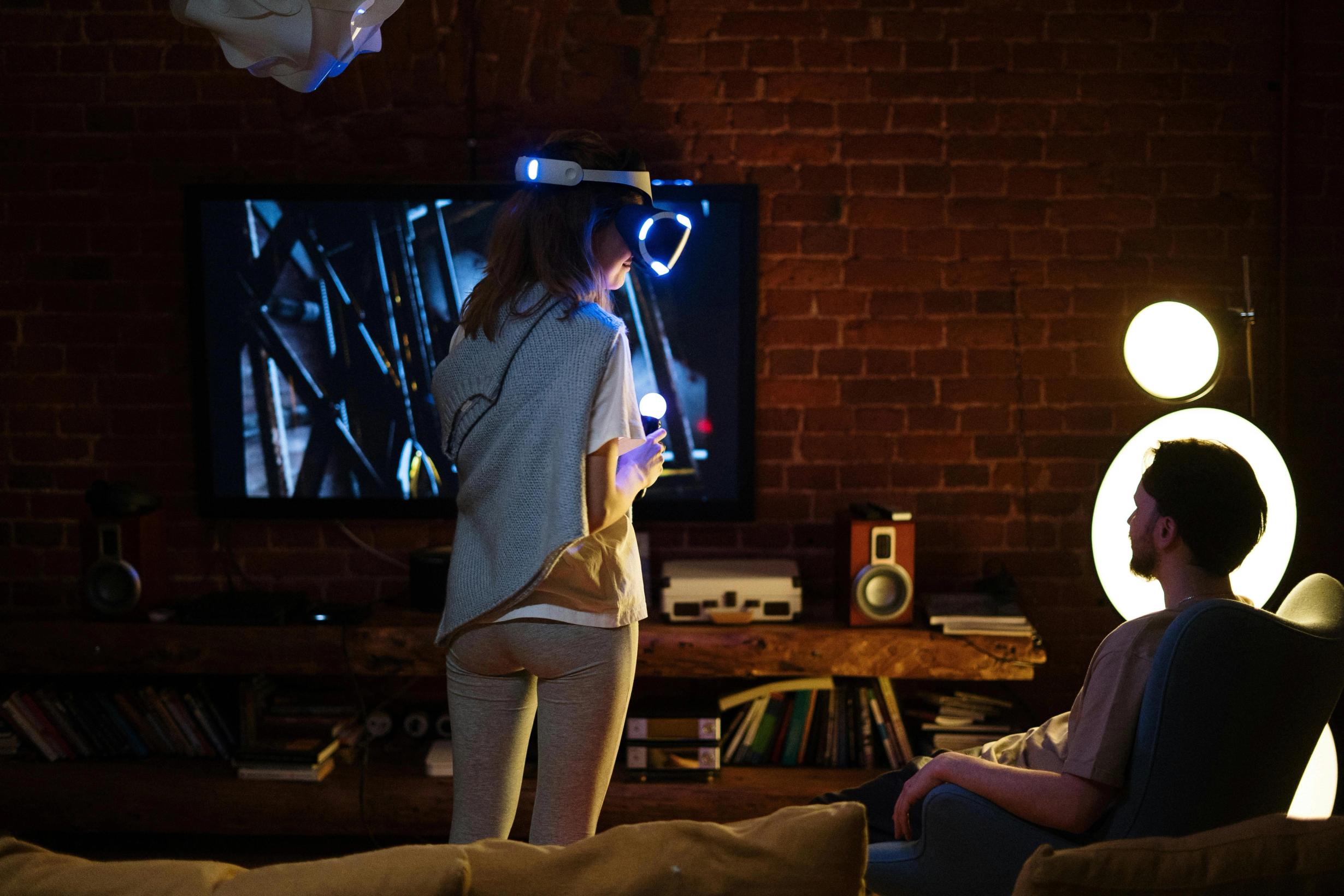
How can Virtual Reality simulations help us escape lockdown? Can the problems arising from social distancing be tackled? Has the COVID-19 pandemic helped the Virtual Reality industry to resurge?
These and other questions are what we are going to try to answer throughout this article, which will focus on how Virtual Reality has helped us escape lockdown and has served, in many cases, as a way of escaping from everyday life. We will also see how this industry has seen a genuine explosion in its use; indeed, since the pandemic, interest in Virtual Reality has increased notably, a technology that is here to stay.
How is Virtual Reality being used during the COVID-19 pandemic?
Confined to our homes, most of our social relationships live in our imagination. We have turned to the internet, video calls or immersive experiences in Virtual Reality to send our brain to another place, even though our body remains sitting on the sofa in our living room.
Indeed, the COVID-19 pandemic started a forced change in our lifestyle, half the world found itself in “quarantine” and social distancing. But the fact that the world's population stayed confined to their homes for weeks has become an opportunity for the Virtual Reality sector.
And, although until now the adoption of Virtual Reality at home had been modest, many people now use Virtual Reality headsets to play games, meet up with friends, attend concerts or even work remotely. This has led to a new resurgence of this technology, which is constantly evolving.
• 360º tour
Being confined made certain tasks impossible that we used to do without a problem, such as visiting a flat to rent it or choosing a school for our children. In the latter case, Virtual Reality has played a fundamental role during the COVID-19 pandemic; thanks to 360º Tours, open days have been held while respecting social distancing. This is the case, for example, with the tour of the Aula Hipàtia at the Cor de María Valls school, one of Invelon's case studies.
• Remote working
Virtual Reality has been advancing little by little and has gradually been introduced into the working routines of different sectors. But the obligation to stay at home, because of the state of emergency, led to an increase in remote working and, with it, the integration of innovative technologies. In fact, Virtual Reality solutions can help us implement remote working and keep up our usual productive pace. The collaborative and interactive working environments it offers are valid for practically any type of company. These are technologies capable of adapting to the specific needs of different teams
• Concerts
Since lockdown, various bands have given concerts in Virtual Reality; such as the Finnish duo JVC, which had 150,000 attendees, and Travis Scott's massive tour through the video game Fortnite, which more than 12 million people attended.
• Visits to museums or monuments
One of the most immediate effects has been the digital acceleration of all sectors, including that of cultural and artistic heritage. So much so that we can now find virtual visits to some of the world's leading museums: such as the Virtual Tour of the Sistine Chapel or the Virtual Visit to the Thyssen-Bornemisza National Museum.
• Travel
Virtual Reality helps to maintain interest in destinations in the context of COVID-19. This tool is used to promote tourist destinations. It allows tourists a sensory immersion and to be the protagonist of the experience, breaking down the barriers of time and space. In addition, the world of simulations allows us, as a leisure activity, to travel from home.
• Leisure and video games
The video game platform Steam announced that the Virtual Reality devices connected during the pandemic grew by more than a million. This is because Virtual Reality offers interaction as well as fun. During lockdown, video games have also served as a tool for socialising, being together and striking up conversations. Another application that has joined Virtual Reality as a leisure option is YouTube which, through YouTube VR, makes it possible to find 360º videos and immersive content.
What will happen to Virtual Reality in the post-COVID-19 era?
We have various Virtual Reality solutions that will help us face new types of social interaction that, in many cases, cannot take place in person. But, far from presenting it as an obstacle, it should be seen as an opportunity for immersive technologies, which will be able to shine and offer their full potential.
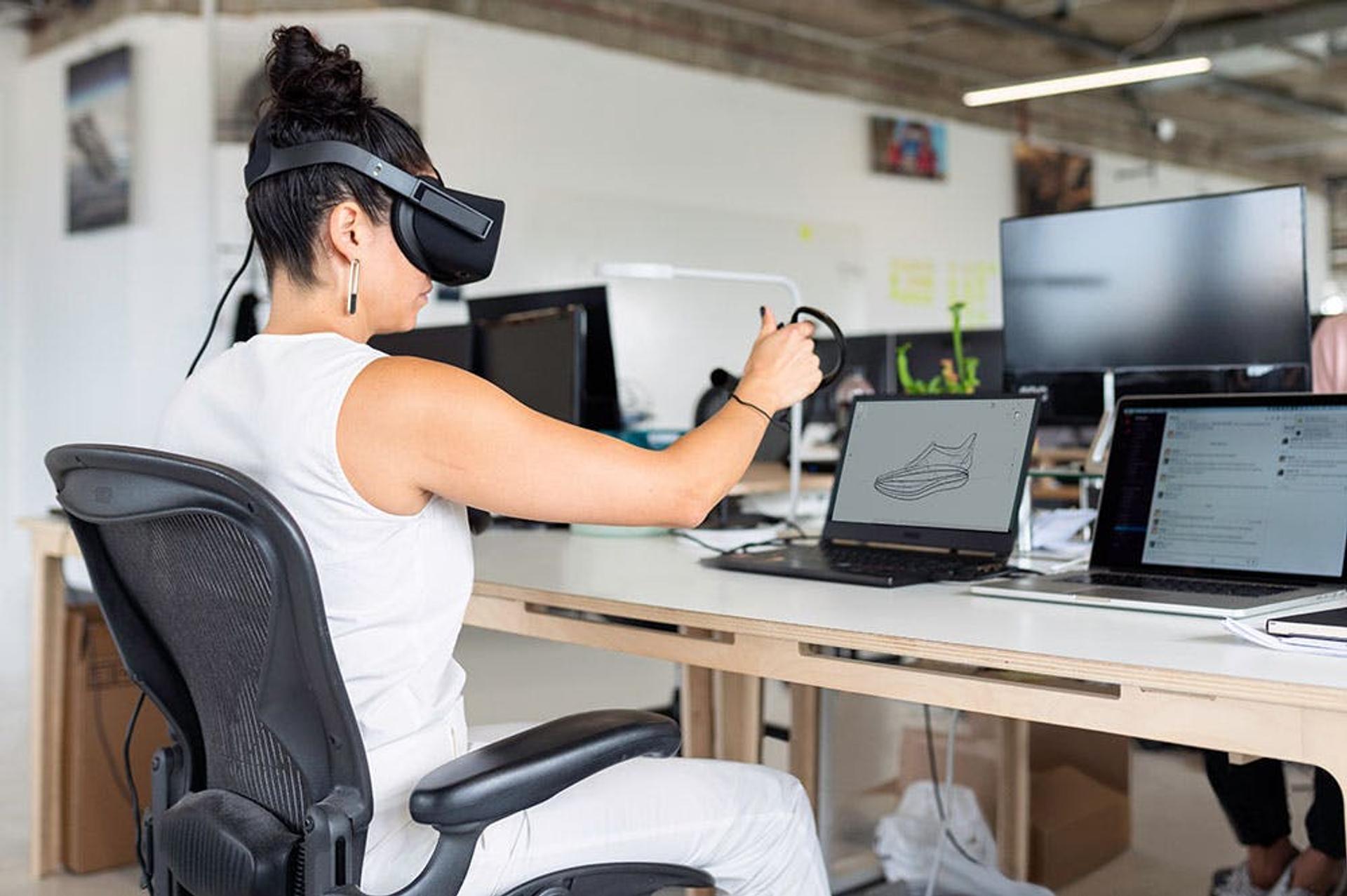
Let us therefore look at some of the fields or applications of Virtual Reality that will be positively affected after the COVID-19 era:
• Marketing
Marketing plays a fundamental role in reaching users in a much more realistic and immersive way, bringing multiple advantages, such as showing the product or service better and a better user experience which, in some way, helps position the brand in the consumer's mind. At Invelon we create virtual catalogues, product configurations or even demonstrations for different companies. This is used to show the customer the product and let them get what they want in a personalised way, through a totally realistic experience.
• Communication
If a video call already represents an important advance in interpersonal communication, we can say that the next revolution is the implementation of Virtual Reality technologies. These can offer more immersive relationships and thus enrich the experience by bringing the people taking part in the meeting closer together.
• Training and education
Although the sectors that can benefit from Virtual Reality are very broad, one of those that can get the most out of it is training and education. In this case, it can be extended beyond secondary schools or universities, and we are also talking about training for workers. And the improvements are notable, since by using Virtual Reality students learn 4 times faster, are 4 times more focused and, in addition, have much more confidence in their personal abilities.
• Leisure
Lockdown and COVID-19 have changed the way we have fun for ever; although interpersonal relationships and classic leisure will not disappear for ever, the use of new technologies to have fun and socialise will become normal. Virtual Reality brings a great advantage over other types of multimedia leisure: interaction.
In short, Virtual Reality has found a crack in the COVID-19 crisis to show that it has a lot to offer and that it is the solution to many of the situations we are now living through. In the post-COVID-19 era we will have to adapt to new situations and new ways of interacting, which will lead us to use immersive technologies.