Virtual Reality and Augmented Reality in cultural heritage
Virtual and Augmented Reality are two key components in the promotion of cultural heritage, improving the user experience and satisfaction.
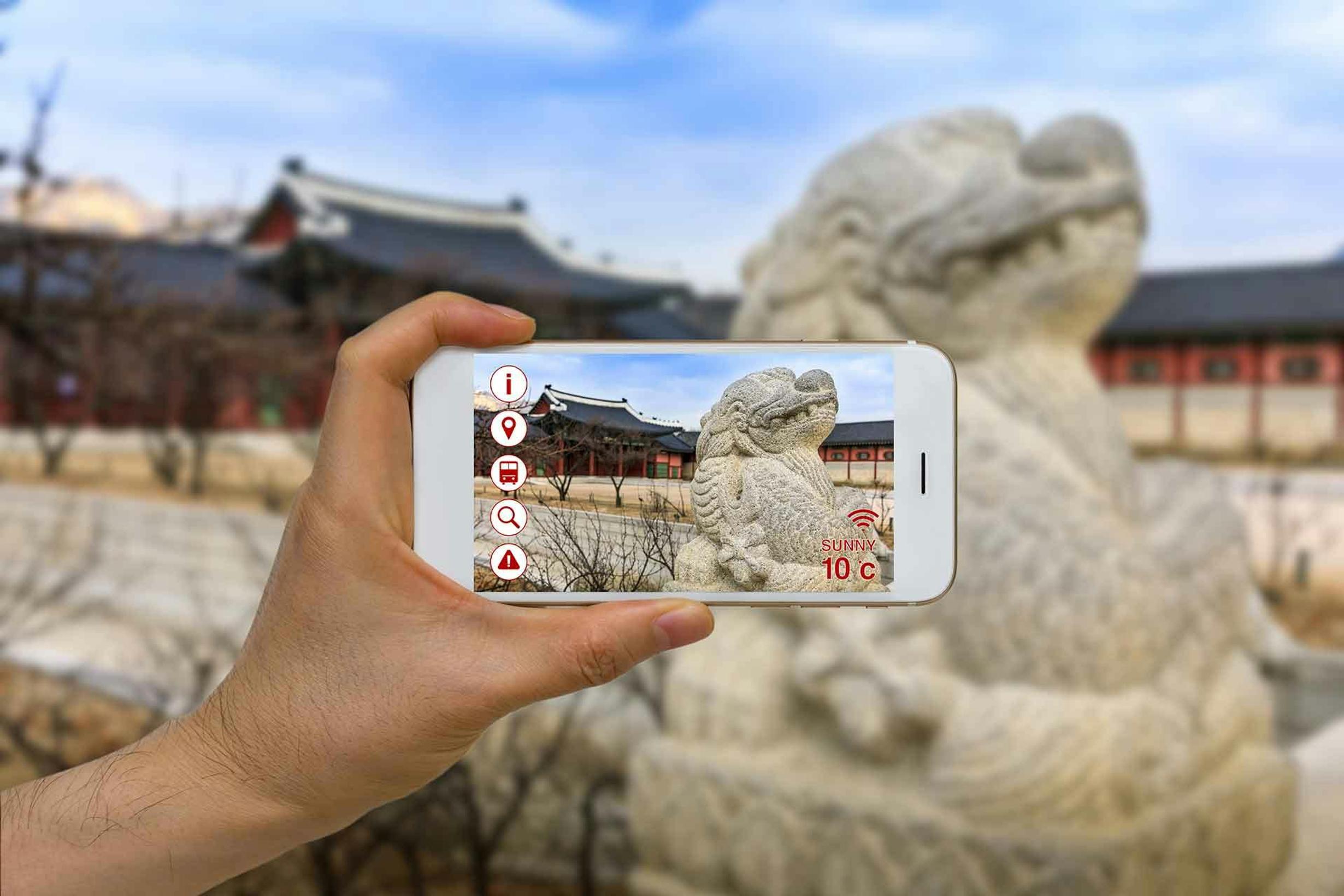
New technologies continue to offer functionality in different fields, and one of them is cultural heritage. You can find many interesting uses of Virtual Reality (VR) and Augmented Reality (AR) in this area. For this reason, at INVELON Technologies we would like to explain how these resources are currently being used.
How are Virtual Reality and Augmented Reality used in cultural heritage?
Although the possibilities are many, in the case of cultural heritage there are three particularly interesting uses of Virtual and Augmented Reality.
- Architecture show-reel: this is a specialism that lets you visualise what the different parts of a building would look like. In the case of heritage, it becomes especially significant, as you can see the construction from the inside, how it used to be, and get an exact idea of how the architectural style worked. It is a solution that can be delivered with Virtual Reality and especially with Augmented Reality, and it is a technique widely used in many sectors that is also easily adaptable to historical heritage.
- Representation of historic monuments: a milestone within virtual reality. There is an immense number of monumental historic spaces of which we can obtain a recreation but which we can no longer see in reality. From the Greek cities to ancient Rome, today technology and knowledge allow us to completely reconstruct this type of structure. It is therefore possible to create a virtual reality, and an augmented one too, in which visitors can see what life would have been like in those spaces. A particularly interesting immersion method or system.
- Visualisation of non-existent information: augmented reality, by allowing you to combine the environment with other kinds of virtual images, can be the key to presenting information in a different way; a much more interactive one. Imagine, for example, that you are at an exhibition and, thanks to an augmented reality device, you can see the informative text right next to the objects you are looking at. And this would be a resource that would not only serve for text. You can supplement, at any time, the information that is already there with other kinds of data or images that are related and useful.
Benefits of Virtual Reality and Augmented Reality for cultural heritage
We know that there are various Augmented and Virtual Reality solutions that can be applied to cultural and historical heritage. But what advantages does the use of new technologies bring to this sector?
- Modernisation of information
The presentation of heritage is brought directly into 21st-century methods. And using new technologies means information is presented according to the criteria of the new formats. This is of great help when presenting information, which can be more relevant and complete thanks to Augmented Reality. It will also be well received by the public, who are already beginning to get used to this kind of system and convenience.
In addition, Augmented Reality in cultural heritage opens the door to better work. It is important to seek modern approaches to presentation that can complement the more classic ones. In this way, the venue will earn a name for itself and gain a certain status. - Greater public interest
Nowadays, the public is used to consuming information in a much more interactive way. Therefore, including this kind of solution or resource will make them much more interested. After all, these can be tools that impress easily, that connect with all audiences and that present information more quickly, arousing great interest among the public. - Dynamism
The classic exhibition formats made up of only text and a piece of material are finally coming to an end. Now different avenues can be explored to present a much richer and more interesting exhibition. The more tools or methods you have, the better. That way you will show the information accompanied by the resource that works best in that context. For example: if you are going to talk about great spaces of which nothing is left standing, virtual reality can present them to the public: that way spectators will see the place instead of having to imagine it. On the other hand, if you have some of the elements of demolished buildings, you can add the option of viewing the intact constructions of those buildings through Augmented Reality. In this way, the pieces will take on meaning and the public will be able to understand everything more immediately. - Better information
Reading about an ancient building and the materials it was made with is not the same as seeing it. Likewise, reading about the old quarters of cities will not be as impressive as taking a walk through those areas. What is visual always stays etched in our consciousness in a more lasting, more spectacular way. Therefore, in the field of cultural heritage it is useful to introduce new technologies to present it in a much more attractive way.
Other applications of Virtual Reality and Augmented Reality in the world of work
In a very similar way to what has been explained, in other sectors such as architecture or design, advanced information visualisation and even in terms of training, protocol and risk prevention, Virtual Reality can be especially useful. Before embarking on a building work or a project, clients can check what results are on offer and what the final appearance of the proposed idea will be.
Augmented reality, meanwhile, is gaining a strong foothold in the world of museums, catalogues, and even in warehouse management and industrial maintenance. In these sectors a new paradigm has emerged that seeks to unite physical and virtual reality, and the technological option offered by augmented reality seems the most advisable.
In conclusion, virtual reality and augmented reality can be two excellent tools for cultural heritage. They energise, entertain and present information in a much more dynamic, functional and entertaining way. Moreover, these new technologies are already well established in other work sectors. Now that you know the advantages, why not start applying them in your business strategy today?