How immersive marketing with Virtual Reality helps you win customers
Immersive marketing wins customers remotely thanks to Virtual and Augmented Reality.
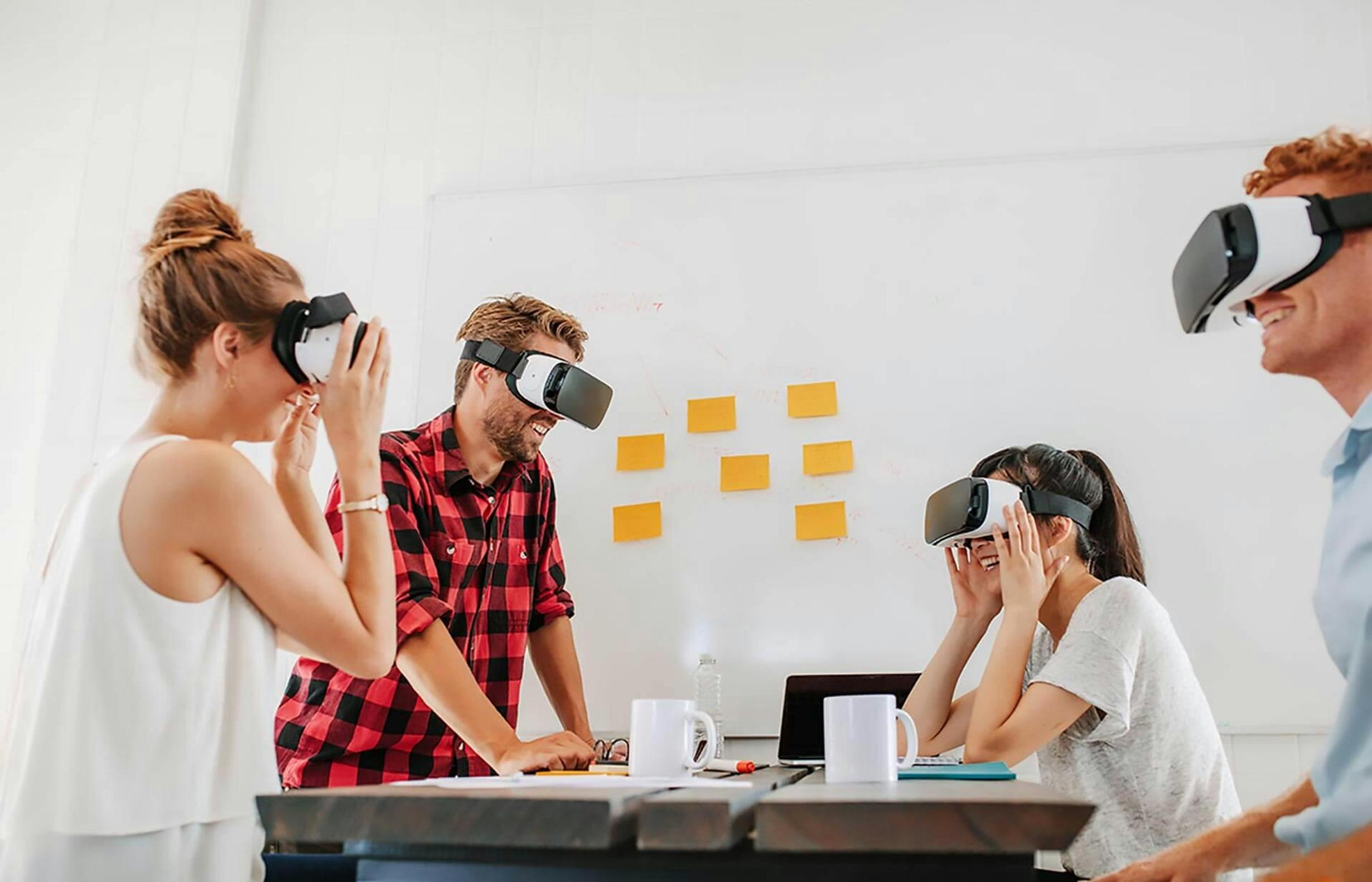
You no longer need to have a product in your hands to be able to feel it, to take it to a presentation or to bring it on face-to-face visits to your clients; there is no longer any need to worry about logistics and operations to bring machinery or equipment to your trade fairs… How? Thanks to Virtual Reality and Augmented Reality, it is easier for brands to reach potential customers and hook them with the merits of their products without having them there in person. Many have already signed up to this new trend known as immersive marketing (or Virtual Reality Showrooms). We explain what it involves and why you too should consider using it.
How are Virtual and Augmented Reality used in marketing?
Every company may have multiple reasons for incorporating Virtual or Augmented Reality into its marketing strategies, but they all share a common goal: winning customers by giving them a new experience that is more visual, more immersive, and easier to understand and remember. What is sought is a new way of showing the product, one that can more easily capture the attention of potential buyers. And the options that Virtual Reality offers us in this respect are many:
- Seeing and getting to know a product without having it there in person.
- Entering the virtual exhibition room, exploring the environment and configuring its elements.
- Customising interfaces to navigate between different virtual spaces.
- Viewing a summary of the order or selected product.
- Modifying a product's features until finding the ones that best suit.
- Changing the type of light and the time of day in the virtual setting to see different combinations of the product under different lighting.
- Adding specialised high-definition sound, allowing users to feel even more a part of the virtual space.
The benefits of Virtual and Augmented Reality in marketing
Having seen all the possibilities, it can be confirmed that applying these technologies to marketing campaigns, the organisation of trade fairs, events or other strategies for getting known offers numerous benefits for companies. Among them, the ones we set out below stand out.
- Improving brand awareness
By using virtual and augmented reality, brands manage to offer customers and the media a novel experience. Bear in mind that the element of surprise also makes you more interested in that brand. The information offered is simpler. Regardless of our knowledge of the subject, we as an audience will better understand how to use the product, the practical examples and other information that companies want to convey. Surprise and more accessible information mean that customers can better remember everything you explain in that content. As a result, 360 videos achieve a much greater impact than traditional advertising. - Greater engagement and shopping experience
As a customer, you become the protagonist in campaigns that use these technologies. In this respect, Virtual Reality provides a radical shopping experience in the form of a Showroom that takes buyers out of the ordinary and places them at the centre of the buying process in a flow of immersive, colourful and exciting emotions. People will therefore feel more attached to the brand, experiencing first-hand the virtual tour or the benefits of using the product being offered to them. The fact that advertising is experienced physically also means a stronger bond with it, with an advert seen through Virtual or Augmented Reality being remembered sooner than with any other, more usual format. - Standing out from the competition
Different campaigns so that you are seen as a different company. Virtual content is much easier to make go viral, as it is still little used and continues to surprise. One of the reasons is that it is a new tool for digital marketing and few departments dare to apply it (or lack the resources to do so). - Creating exclusive messages
As consumers, we feel much closer to messages if we receive them through augmented or virtual reality, because they are much more exclusive. This is new content and, in general, of high quality, which leaves no one indifferent. It is a new formula for your sales team and distributors, who can have a very powerful tool when it comes to presenting products. - Post-purchase evaluation
One of the great challenges of marketing was being able to analyse customers' sensations after they had used a product. That is why you are increasingly asked to leave comments or answer feedback surveys for the brand. With Virtual and Augmented Reality, those emotions and feelings can be known before the moment of purchase, since we as potential consumers try the product before taking it home. - Recreating all kinds of scenarios
Thanks to these highly innovative technologies, we will be able to recreate all kinds of scenarios. The Virtual Reality Showroom interweaves a visually realistic interface with motion design with 3 or 6 degrees of freedom. The result is a multidimensional signature brand and product experience that you can see and feel. In this way, Virtual Reality becomes a very suitable marketing weapon for any type of company, regardless of the sector they work in or where their offices are located.
How do brands use these new technologies?
Although the use of Virtual Reality and Augmented Reality is relatively recent in marketing, we can already find some examples of brands that have committed to these technologies:
- Jamón de Teruel
Aire Sano Experience is the way in which those responsible for this designation of origin present one of the star products that Spain exports around the world. It is a space located in La Puebla de Valverde that lets you get to know, feel and taste Teruel PDO ham. In its facilities you will find an interactive museum, a restaurant and a shop for as complete an experience as possible. - XC90 Test Drive VR
Volvo is betting on virtual reality to offer you the driving experience of the XC90 SUV. If you do not have a dealership nearby, simply by downloading an app on your phone you can take this high-end car for a drive through various landscapes. - Oreo, a biscuit with a 360 flavour
The “vault of wonders” opens on your device so that you can explore it. In this way, you can get to know and be the protagonist in the world of Oreo, a land full of rivers of milk where life-size biscuits live. - Samsung VR takes you to the Moon
This is a project developed in collaboration with NASA. The user is hung from a harness and dressed in a flight suit while wearing Samsung's VR headset. It is the closest feeling to taking a walk on the Moon that you will have on Earth.
As you can see, despite its recent arrival in marketing, virtual and augmented reality have already given rise to campaigns that surprise any type of consumer. Immersive marketing is increasingly present and can become an incredible advertising weapon. How do you think you could apply it in your company?