Virtual Reality and Augmented Reality, also present in tourism
Tourism already applies Virtual and Augmented Reality strategies to win over users, increasing interaction and offering visual communication.
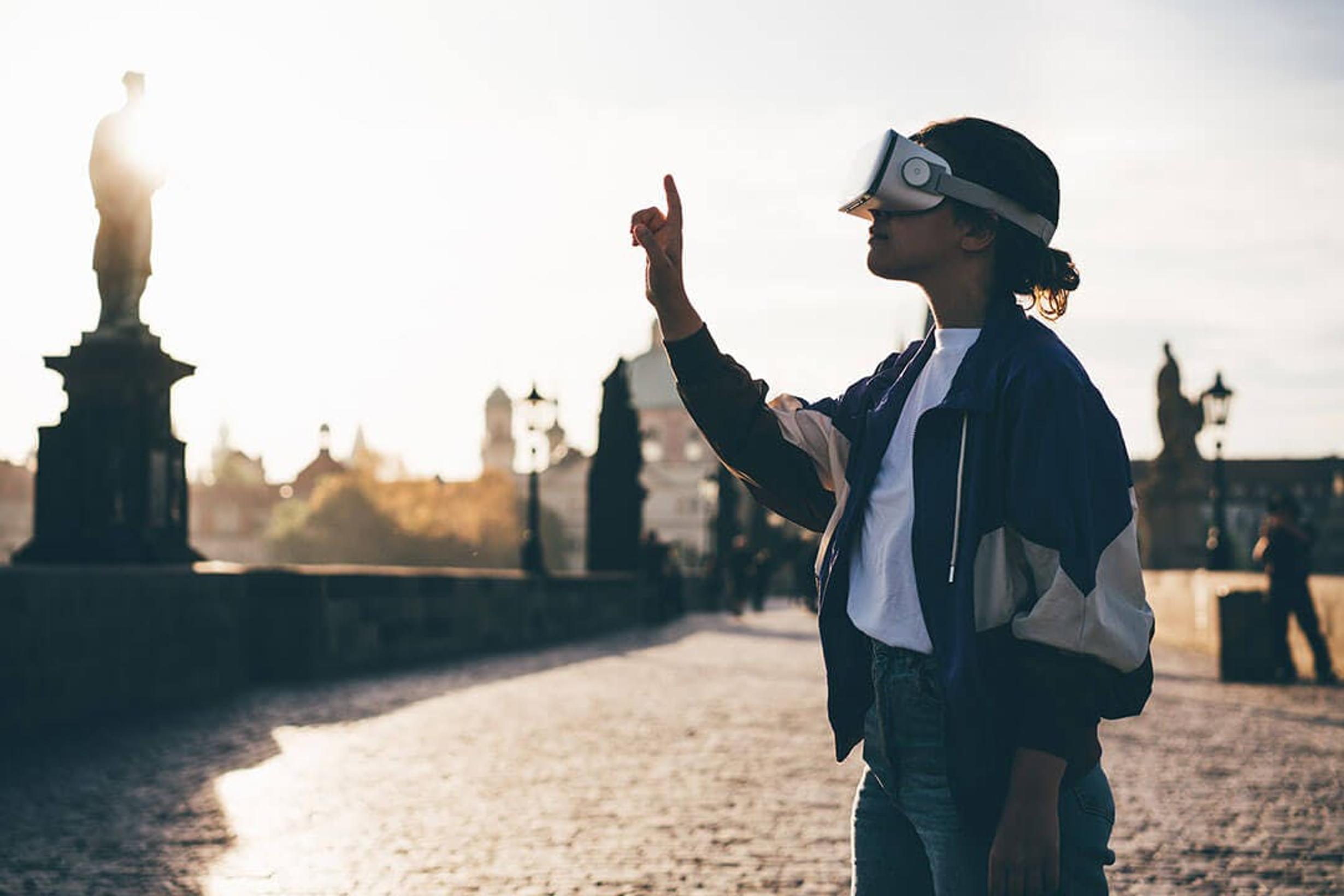
Technological innovation has gone through many changes over the years, from the first websites in 2000 to today's new technologies. And we can all come across, without realising it, cutting-edge technologies not only in our working routines, but also on our holidays and in our leisure spaces.
A clear example of how new technologies are already part of leisure spaces is tourism: a sector that has begun to apply Virtual Reality and Augmented Reality strategies to win over its consumers, increasing interaction between tourist and agency and offering more groundbreaking, visual communication that leads us to new experiences.
Tourism strategies with Virtual Reality
With Virtual Reality, tourists can step straight into the facilities, cities, spaces or places they want. They can visit the rooms of a hotel before seeing it, tour a cruise ship, take in the views of a particular area, walk around any place in 360 degrees, and so on. It is possible to be fully immersed in any part of the world, even the most distant places, giving users the chance to reach unfamiliar places, find out more about them and be transported to new experiences.
Virtual Reality headsets are the star product for this kind of example, where tourists can step into a new world in which what is presented to them is simulated almost realistically before their eyes. And once they have checked and confirmed that they like their destination through Virtual Reality, they can get an idea of, and better understand, the experience they might actually have in person.
Tourism strategies with Augmented Reality
With Augmented Reality, tourists can learn more, and better, about the areas, spaces, works, routes or events where they find themselves. Information is power, and augmented reality applications help travellers plan, organise and enjoy their trip by having the information they need for it. Users can access the information they need at the moment they need it, and even in the language they need, avoiding language barriers and without having to wait on a tour guide to give them the explanation.
In these cases, we only need our phone or mobile device to download the specific app and start using Augmented Reality to see what life used to be like in the place where we are now, find recommended restaurants, shops or areas of the city and, in short, learn much more about the place where the user is, making the trip a much more enriching experience.
Why use Virtual Reality and Augmented Reality in tourism?
Virtual Reality offers users the chance to reach unfamiliar places, find out more about them and be transported to new experiences, whereas Augmented Reality is the one that offers more contextual information and takes us wherever we need it to take us, which is its main strength. And the two strategies, although they serve different purposes, are increasingly common in the sector, making a technological leap and changing the way we travellers experience tourism.
On the one hand, travel agencies use them to attract customers, as they make it possible to get to know the travel destination or the facilities much better. It is even thought that by 2025 the most normal way to get to know a holiday destination will be to use virtual reality technology, as it is the best way for potential customers to know what awaits them and whether they like the idea. (For example, customers can see their hotel with Virtual Reality and choose their room after having looked at them all carefully, increasing user satisfaction because these technologies allow them to make better decisions about what they want.)
On the other hand, tourists can place more trust in the travel agency or company, as they are shown much better what they could not get to know as well in any other way. Therefore, not only will they buy more readily, but they could also be offered more expensive products based on the experience they had with these technologies.
And finally, during the trip itself, tourists can also have better experiences, discovering new ways of experiencing tourism thanks to Virtual Reality and Augmented Reality. With them, the way unfamiliar experiences are sold changes, offering users new experiences, new channels for viewing information, new applications and, in short, new ways of experiencing tourism. So how could we not bet on them?
Benefits of Virtual Reality and Augmented Reality in tourism
The capacity for innovation and the first visual impact are only the first benefits that can be seen when we add Virtual Reality and Augmented Reality to tourism. But in reality, the benefits for both the tourist and the tourist agency or company are many more.
- Interactive experience: thanks to Virtual and Augmented Reality, tourists and customers in general can play with the products, enjoying a more interactive experience.
- Getting to know the destination before travelling there: customers can also interact with the tourist areas they are going to travel to, seeing them, getting to know them and learning more about them before travelling there.
- More visibility, more interest: thanks to these technologies, more visibility can be given to little-known cities or areas, making users interested in places they might never have noticed before.
- Improves the company's image: a way of promoting not only the offers, trips and services provided, but also the tourist agency itself, making Virtual and Augmented Reality an added value for the company.
- Improves the business's competitiveness: many tourism agencies or companies do not yet use VR technologies, so being one of the pioneering agencies to implement them could position the company better and make it more competitive.
- Multiple possibilities in the tourism sector: Virtual Reality and Augmented Reality have no limits. They can be used in many applications and ways, from travel agencies to museums and theme parks, holiday rental companies, town councils, restaurants and more. They adapt perfectly to the needs of the business.
- More satisfied customers: lastly, customers can also be happier with their trip or experience, as they have more tools for making decisions and feel more satisfied with what they have booked.
Although Virtual Reality and Augmented Reality still have a lot to offer and many more features to bring to their users, they are undoubtedly a very interesting tool for tourism given all their advantages. Undoubtedly, for a destination to be successful, it will increasingly be necessary to build a virtual or augmented reality experience that is genuine and focused on tourism at that destination. Something that both cities and specific tourist sites should consider. Because virtual reality and augmented reality are tools that will increasingly flourish in the tourism sector, with clear advantages for tourists as well as for agencies, cities and all the players involved in the sector.