Virtual and Mixed Reality at work
These technologies bring real value to organisations because they optimise resources, improve internal processes and enhance the employee experience.
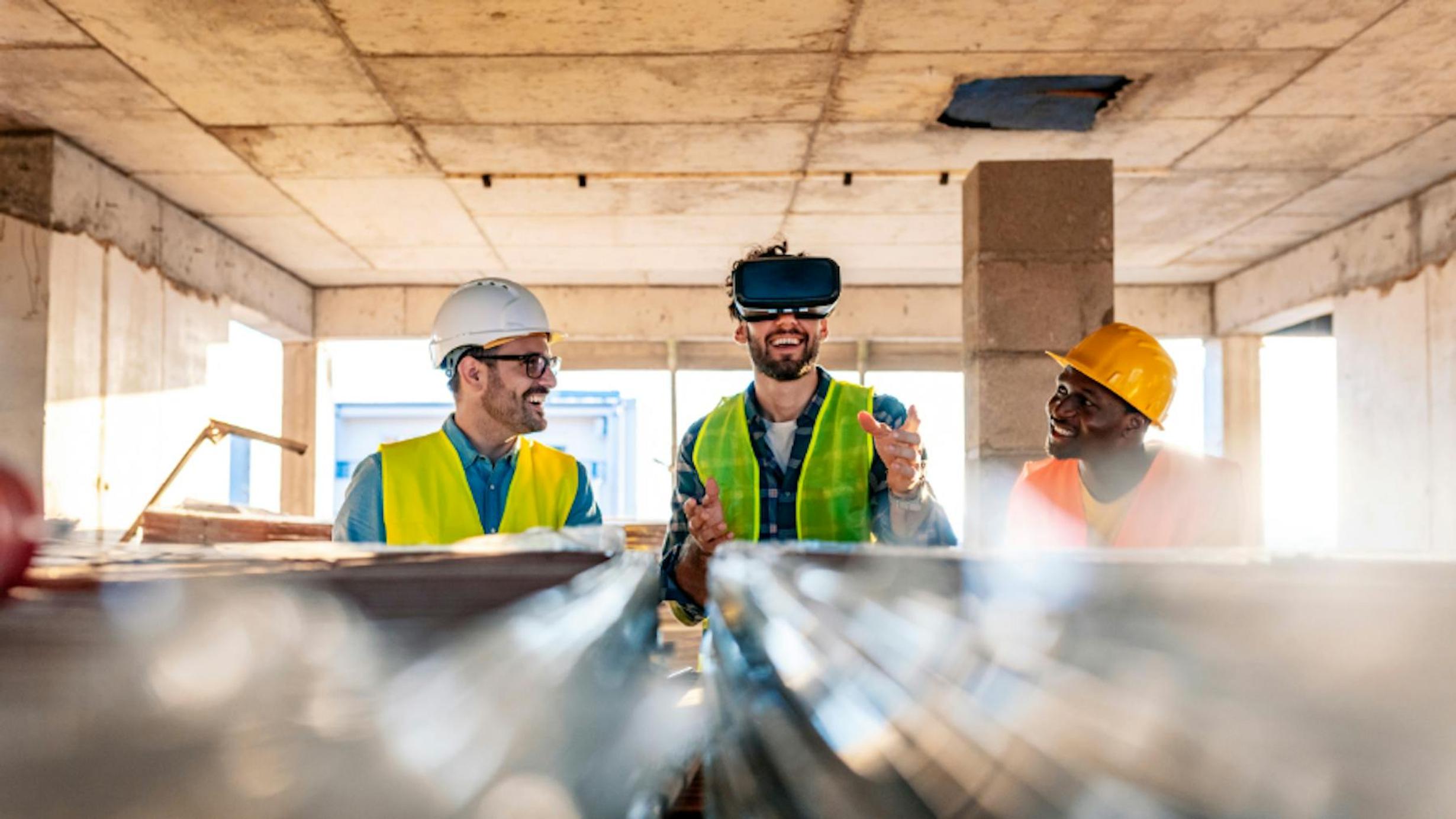
Virtual reality and mixed reality are transforming the way we work, collaborate and develop projects remotely.
At Invelon, our mission is clear: to help companies become more efficient, innovative and competitive through virtual, augmented and mixed reality solutions. How do we achieve it? By integrating technological tools that transform the way things are produced, learned and collaborated on remotely.
Below, we explain how these technologies are changing the present of work and why now is a good time to implement them in your company.
What are virtual and mixed reality?
Virtual reality is a 4.0 technology that immerses the user in a completely digital environment, isolating them from the physical world. Through headsets, sensors and specialised software, scenarios, objects and situations are recreated that the user can interact with as if they were present, even though everything is part of a virtual environment.
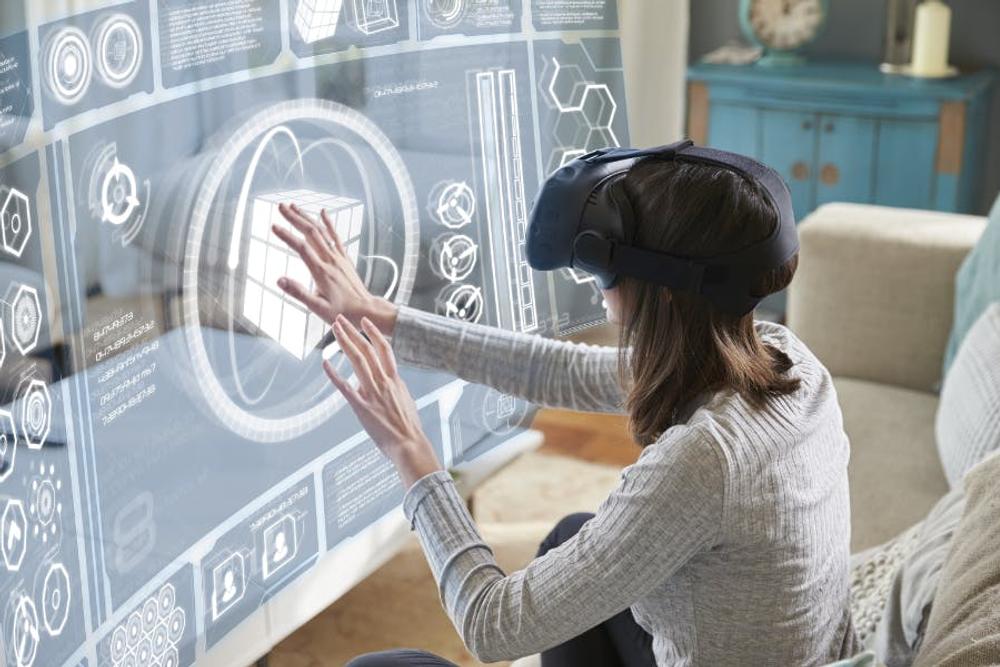
Mixed reality intelligently combines digital elements with the real physical environment. Unlike virtual reality, MR technology allows the user to see their real surroundings while interacting with superimposed virtual objects, as if both coexisted.
Both technologies are part of what is known as extended reality (XR), and are key tools for business digital transformation.
How do virtual and mixed reality change the way we work?
VR and MR technology are redefining industrial and collaborative processes, with real, proven applications in the workplace:
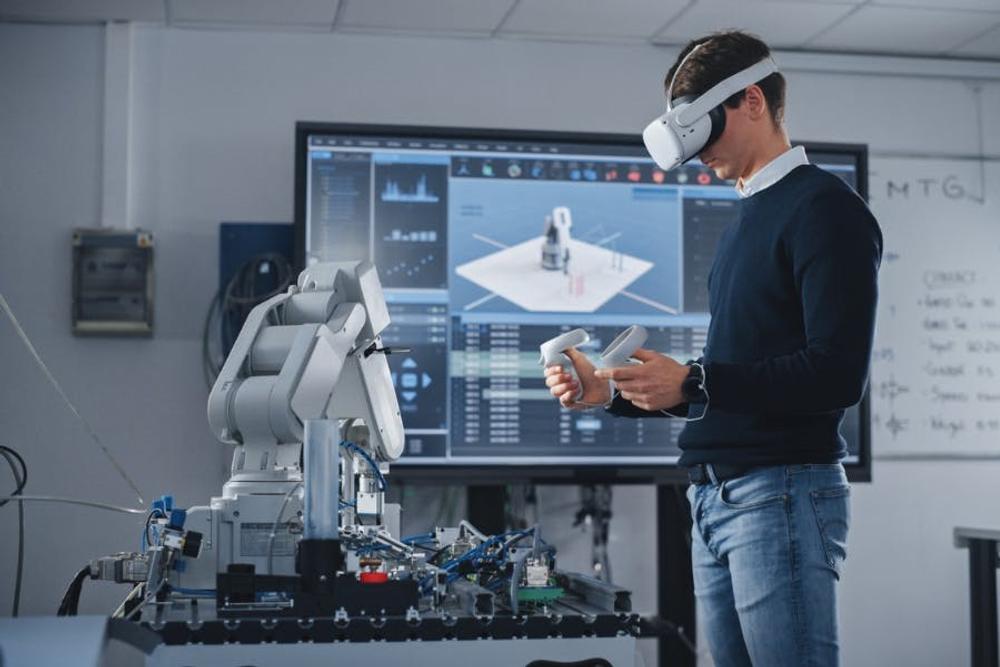
- Optimised production: Thanks to interactive 3D models, operators can practise assembling machinery, detect faults before they occur and speed up the learning curve, which translates into fewer errors, less wasted time and higher productivity.
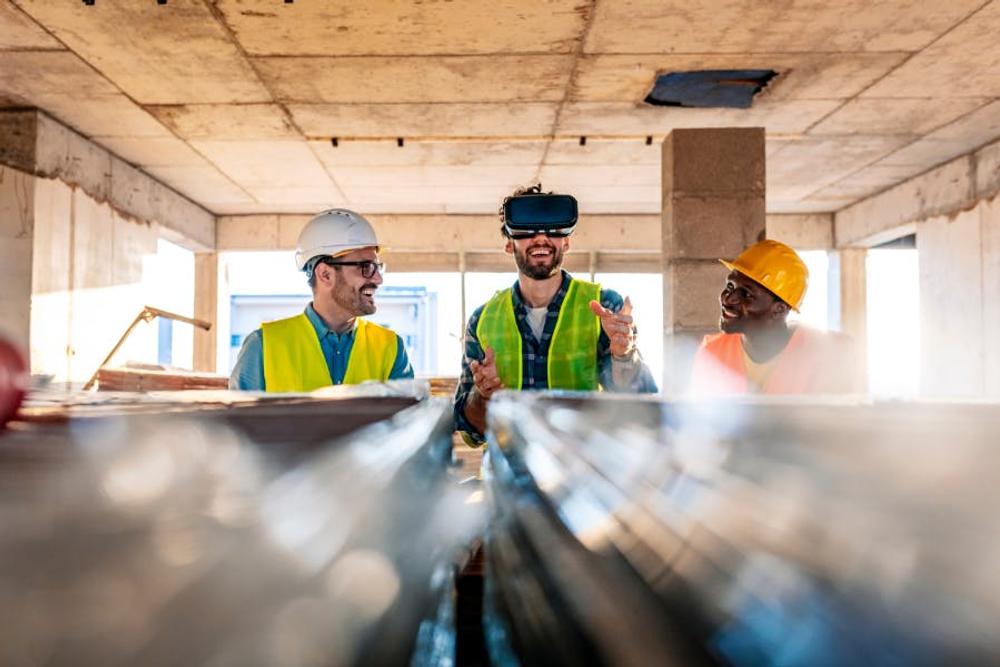
- Real-time remote collaboration: These technologies make it possible for teams in different countries to meet in the same digital space, view prototypes, simulate processes or carry out technical inspections without travelling. Collaboration becomes more agile, visual and efficient.
- Practical training and simulations for companies: They make it easy to create simulated environments in which protocols are practised to improve employee training, remote inspections, predictive maintenance and the reduction of occupational risks. This improves the quality of training, knowledge retention and workplace safety.
These dynamics make virtual and mixed reality useful tools for companies in many industries.
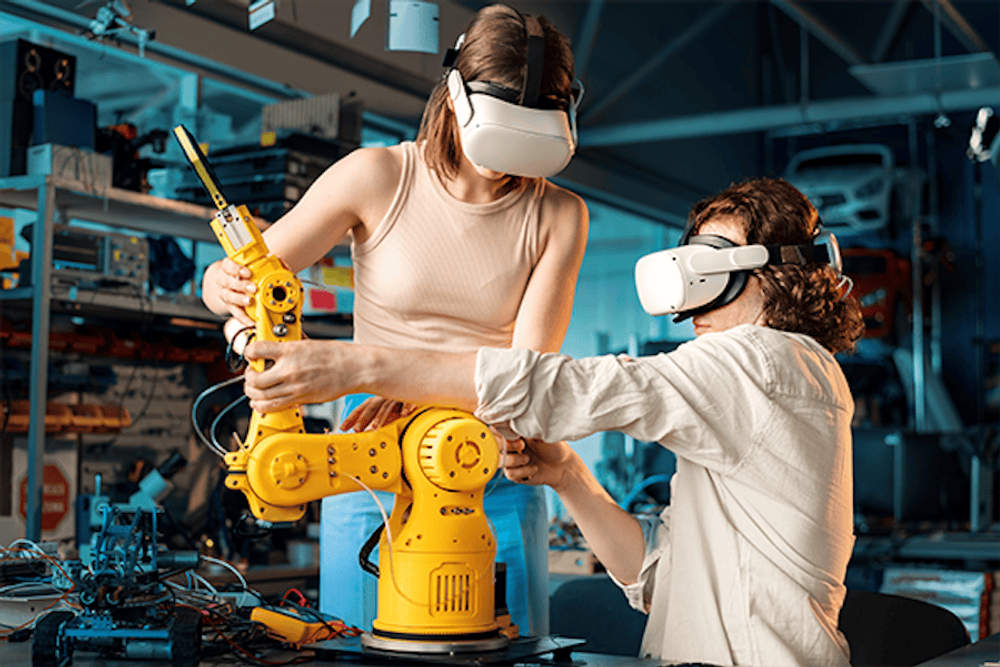
Key benefits of virtual and mixed reality at work
Adopting virtual reality (VR) and mixed reality (MR) in your company is not just a bet on innovation, it is a clear strategy to improve performance, reduce costs and prepare teams for the future of work.
These technologies bring real value to organisations because they optimise resources, improve internal processes and enhance the employee experience. Here we explain the main benefits:
- Reduced operating costs and removal of physical barriers: Implementing virtual or mixed environments makes it possible to avoid travel, shorten training times, minimise errors and prevent failures in processes. This translates into direct savings of time, materials and money.
- Increased productivity in the workplace: XR solutions make it possible to work with data and virtual environments that strengthen accuracy and reduce human error.
- Better decision-making: By allowing real-time data visualisation and the simulation of multiple scenarios, these technologies offer a competitive advantage in analysis, diagnosis and planning.
- Boost to the culture of innovation: Using VR and MR encourages an agile and adaptable mindset in teams, by enabling new ways of working that are more creative, collaborative and technological.
- Increased workplace safety: Immersive environments make it possible to train employees in risky situations without putting them in danger. They also help to visualise the state of equipment and detect anomalies before they occur, which improves accident prevention.
Examples of use in different sectors and industries
The applications of virtual and mixed reality are so versatile that they are already being used in many industries:
Industrial sector
- Process simulation
- Maintenance and remote assistance
- Assembly line optimisation
- Immersive technical training for operators
Medical sector
- Planning of interventions through 3D reconstruction
- Surgical training
- Immersive telemedicine
- VR simulations without putting the patient at risk
Architectural sector
- Presentation of projects in 3D before construction
- Real-time design evaluation
- Virtual tours
- Remote supervision
Logistics sector
- Simulation of routes and loading and unloading processes
- Operator training
- Organisation of inventory and storage space
- Remote supervision
Steps to follow to implement virtual and mixed reality in your company
Adopting virtual or mixed reality in your organisation may seem complex, but with the right support it is an orderly, gradual process that leads you to success.
At Invelon we do not just offer you the technology, we support you throughout the whole process to turn your company's vision into a real experience.
With our one stop shop model, we take care of EVERYTHING in this implementation process, so that your company can harness the transformative potential of XR from day one.
- Initial assessment of the use case: We analyse your company to identify where the technology can add the most value.
- Design and prototyping of the solution: We develop a personalised experience tailored to your needs and objectives.
- Team training: We train your staff in the necessary protocols to ensure effective adoption.
- Hardware and software deployment: We help you choose the right infrastructure (headsets, sensors, software, licences, connectivity) and support you in the technical deployment, ensuring compatibility and integration with your systems.
- Integration and continuous improvement: We measure the impact of the solution, gather user feedback and optimise the experience.
New ways of working thanks to virtual and mixed reality
Virtual and mixed reality are more than a technology, they are a new way of understanding work, opening up virtual spaces without geographical barriers.
Thanks to them, employees feel more connected, collaborate in immersive environments and acquire new skills suited to the demands of today's labour market without associated risks, through:
- Immersive meetings where the same digital environment is shared.
- Real-time project supervision, from anywhere in the world.
- Mentoring and training of new employees, without the need for physical presence.