Virtual and Augmented Reality improve the soft skills of university and vocational training students
Virtual and Augmented Reality improve the soft skills of university and vocational training students.
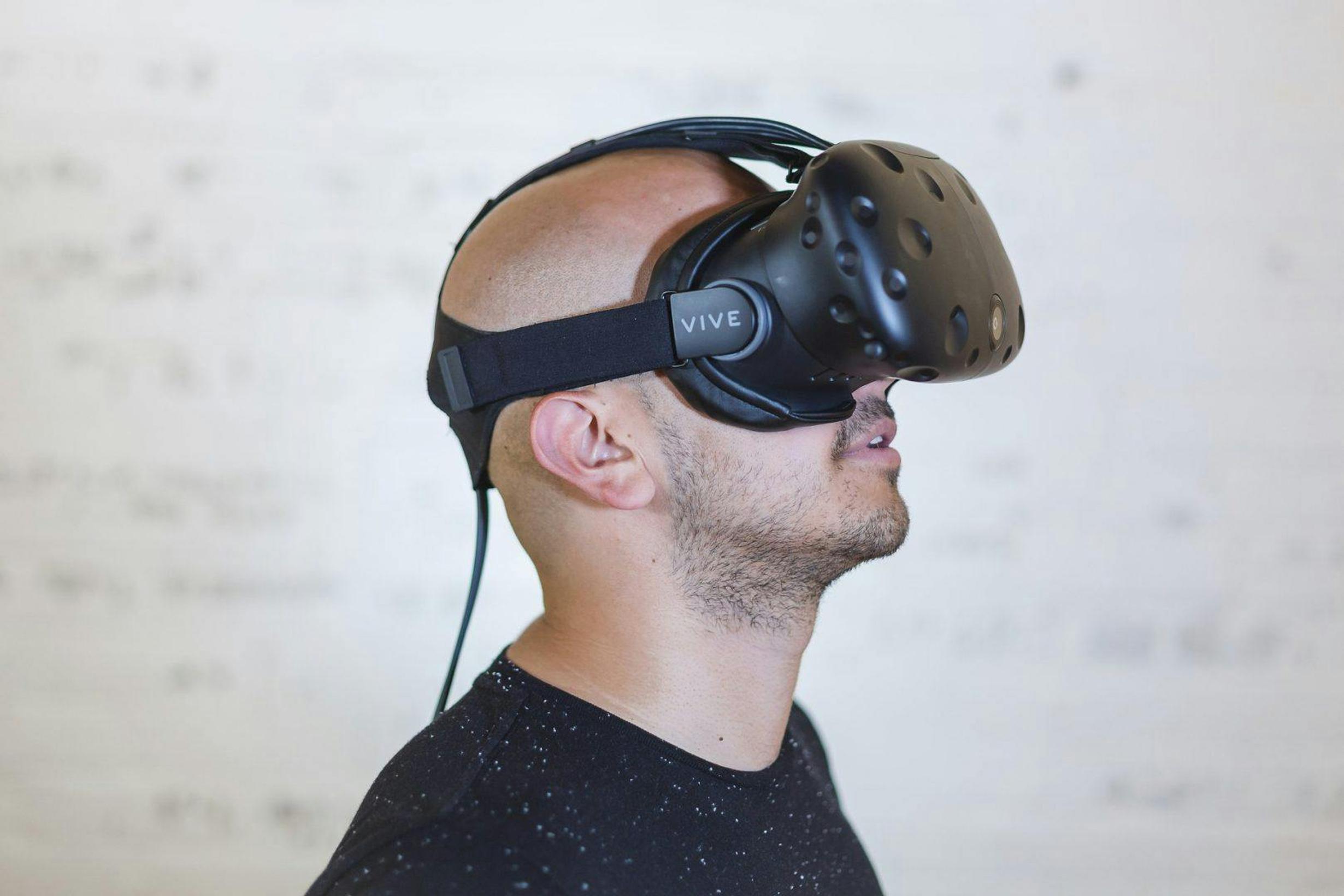
Virtual Reality (VR) and Augmented Reality (AR) are taking up an important place in the education of many students. Companies that need to recruit highly qualified professionals now look for skills beyond those described on the CV, such as soft skills; a set of characteristics that make us stand out as professionals beyond pure training.
How Virtual Reality and Augmented Reality help improve the interpersonal skills of higher education students
What are soft skills and how do Virtual and Augmented Reality help improve them?
Imagine a student who is taking vocational training (FP) or a university degree. The use of Virtual Reality (VR) or Augmented Reality will allow them to be transported to practical environments so that they can, step by step, put into practice and better absorb the theoretical concepts presented in class.
Apart from putting into practice what has been learned and assessing how it is done, we must also bear in mind that Virtual Reality or Augmented Reality will help improve the well-known soft skills, or interpersonal skills; which can be summarised in the following list:
- The ability to solve any problem. Through practice, students will learn how they react to a new challenge, so they will know how to improve their performance in future.
- The importance of critical thinking. A student should not simply repeat the knowledge they have learned, but understand it and put it into practice correctly. In this way, the teacher can see how they cope in a particular situation and how they resolve the situation presented.
- Personal development. Experts estimate that 20% of a higher education student's training comes from these skills. Each person must also acquire a certain capacity for leadership, socialise, improve their talent and develop the necessary empathy with the rest of the group they belong to.
- Collaboration and teamwork. Essential in today's most innovative professions, where the aim is to bring talent together to achieve success on a large scale.
- The development of emotional intelligence. Students must learn to know themselves, to face their own challenges and to overcome them in the best possible way.
- Motivation. It accounts for a large part of the success cultivated in a company or profession. We could say that, without motivation, professionals will not face new challenges with ambition and will possibly not overcome them with flying colours. The incorporation of new technologies such as Virtual or Augmented Reality helps us add an extra boost of motivation to the challenge being set
- Responsibility. A good professional takes on new challenges responsibly, feeling them to be their own. Thanks to Virtual or Augmented Reality, students take part in a challenge and take on their role actively: meeting the set deadlines for teamwork and following the pattern established for all students.
- Body language. It may seem complicated when using Virtual Reality or Augmented Reality, but it is not. Whoever is interacting with these technologies may not be aware of their body language, but the teacher or trainer can see their gestures and analyse them.
- Ethics. Despite the circumstances, learning is not a solo project, but one in which one's own success is also that of one's peers. The values described above will help to shape better people and will complete academic training.
In the case of university degrees or vocational training, each student must be required to show a certain degree of responsibility and, above all, participation in every class. Thanks to the use of Virtual and Augmented Reality in classrooms, each student can carry out practical exercises on the theoretical content they have learned, and this results in a qualitative improvement in the higher education provided at the educational institution, as well as improving students' soft skills.
What are the results of applying Virtual Reality and Augmented Reality in higher education?
All of the above may have convinced you, but we want to offer more concrete data to confirm the effectiveness of using these new technologies in the higher education or university sector. In the United States, a survey was recently carried out in 12 educational institutions that had introduced both disciplines for their online classes. After several months of trial, a survey was carried out among the students, which produced the following conclusions:
- Participants managed to quadruple their speed in carrying out a practical task, learned remotely, in the classroom.
- The increase in confidence when putting their knowledge into practice was put at 275%.
- Emotional connection with classmates was multiplied by 3.75.
- Compared with other students who did not use VR glasses, motivation was four times greater.
Likewise, the survey also featured teachers, who were surprised to find that:
- Students learned in less time, as each of them became more focused.
- Students showed no doubt whatsoever when confirming what they had learned in practice.
- The connection with Virtual Reality is more emotional than with traditional education, as it incorporates new technologies that bring it closer to the lifestyle of students, who are in regular contact with them in their day-to-day lives.
- Greater motivation was observed in each student, along with more eagerness to learn new concepts.
What is the cost of implementing this system?
The answer to this question was also part of the study mentioned above. The price is quite affordable considering the return on investment (ROI) and the use it will be put to over several years. By comparison, teaching 375 students costs the same as installing a VR system that supports up to 3000 students, saving up to 52% of costs.
We therefore encourage any vocational training centre or university to try an approach designed to improve soft skills (or soft skills), to increase their adaptability to new working circumstances.
At INVELON, we are experts in designing tailor-made Virtual Reality and Augmented Reality systems for every kind of educational centre. Tell us what you need, what you would like to offer your students and how you want each of your classes to be. Our experts will design an exclusive system that allows you to turn your training offer into a new one, more attractive and more effective when it comes to achieving objectives.