The contribution of Virtual and Augmented Reality to business digitalisation
We tell you how to make the most of the advantages of Virtual and Augmented Reality in our daily routines and in the digitalisation of the company.
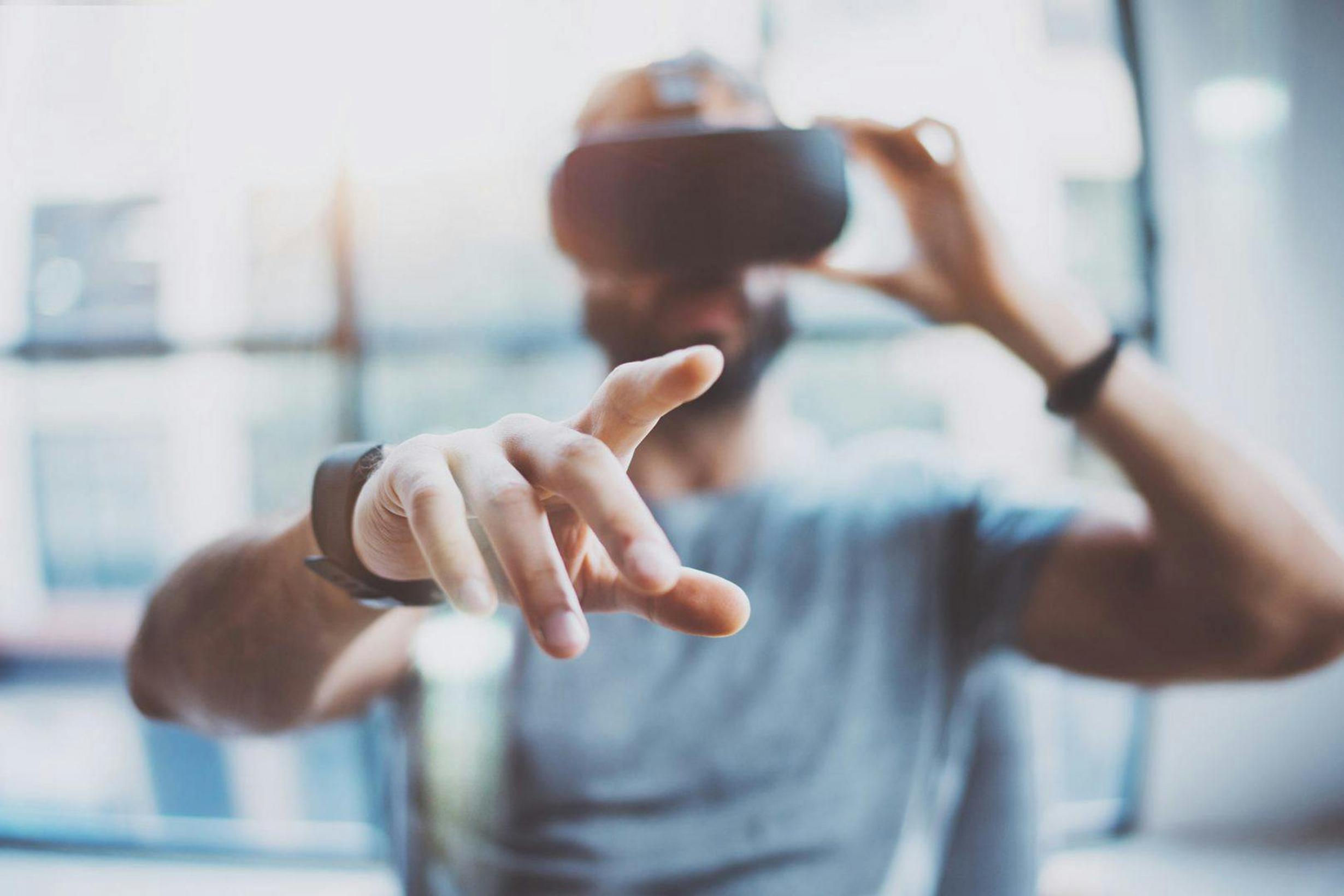
Virtual Reality (VR) and Augmented Reality (AR), whose acronyms come from the English terms Virtual Reality and Augmented Reality, have developed exponentially in recent years. And many people, even though they may not be aware of it, have already come into contact with the benefits they provide.
Below, we tell you how we can take advantage of VR and AR in our daily routines, both social and professional. We will also focus on the contributions these new technologies are making during the days of quarantine and the state of alarm in our country because of the coronavirus. Pay attention.
Virtual Reality and Augmented Reality are already among us
Yes, Virtual Reality and Augmented Reality are more present in our daily lives than you can imagine. But before addressing the most direct practical uses of VR and AR, it is worth giving a brief description of each.
As for the first, Virtual Reality is a technology that enables the creation of 100% virtual environments, through which users can live a completely immersive, first-person experience, interacting with the reality created in this digital setting. As for the second, Augmented Reality is characterised by the distortion of reality, blending virtual experiences applied directly in a physical and real context, where one or several people can interact.
Many businesses have already committed to business innovation, applying these VR and AR technologies in their working environment. For example, in the property industry, homes that have not yet been built are simulated through Virtual Reality. The same can be said of the tourism sector, which has used Augmented Reality to restore and complete the oldest works of art that have deteriorated.
However, we can agree that, while these uses would have been unthinkable years ago, the scope for exploiting virtual and augmented resources is still much wider.
The challenge the coronavirus crisis poses for Virtual Reality and Augmented Reality
We want to highlight that sudden crises are the junctures in which we can most realistically measure whether a technology is now ready to be used in a more or less widespread and functional way by the population. In this respect, contexts such as the ones currently unfolding because of the effects of the coronavirus can be considered genuine opportunities. It is simply a matter of seeing the glass as half full and committing to business reinvention.
First of all, you should know that this virus was declared a global pandemic by the World Health Organization (WHO). And in Spain a state of alarm has already been declared in order to curb mass infections by this virus: the aim is not to overwhelm the healthcare system. And one of the most striking measures of this national state of alarm is the one relating to restrictions on the movement of the population, with the now well-known hashtag #YoMeQuedoEnCasa.
As a result, in the first days of lockdown alone, internet use has increased by more than 40%. Users, for their part, are using their computers and mobile phones more intensively, especially to browse social media. And many companies, for their part, have introduced the possibility of working from home. A digital evolution that has arrived involuntarily, but one that makes us realise that new technologies are a great tool not only for our personal lives, but also for our working environment.
Consequently, in some areas, everyday contributions from VR and AR have already been put into operation to ease this situation. For example, as in-person classes have been cancelled in schools, secondary schools and universities, many of them are going to be taught online, using Virtual Reality models to make the content more dynamic and easier to understand. Broadly speaking, it is about making learning by doing and anytime, anywhere learning more common.
The tourism sector, one of the hardest hit by the coronavirus, has also turned this challenge into an opportunity; offering virtual tours (and free ones!) of some museums in different countries around the world through Virtual Reality and Augmented Reality.
Even the healthcare sector is throwing itself into this opportunity, and in the United States Virtual Reality has already been used to build a reconstruction of what the current coronavirus looks like and how it affects our respiratory system. Just one example of everything that Virtual and Augmented Reality can offer the medical sector to better understand the various diseases and, consequently, to know how to fight them.
The best initiatives arise from necessity, and we are seeing that at this very moment. We hope that, when all this is over and we have managed to defeat the coronavirus, all these digital and virtual initiatives will continue and become indispensable tools for all of us, both as companies and as individuals.
Invelon works to implement Virtual Reality and Augmented Reality in your daily life
Lastly, at INVELON we want to stand up for the everyday application of Virtual Reality and Augmented Reality. Before this recent health crisis, we had already put all our effort into offering you ways of using these technologies. And we continue to do so, helping you make the most of them in your workplace in fields as diverse and relevant as industry, healthcare, marketing, housing, education and tourism. It is about connecting businesses more closely with employees and customers.
In short, we encourage you to keep increasing this business digitalisation and to commit to Virtual Reality and Augmented Reality, to enjoy experiences without having to visit specific places or try products in situ. The best time to start is always now.