The company TMI incorporates Virtual Reality into its production process
The projects we work on are what back up the case studies we achieve. We explain one of our Virtual Reality projects.
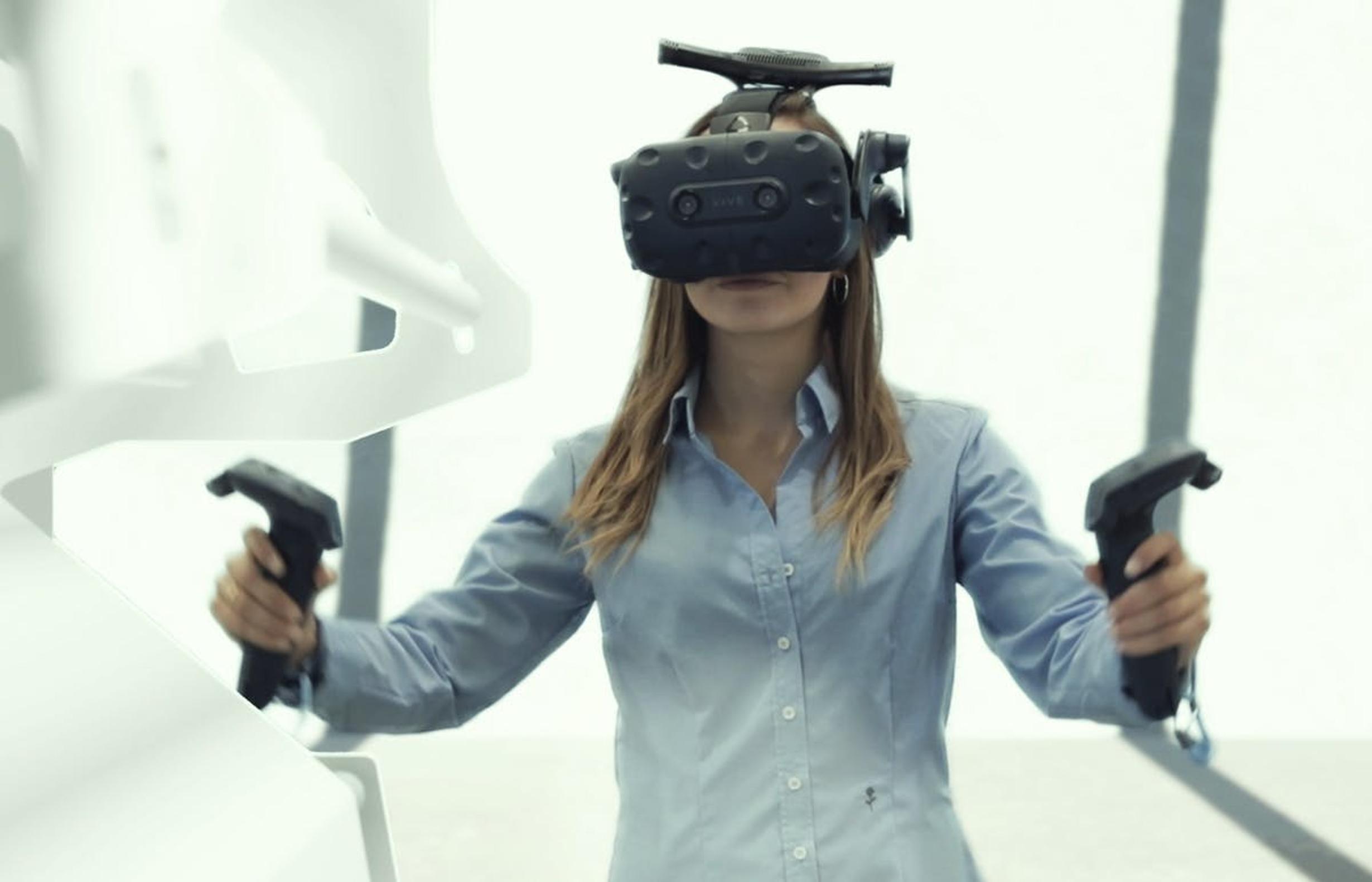
The real cases we work on are what back up the achievements we reach at INVELON. That is why we have decided to tell you first-hand about another of our most recent Virtual Reality projects.
The client we worked with is the company TMI (Técnicas Mecánicas Ilerdenses, S.L.). TMI specialises in providing logistics solutions for palletising and bagging, among others. To do so, they design and manufacture their own machines. Although its founder, Manel Padullés, set up his first bagging company in 1973, TMI would not come into being as such until 2000, when, with the help of his colleague Xavier Arderiu, he began working together on the design of new bagging alternatives. Together they devised solutions such as automatic bagging lines and tubular FFS bagging stations.
Since then, they have continued to improve their machinery to adapt it to the modern market and set themselves apart from their competitors. Today, this Lleida-based company also works in palletising and supplies sectors such as food, agri-food, construction and mining, chemicals and petrochemicals.
The goal: to incorporate Virtual Reality into the design process of their machines to improve the customer experience
The challenge that TMI set us was to use Virtual Reality to improve the design development phase of their machines. The idea was that, using a pair of Virtual Reality or VR glasses, their R&D team could preview 3D prototypes of their machines, and that TMI could present them to its customers before manufacturing them.
It was not a simple task, since this company offers its customers the highest quality standards and has several machinery lines, which include equipment for dosing, bagging, palletising, overwrapping and weighing. As can be seen in the video, they manufacture very different machines, with the added challenge that they provide customised solutions for each of their customers.
Invelon's solution: using VR glasses to visualise projects
In this case, TMI needed the VR prototype of a bagging machine and the solution INVELON offered was the use of Virtual Reality or VR technology in the design process of their machines and for presenting them to customers.
At first, the company sent us a 3D design of the machine they wanted to build, so that we had the chance to scan it in detail and thus include it in a Virtual Reality space. In the prototype we captured all the important points of the machine, including its accessibility, ergonomics, fit, maintenance, and so on. This was to reflect it in VR in the most realistic and detailed way possible. The idea was for it to fully meet the expectations of their customer, to whom this project was going to be presented using VR glasses.
We managed to create the prototype quickly. This was partly thanks to TMI's collaboration, as they were always quick to prepare and provide us with all the material needed to work.
Testing, prefabrication and professional customer presentations thanks to Virtual Reality
The results for TMI could not have been more satisfactory. With Virtual Reality, they can create a digital clone of their machines, a 100% accurate view of what the final result will be, even long before the machine in question is manufactured. This way, workers can practise with the machine in the virtual space, immerse themselves fully in the designs created to validate them and, ultimately, make the customer experience far more satisfying, transforming their perception of the project. These are the advantages they have gained for the development phase of their machines:
- Mock-ups of machines under development made by 3D printing are not always enough, as there are certain technical aspects that cannot be reflected with that type of method. VR projects cover those small details that other 3D design technologies fail to capture.
- VR glasses make it possible to present the machine in detail, increasing customer satisfaction with the project.
- With VR technology, it is possible to assess aspects related to functionality, ergonomics or accessibility before moving on to manufacturing; it allows errors to be detected and the necessary improvements to be devised in time, thus avoiding unnecessary costs or repeated project phases.
- It offers the possibility of validating designs with the customer as they are being developed.
- VR technology makes it possible to present the machine not only to the end customer, but also to assembly technicians. This way, the customer is given technical details and details related to the assembly order, for example.
- VR prototyping can be developed quickly. Thanks to it, customers can see the product they have ordered at very early stages of the project, so TMI manages to increase the confidence of its customers.
The application of Invelon's VR technology across all industries
TMI is just one example of how VR technology can help add value and provide customers with a satisfactory service. Likewise, any company involved in industrial manufacturing can benefit from presenting its projects through VR spaces.
Virtual Reality is here to stay and is being applied in various sectors such as industry, leisure and training. At INVELON we are proud to have helped yet another company with the development of its projects and to improve the experience of presenting to its customers, helping to improve conversion and the confidence of any customer who orders a customised product.