How Virtual Reality and Augmented Reality are reinventing teaching in schools
How Virtual Reality and Augmented Reality are reinventing teaching in schools
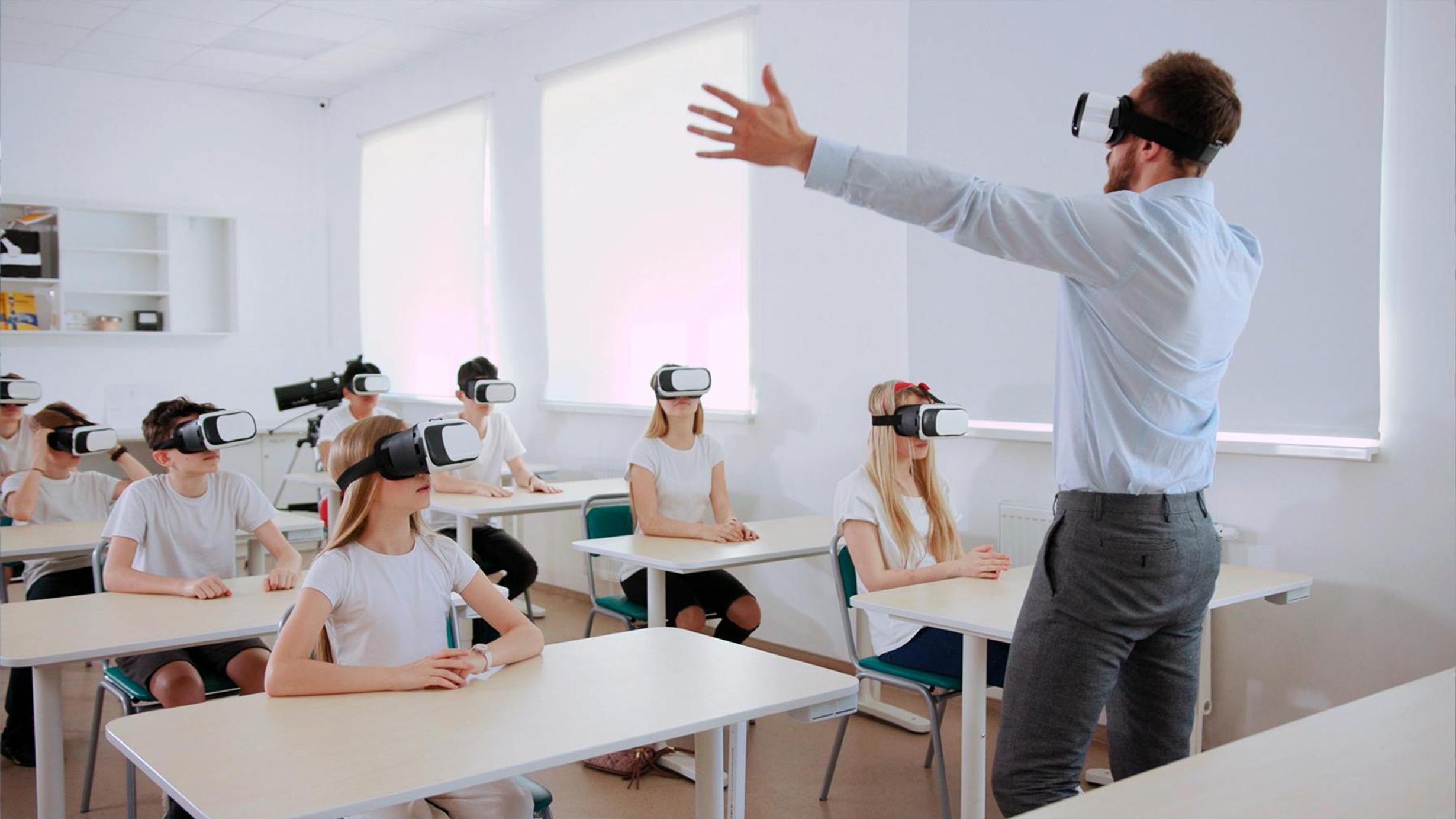
Virtual Reality and Augmented Reality technologies can be a good ally for teaching in primary and secondary schools. These technologies open up a world of possibilities in different areas of the education sector.
We are often faced with the following question: Is learning surrounded by technology a good thing? The answer is that technology in itself is not harmful to children. According to a large number of studies, what is harmful is living surrounded by an excess of technology, but if it is used appropriately, it need not be negative for students.
In practical terms, learning in interactive environments is a very positive factor for pupils, since in these environments they can develop new skills, making mistakes and learning more effectively and, most importantly, improving their competences.
In this post we are going to tell you how Virtual Reality and Augmented Reality technologies can bring a great many benefits to learning in primary and secondary schools.
What applications and dynamics can Virtual Reality and Augmented Reality bring to the education sector?
Both technologies, Virtual Reality and Augmented Reality, do not in themselves generate learning, but are tools for generating learning resources.
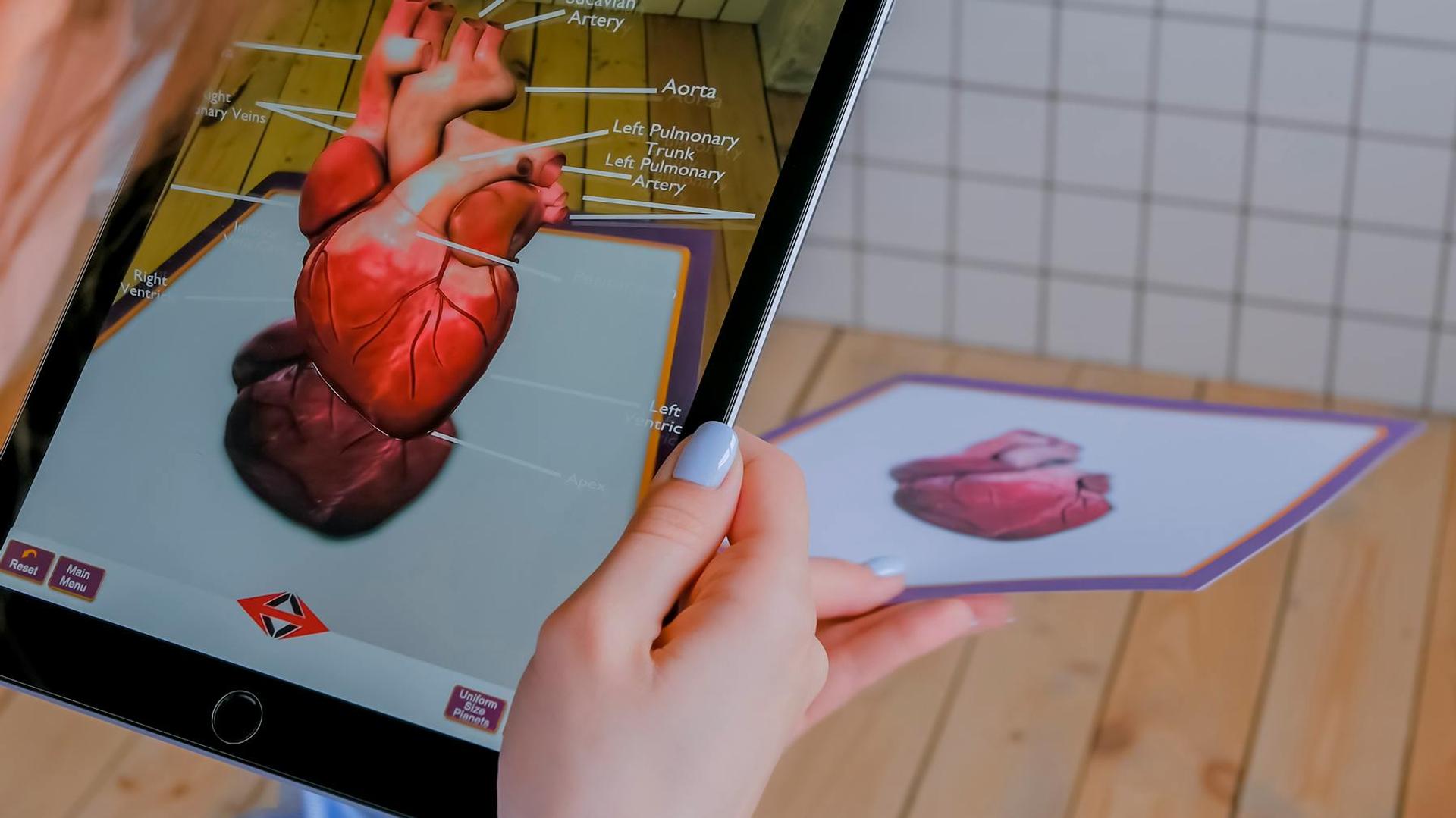
Augmented Reality is the 4.0 technology most present in classrooms, as it is very easy to integrate, since all you need is a tablet or mobile device on whose screen pupils can see the added graphic information. Whether it is to study parts of the body, to discover the Milky Way or to learn about natural phenomena. Augmented Reality has no limits, the possibilities are endless, you can prepare an escape room for pupils to learn about a historical period or an interactive science game in which they earn rewards if they get the answers right.
As for Virtual Reality, it is a less developed technology in the education sector, as the price is higher than Augmented Reality. Even so, there are more and more projects to bring these technologies into classrooms so that students can benefit from their many advantages.
The result is clearly 100% immersive learning. This means that pupils will retain knowledge better and, most importantly, their knowledge will last in the long term, since the learning goes much further and pupils experience the syllabus they are studying first-hand.
Biology, history or science in general are subjects in which Virtual Reality and Augmented Reality are key, as they open up a world of possibilities when dealing with concepts that are difficult to visualise and understand without these technologies.
Why is it important to teach pupils to use technology in a healthy way?
Children are exposed to too many technological stimuli in their daily lives. This is why children need to be taught to tell the difference between the use of technology as a form of leisure, for example, exposed to a television or a tablet for playing, and the technology used in classrooms to encourage their learning.
However, for this learning through technology to be 100% effective, children need to be taught to see technology as an ally and not as a restrictive element. To avoid reaching the point of having to use restrictive measures, they must first have understood that Virtual and Augmented Reality technology is just another tool for school learning.
Young children process information very quickly, which is why 4.0 technologies are a good tool for fostering their creativity, increasing their abilities and knowledge and encouraging teamwork and cooperation with their classmates.
What are the benefits of integrating Virtual Reality and Augmented Reality in schools?
Technology is a great ally for boosting pupils' concentration, their focus on learning and their cognitive skills. This is why integrating these immersive technologies into classrooms brings with it a great many benefits, which we set out below.
- Immersion increases interest in learning and in the content
- Boosts pupils' concentration
- Long-term retention of knowledge
- Improved school performance
- More dynamism in the classroom
- Learning is no longer linear
- Encourages creativity, parallel thinking and motivation for different subjects
- Encourages collaborative and participatory learning
- Helps include more introverted pupils
- Putting a subject of study into context
- Understanding concepts that are hard to explain without visual support
Virtual Reality and Augmented Reality technologies as a complement to traditional learning
Virtual Reality and Augmented Reality are not being incorporated to replace traditional tools, but rather are integrated to complement and enhance more traditional learning, making it more immersive and more memorable for pupils. The ideal is to find a balance between more traditional learning and technology, since technology is no more than a mere evolution of more classical teaching.
After all, there are some subjects whose content is hard for pupils to picture in their minds, such as history, for example. And it is thanks to Virtual and Augmented Reality that historical moments and situations can be recreated, helping to understand the content better.
It is clear that teaching involving these technologies is much more attractive for pupils, but also for teachers. It is a win-win, as teaching staff are exposed to technologies that may be less familiar to them, and can learn at the same time as their pupils.
How important is immersive learning in the learning curve?
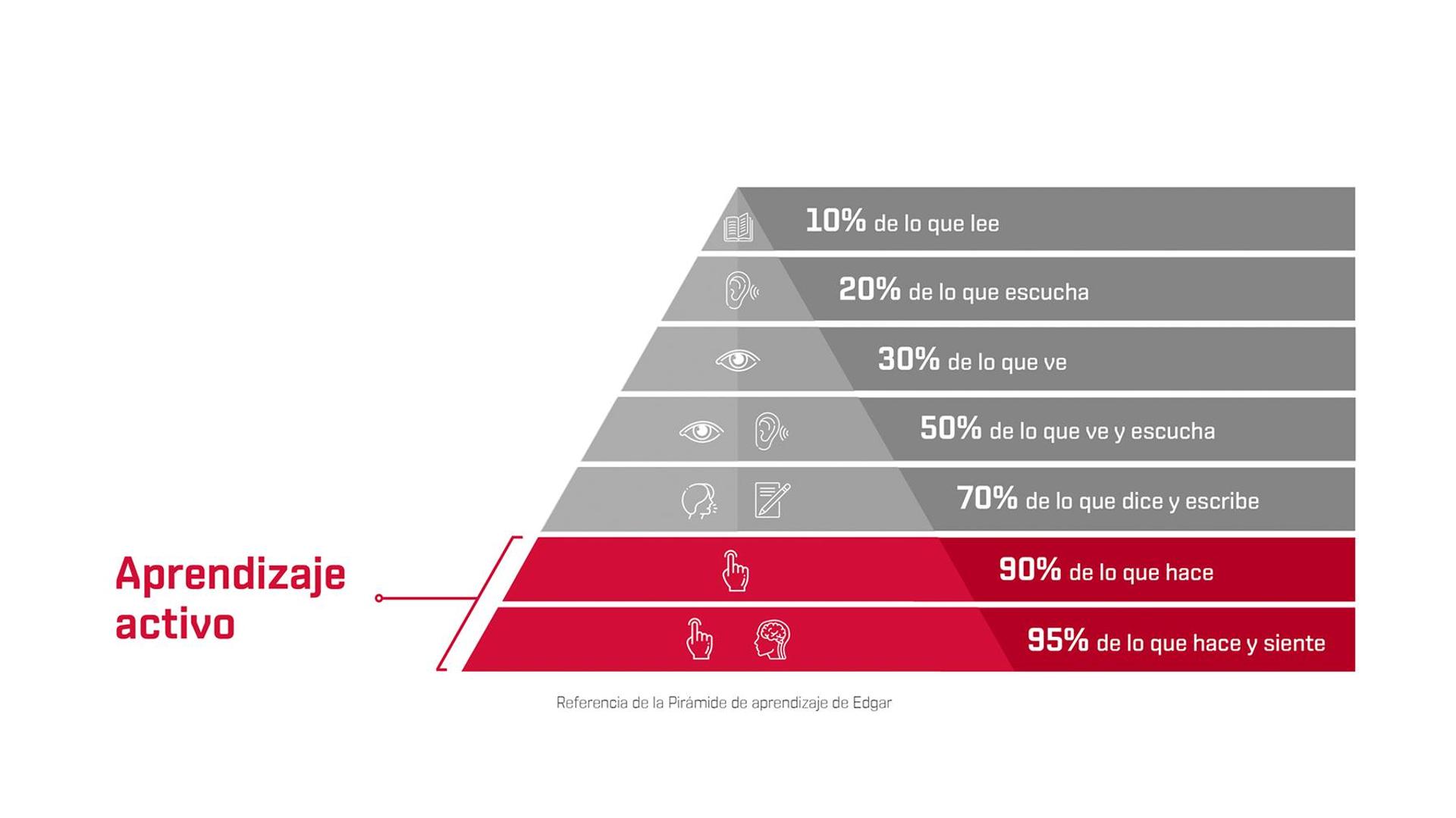
Learning through Virtual Reality and Augmented Reality becomes completely active and, therefore, will last in the long term in students' memory. Taking Edgar Dale's Learning Pyramid into account, active learning is where the pupil retains the most information about what they do and feel.
Learning surrounded by technologies such as Virtual Reality and Augmented Reality means a great optimisation of time, since the content is delivered in much less time than in traditional classes or e-learning. In addition, the pupil empathises more with the information received, since Virtual Reality and Augmented Reality quadruple interest and empathy.
In turn, pupils who receive training through Virtual Reality say that they focus much more on the content and manage to escape external distractions, compared with other forms of teaching.