How do Virtual Reality and Augmented Reality influence industry?
Among the new technologies applied to industry, Virtual Reality and Augmented Reality improve and speed up production processes.
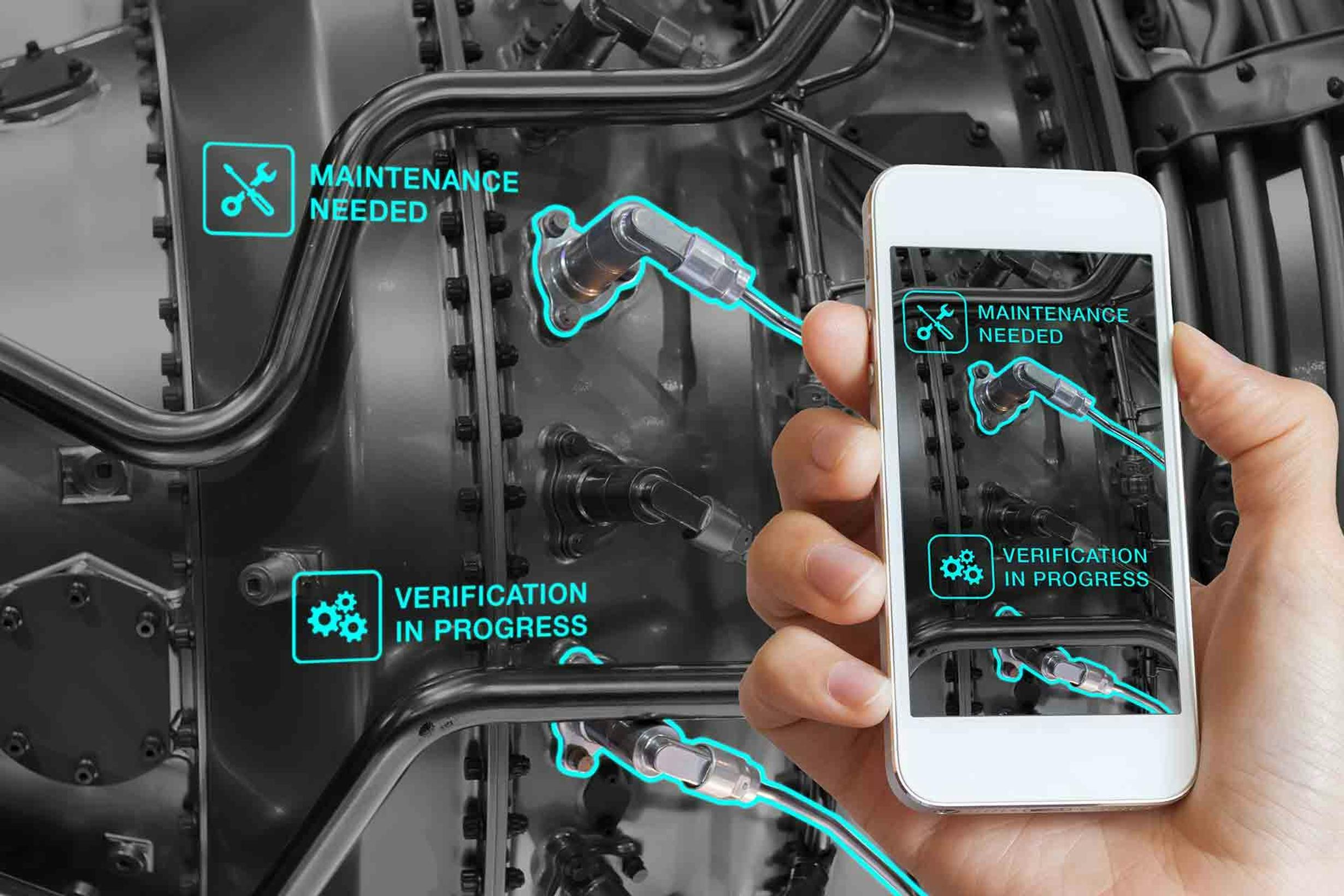
We have reached the 4th industrial revolution, also known as Industry 4.0, and in this new stage conventional production methods and techniques are being transformed thanks to new technologies.
Industry in general is increasingly looking for new technologies that can help it do its work more safely, efficiently and economically. And with the arrival of this increasingly digitalised industry, many new possibilities are opening up. Among the new technologies applied to industry, Virtual Reality and especially Augmented Reality are key, as they provide new useful information to improve and speed up production processes. We can therefore think of smart factories, where the connection between machines, people and data helps improve industrial productivity.
And although we talk about both Virtual Reality and Augmented Reality, each of them brings us different advantages in the industrial sector.
Industry 4.0 and Virtual Reality
Virtual Reality applied to industry helps us create a “digital factory”, where we can mainly experiment with and test the products we have designed before starting production processes. In other words, tests are carried out in the virtual world, which are later applied to the real world.
Virtual Reality is also used in industry during workers' learning periods, as this way they can visualise all the operations to be carried out and remember the necessary information much better.
Lastly, Virtual Reality is even used in industry to simulate dangerous situations. Operators can be exposed to a variety of situations with Virtual Reality, preparing themselves better for the possible risks that could arise in the factory.
So, by applying Virtual Reality in all these fields of industry, we can achieve great advantages:
- Makes learning processes easier
- Improves organisational models during production processes
- Reduces manufacturing and product development costs
- Reduces possible occupational risks
Industry 4.0 and Augmented Reality
On the other hand, Augmented Reality gives industry a large amount of data that can be connected in real time with other systems. With Augmented Reality, we manage to blend physical and digital reality to provide additional information and build entirely new realities. This also allows us better control of all the information in the industry and better organisation in general, by monitoring all manufacturing processes.
In addition, with Augmented Reality we can have additional, on-site information about the tasks to be carried out, superimposing the instructions for any operation on the operator's field of vision while they work with the new product or design. We can even access multimedia content that makes it possible to resolve any incident more quickly.
Augmented Reality, like Virtual Reality, also helps in the learning process of new operators or workers, as they will work with devices with built-in Augmented Reality that will make the tasks they have to carry out easier and allow them to interact much better with the necessary machines and devices. In this way, the learning path is much faster and simpler.
As a result, applying Augmented Reality benefits us in many areas of industry:
- Makes complex maintenance or production tasks easier
- Improves the combination of physical and digital data
- Reduces manufacturing and product development times
- Like Virtual Reality, it also reduces possible occupational risks
As we have seen, both Virtual Reality and Augmented Reality represent a great advance for industry and the two technologies offer us different solutions to improve the company's communication, organisation and competitiveness. And through Industry 4.0 we create a new relationship between people, environment and information systems: we exchange and analyse data, resolve incidents, interact with machines, speed up processes and benefit from new technologies to improve and ease our day-to-day lives.
Ultimately, Virtual Reality and Augmented Reality allow us to overcome barriers in production and achieve new solutions. We just have to think beyond the conventional and look for ways to take advantage of all the opportunities these new technologies offer us, because Virtual Reality and Augmented Reality applications do not only benefit industry, they benefit society as a whole.